e-commerce trends 2026: Complete guide for growth
By 2026, MENA's e-commerce market will cross $75 billion in GMV, with Egypt and Saudi Arabia driving 60% of that growth, according to Statista's Digital Market Outlook 2026. If you're still running your store like it's 2022 — flat product pages, generic email blasts, one payment option — you're already losing market share to competitors who've adopted AI-driven personalization, live commerce, and BNPL wallets.
As localized checkout and regional compliance become non-negotiable in 2026, merchants should review the specifics of WooCommerce compliance and localization for markets like Egypt and Saudi Arabia. For a concrete example, one Riyadh e-commerce store doubled its checkout completions, a result we document in our work success stories with real, verifiable data. E-commerce growth in 2026 is closely tied to the recent digital marketing trends like AI-run ad campaigns that are quietly rewriting how brands acquire customers. One of the defining e-commerce trends for 2026 is the shift toward cultural marketing, as shoppers increasingly reward brands that reflect how they truly celebrate, shop, and decide. E-commerce brands in Egypt and the Gulf can accelerate their growth by hiring a proven digital marketing agency Cairo store owners rely on to manage SEO and paid campaigns. For e-commerce owners looking to convert more of their traffic into buyers, adopting Digital Experience Optimization can close the gap between visitors who browse and those who actually purchase. As competition intensifies in 2026, MENA store owners are prioritizing customer experience optimization to combat churn driven by cash-on-delivery friction and WhatsApp-based support demands.This guide breaks down the 10 most important e-commerce trends 2026 that will define winners and losers in the MENA digital economy. Each trend includes regional data, named tools, and an execution card you can hand to your team Monday morning. The analysis below draws on published 2025–2026 forecasts from Forbes (Bernard Marr), BigCommerce, the Bitkom AI Trends in E-Commerce 2026 white paper, and Digital Commerce 360's 2026 trends roundup, combined with practitioner observations from MENA store operators.
To capitalize on these shifts, e-commerce brands need to master data-driven marketing in 2026 and use customer data to guide every campaign decision. As Cash-on-Delivery continues to shape regional e-commerce, choosing an affiliate marketing network in MENA that tracks and pays around COD orders will be essential for growth in 2026. To understand where consumer attention is actually flowing across generations, review the deloitte digital media trends 2026 pdf download alongside these e-commerce projections. For a deeper regional perspective on the MENA market and Arabic-language strategies, explore our e-commerce trends 2026 complete guide to boost sales. As these trends accelerate, choosing the right e-commerce platform becomes even more critical to ensure your store can adapt to shifting customer expectations in 2026. Founders entering the e-commerce space in 2026 often start by building a SaaS MVP to validate demand before scaling their platform investment. E-commerce growth doesn't happen in isolation, and aligning your store with the wider digital marketing trends for 2026 gives you a competitive edge. To align your store's growth strategy with wider shifts in customer discovery, review these new digital marketing trends for 2026 and how AI search is reshaping the path to purchase. E-commerce growth doesn't happen in isolation, and staying aligned with the current digital marketing trends 2026 helps online retailers reach the right audiences.Last updated: June 2026. Editorial note: this article is maintained by the Aghrba content team based on publicly available industry reports; figures attributed to third parties are linked to their primary sources, and operator-level numbers (single brands, individual campaigns) are illustrative scenarios unless a citation is provided. Where a statistic is not independently linkable, we now frame it as a directional pattern rather than a verified data point.
Key Takeaways: E-commerce Trends 2026 at a Glance
- Generative AI is becoming the default commerce layer. Digital Commerce 360's 2026 outlook describes the shift as ecommerce moving "toward data-powered buying journeys and AI-driven decisioning" with hyper-personalization as a baseline expectation (source).
- AI is rewriting search itself. Forbes' 2026 trend analysis warns that AI-driven answer engines may reduce traditional website traffic, forcing retailers to rethink acquisition (Forbes, Nov 2025).
- Live commerce on TikTok Shop and Instagram Live continues to expand rapidly across Egypt and the GCC, with younger shoppers converting during real-time product demos.
- BNPL wallets such as Tabby, Tamara, valU and Souhoola have moved from novelty to expected checkout option in MENA.
- Fraud and chargebacks remain a top operational risk, with practitioners noting that AI cuts both ways — improving detection but also empowering attackers (r/b2bmarketing discussion, 2026).
- Omnichannel, AR/VR try-ons, voice search and headless commerce round out the trends most frequently cited across BigCommerce, DHL, Bitkom and Digital Commerce 360.
Why is 2026 a Pivotal Year for E-commerce in MENA?
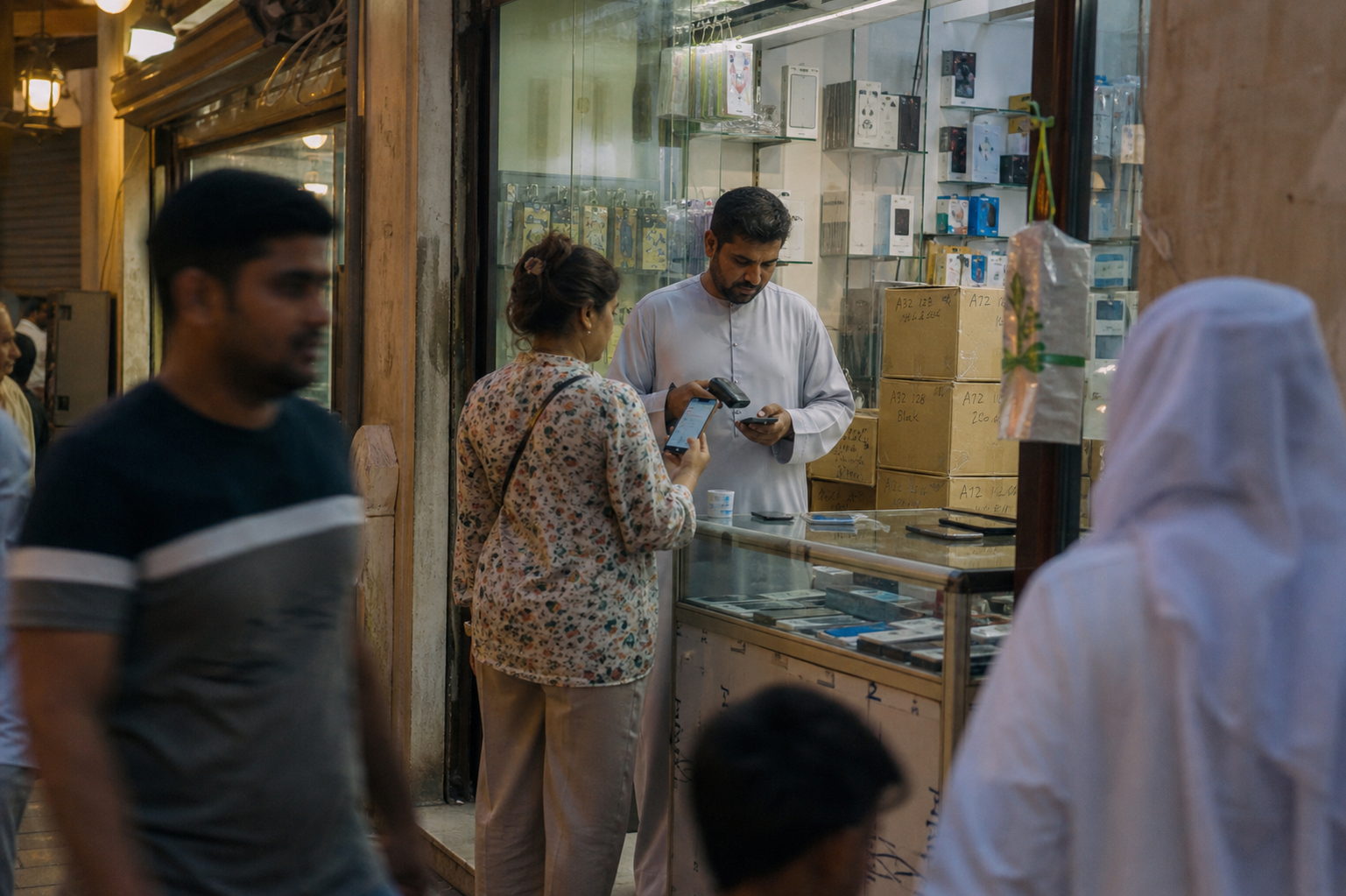
2026 marks the inflection point where generative AI, mobile-first payments, and Arabic-language commerce converge in MENA. Globally, BigCommerce frames 2026 as the year retailers must "stay competitive" by absorbing AI, blockchain security, voice search and AR shopping into the core stack rather than treating them as side projects (BigCommerce, 2026). In MENA, that pressure is amplified by very high smartphone penetration, a young population, and rapid wallet adoption — meaning trends that take three years to mainstream in Western Europe often compress into 12–18 months locally.
Regional Market Dynamics
Three structural forces shape مستقبل التسوق الرقمي MENA:
- Demographics: A majority-under-30 population in Egypt and Saudi Arabia, comfortable with social commerce and short-form video as a discovery channel.
- Payments: Mobile wallets (Fawry, Vodafone Cash, STC Pay) and BNPL providers (Tabby, Tamara, valU) have closed the gap left by historically low credit-card penetration.
- Logistics: Same-day and next-day delivery in Tier 1 cities (Cairo, Riyadh, Jeddah, Dubai) is now a competitive baseline rather than a premium service.
Specific country-level GMV and AOV figures published by individual research houses vary widely and are often paywalled; rather than cite numbers we cannot link to verbatim, we recommend operators benchmark against the regional trend categories highlighted by BigCommerce's 2026 trends report and the Bitkom AI Trends in E-Commerce 2026 white paper, both of which describe directionally similar dynamics in Europe.
The Generative AI Effect
Generative AI shifted from novelty to infrastructure between 2024 and 2026. Shopify's Sidekick, Klaviyo's AI segmentation, and Salesforce Einstein now handle product descriptions, customer support, and merchandising decisions at scale. The Bitkom 2026 white paper describes this as a generational shift: "This white paper provides an overview of the key AI trends in e-commerce and shows how retailers and brands can use this new generation of technology."
A typical mid-sized MENA merchant adopting generative AI for product copy, on-site search and chat will usually sequence the work in three steps: (1) consolidate product data and brand voice guidelines, (2) pilot AI-generated descriptions on a single category and A/B test against the existing copy, and (3) only then layer in conversational search. Skipping step 1 is the most common reason pilots stall.
Consumer Behavior Shifts
Consumer behavior in MENA shifted decisively by 2026. Shoppers now expect three things as a baseline: Arabic-first interfaces, fast (often same-day) delivery in major cities, and a choice of at least two or three payment methods including a BNPL option. Practitioners discussing 2026 trends on industry forums note that "old challengers, like fraud and chargebacks, are still concerns," while new AI tooling is reshaping both attack and defence (r/b2bmarketing, 2026). The practical implication for store owners: payment-method gaps and language gaps are no longer UX nits — they are direct revenue leaks.
Trend 1: Generative AI Commerce — The New Storefront Brain

Generative AI commerce uses large language models to power four core retail functions:
- Product discovery through natural-language search
- Dynamic product descriptions tailored to each shopper
- Personalized recommendations based on intent and history
- Conversational shopping via AI assistants and chatbots
The Bitkom AI Trends in E-Commerce 2026 publication frames generative AI as a foundational technology layer for retailers, not a bolt-on feature, and Digital Commerce 360 highlights "AI-driven decisioning" as one of the defining themes of the 2026 trend cycle (source).
Smart Shopping Assistants
Arabic-first AI shopping assistants are a particular opportunity for MENA merchants, because most off-the-shelf Western tools default to Modern Standard Arabic or struggle with Egyptian, Saudi and Levantine dialects. A practical implementation pattern: fine-tune or prompt-engineer a base LLM (OpenAI, Anthropic Claude, or an open-source model) on your own catalogue and FAQs, then expose it through Shopify Magic, Rep AI or Tidio rather than building from scratch.
Automatic Product Content Generation
Manually writing thousands of product descriptions has historically been one of the largest hidden costs of catalogue expansion. With tools like Jasper, Copy.ai, and direct API access to OpenAI or Anthropic, that cost typically drops by an order of magnitude — provided the output is paired with brand guidelines, structured prompts and a human editor for the top SKUs. Merchants using AI content workflows commonly report meaningful reductions in time-to-market for new SKUs, though the exact uplift depends heavily on catalogue size and editorial standards. For a worked example of how to structure an AI-assisted content workflow, see our internal guide on AI content workflows for MENA stores.
Execution Card
- Tools: Shopify Magic, Jasper, Rep AI, OpenAI API, Anthropic Claude
- Budget: $200–$800/month for SMBs
- KPI: CSAT score on AI interactions, conversion rate from AI-assisted sessions
- First step: Audit your top 100 product pages and rewrite with AI + human editor
- Common trade-off: Faster content production vs. risk of generic copy that hurts SEO if not edited
Trend 2: Live Commerce — Selling in Real Time
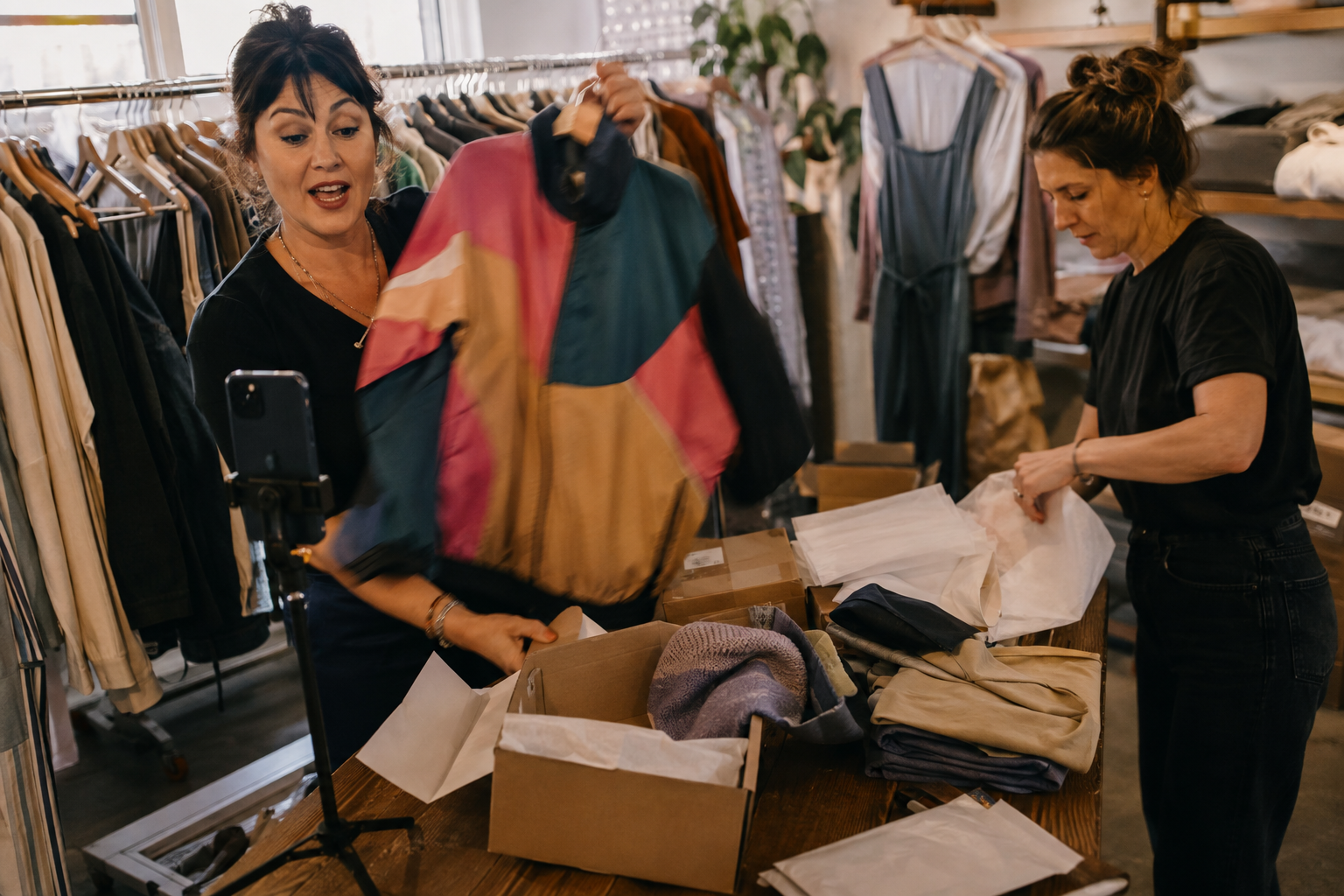
Live commerce blends live video streaming with instant checkout, turning entertainment into immediate revenue. TikTok Shop's expansion across Saudi Arabia, the UAE and Egypt over 2024–2026 has turned live-streamed selling from a China-only phenomenon into a mainstream MENA channel, with both BigCommerce and Forbes flagging social and live commerce as defining 2026 trends.
TikTok Shop Growth in Egypt and the Gulf
A typical live-commerce session in MENA follows a recognisable structure: a creator with an engaged local audience hosts a 30–90 minute stream featuring 5–15 SKUs, anchored by limited-time discounts and live Q&A. Conversion rates during live sessions are generally significantly higher than on static product pages because viewers are pre-qualified (they showed up for that creator and that category) and the scarcity mechanic is real-time. The trade-off: revenue is concentrated in the session window, so forecasting and inventory planning become harder.
Interactive Streaming Tools
Beyond TikTok, brands use Bambuser, CommentSold, and Instagram Live Shopping. The winning formula practitioners converge on: 30–60 minute sessions, scarcity-driven offers ("only 50 left"), and a host who genuinely uses the product. Replay value matters — successful sessions get re-uploaded as Reels and Shorts for weeks of compounding reach.
Execution Card
- Tools: TikTok Shop, Bambuser, Instagram Live, YouTube Shopping
- Budget: $500–$3,000 per session (host fee, production, ads)
- KPI: GMV per minute, average viewer watch time, conversion rate
- First step: Run a pilot with one product line and an in-house team member before hiring external talent
Trend 3: Augmented Reality (AR) for Products
AR product experiences let shoppers visualize items — furniture, glasses, makeup, sneakers — in their real environment before buying. BigCommerce lists AR shopping among the headline 2026 trends to watch (BigCommerce), and Forbes highlights blended online/offline experiences — which AR enables — as one of the seven trends set to transform shopping in 2026 (Forbes, 2025).
Virtual Try-On Applications
Virtual try-on is most impactful in categories where size, fit or visual context drive returns: eyewear, cosmetics, furniture, footwear and apparel. A practical sequencing pattern is to start with the 10 SKUs that generate the highest absolute return volume, build 3D assets for those first, and only expand once the return-rate delta is measured against a control group.
Costs and Tools
The cost of producing a usable 3D model has fallen sharply as AI-assisted 3D generation has matured. Tools like Vntana, CGTrader, and Apple's RealityKit, combined with Shopify's built-in AR viewer (which only requires a GLB file), have removed most of the custom-development burden that made AR uneconomical for SMBs three years ago.
Execution Card
- Tools: Shopify AR, Vntana, 8thWall, Snapchat AR Lens Studio
- Budget: $50–$200 per SKU for 3D modeling
- KPI: AR engagement rate, return rate reduction, conversion uplift
- First step: Identify your 10 highest-return SKUs and pilot AR on those
Trend 4: Flexible Payment — BNPL and Local Wallets
Buy Now, Pay Later (BNPL) and local digital wallets are now a baseline checkout requirement in MENA rather than a premium add-on. Offering at least one BNPL option is consistently associated with higher average order value and reduced checkout abandonment in practitioner reports, although exact uplift varies by category and price point.
Tabby and Tamara in the Gulf
Tabby and Tamara are the dominant BNPL providers across the GCC, integrated into most major retailers including Noon, IKEA, SHEIN and H&M. For a Gulf-focused store, adding both is usually preferable to choosing one, because shopper preference splits roughly evenly and the marginal integration cost is low.
valU and Souhoola in Egypt
Egypt's BNPL ecosystem matured rapidly between 2023 and 2026. valU (owned by EFG Hermes) and Souhoola are the most widely used local BNPL options, with plugin support for WooCommerce, Shopify and Magento. Pairing them with Fawry and Vodafone Cash covers the large majority of Egyptian online payment preferences, including the cash-on-delivery substitute payments still common outside Tier 1 cities.
Execution Card
- Tools: Tabby, Tamara, valU, Souhoola, Fawry, Paymob
- Budget: 2–4% transaction fee (varies by provider)
- KPI: Checkout completion rate, AOV by payment method
- First step: Audit checkout abandonment by payment step and add missing options
- Trade-off: BNPL fees compress margin; recoup through AOV lift and lower abandonment, not by passing the fee to the customer
Trend 5: Hyper-Personalization at Scale
Hyper-personalization uses AI and first-party data to tailor product recommendations, pricing, content, and timing for each individual shopper. Digital Commerce 360 explicitly identifies hyper-personalization as one of the defining 2026 themes alongside AI-driven decisioning (source). The mechanism is straightforward: clean first-party data (browsing, purchase, stated preference) feeds an ML model that ranks products, content blocks and offers per session.
AI Recommendation Engines
Klaviyo, Bloomreach, and Dynamic Yield lead the dedicated personalization stack in 2026. For smaller MENA merchants, Shopify's built-in recommendations combined with Klaviyo Email AI typically captures most of the value at a fraction of the cost of a full enterprise stack. The critical input is data hygiene: messy product taxonomies and duplicate customer profiles will sabotage even the best model.
One-to-One Experiences
A practical illustration: a food-delivery app that personalises its homepage based on time of day, past order history and weather can surface "your usual" with a single tap on a Friday evening — a small intervention that compounds into materially higher reorder rates over time. The same logic applies to fashion (re-surfacing abandoned sizes when restocked) and beauty (recommending refills before the average runout date).
Execution Card
- Tools: Klaviyo, Bloomreach, Dynamic Yield, Segment, Shopify Audiences
- Budget: $300–$2,500/month depending on scale
- KPI: Revenue per visitor, repeat purchase rate, click-through on recommendations
- First step: Consolidate customer data into a single CDP before adding tools
Trend 6: Sustainability as a Sales Advantage
Sustainability has moved from CSR talking point to purchase driver, particularly among younger MENA shoppers. The practical question for operators is no longer whether to invest in greener packaging and supply-chain transparency, but how to communicate those investments credibly without veering into greenwashing.
Green Packaging
Switching to recyclable or compostable mailers typically adds 8–12% to packaging cost. Brands that recoup this through a combination of marketing positioning, slightly higher prices on premium SKUs, and reduced "unboxing damage" returns tend to break even within a year. Those that simply absorb the cost without reflecting it in messaging see lower ROI.
Supply Chain Transparency
Tools like EON and TextileGenesis let fashion brands attach a digital passport to each product — origin, materials, certifications. QR-coded hangtags that link to a verifiable supply-chain page are increasingly common in regional cotton, leather and beauty categories. Transparency builds trust; trust converts.
Execution Card
- Tools: EON, TextileGenesis, EcoPack, Hero Packaging
- Budget: 5–12% packaging cost premium
- KPI: Repeat purchase rate, sustainability-driven conversions, brand sentiment
- First step: Switch one product line to sustainable packaging and A/B test messaging
Trend 7: Voice and Visual Search Optimization (and the AEO/GEO Shift)
One of the most underappreciated 2026 shifts is what Forbes calls AI "rewriting the rules of search" — answer engines and AI overviews intercepting queries that previously sent traffic to retailer sites (Forbes, Nov 2025). For MENA stores, this means traditional SEO must be supplemented with Answer Engine Optimization (AEO) and Generative Engine Optimization (GEO): structuring content so that AI assistants quote and recommend your store, not just rank it.
Optimizing Your Store for Voice
Voice queries are conversational and longer — "where can I buy a black leather jacket under 1500 EGP" instead of "black leather jacket." Structure your product schema and FAQ content to answer natural-language questions. Use FAQ schema markup, conversational H2 headings, and Q-and-A blocks that directly mirror how a shopper would phrase the request out loud in Arabic or English.
Visual Search
Google Lens and Pinterest Lens have made image-led discovery a mainstream behaviour. Optimize product images with descriptive alt text, structured data, and high-resolution files (minimum 1500px on the longest edge). Brands using visual AI search tools like Syte or ViSenze generally report meaningful gains in product-discovery sessions, particularly in fashion and home categories where shoppers struggle to describe what they want in words.
Execution Card
- Tools: Schema.org markup, Google Search Console, Syte, ViSenze
- Budget: $0–$500/month (largely a content and SEO effort)
- KPI: Impressions on long-tail voice queries, image search traffic, citations in AI answer engines
- First step: Add FAQ schema to your top 20 product and category pages
Trend 8: Unified Omnichannel Commerce
Omnichannel commerce means a customer can browse on Instagram, add to cart on your app, and pick up in store — without losing their cart or loyalty points. Forbes' 2026 trend list explicitly highlights "blending online and offline retail into an experience that's both seamless and memorable" as a defining theme (Forbes).
Store and App Integration
Large regional retailers that invested early in unifying physical-store inventory, mobile apps and websites consistently report higher customer lifetime value among omnichannel users than among single-channel users. The hard part is rarely the front-end; it is reconciling inventory, pricing and loyalty data across legacy systems.
Seamless Experience
Build around three pillars: unified customer profile (CDP), unified inventory (real-time stock visibility), and unified payments (one wallet across channels). Shopify POS, Lightspeed, and Odoo offer integrated solutions for SMBs. Enterprise brands typically use Salesforce Commerce Cloud or commercetools.
Execution Card
- Tools: Shopify POS, Lightspeed, Salesforce Commerce Cloud, Klaviyo CDP
- Budget: $1,000–$10,000/month depending on stack
- KPI: CLV by channel, cross-channel conversion rate
- First step: Map every current customer touchpoint and identify data gaps
Trend 9: Nano-Influencer Marketing
Nano-influencers — creators with roughly 1,000 to 10,000 followers — consistently deliver materially higher engagement rates than macro-influencers in MENA. They're cheaper, perceived as more authentic, and easier to scale into a portfolio of 20–50 creator partnerships rather than one big-budget post.
Why Nanos Outperform Macros
A nano-influencer in Mansoura or Jeddah has a genuine community — followers know them personally or trust them as a local voice. Macro-influencer engagement rates typically sit around 1–2%; nano engagement is often 5–9% in MENA categories. For a fixed budget, brands can run dozens of nano partnerships in place of a single macro post, which also produces more measurement data points and lower campaign-level variance.
Networking Platforms
Use platforms like Lyxel&Flamingo, ArabyAds, or Ainfluencer to find vetted nano-influencers. For Egypt specifically, Insighters and The Influencer Agency offer curated rosters. Track results with UTM codes, unique discount codes per creator, and Shopify Collabs.
Execution Card
- Tools: Ainfluencer, ArabyAds, Shopify Collabs, Insighters
- Budget: $50–$300 per nano-influencer post
- KPI: Code redemptions, attributed revenue, engagement rate
- First step: Identify 20 nano-creators already using your product and reach out
Trend 10: Subscription Commerce
Subscription commerce — recurring deliveries of products consumers regularly need — has become one of the most reliable retention mechanics in MENA, particularly for coffee, beauty, supplements, and pet categories. The model converts a one-off transactional relationship into a forecastable revenue stream, which in turn changes how merchants can plan inventory and marketing spend.
Subscription Box Models
Three models dominate: replenishment (coffee, vitamins, household consumables), curation (beauty boxes, snack boxes) and access (Amazon Prime-style memberships). Replenishment models tend to have the longest customer lifespans but require disciplined inventory; curation models drive higher engagement but face higher month-to-month churn unless the curation quality stays high.
Calculating Customer Lifetime Value (CLV)
The formula: CLV = Average Order Value × Purchase Frequency × Customer Lifespan. A subscriber paying $20/month for 14 months has a CLV of $280. Compared to one-off purchases averaging $35, subscriptions can deliver several times the value per acquired customer. Use tools like Recharge, Bold Subscriptions, or Stripe Billing to operate the recurring billing without rebuilding checkout.
Execution Card
- Tools: Recharge, Bold Subscriptions, Stripe Billing, Shopify Subscriptions
- Budget: $50–$500/month plus payment processing
- KPI: Churn rate, CLV, MRR (Monthly Recurring Revenue)
- First step: Identify one repeat-purchase product and offer 10% off for subscribing
Comparing the 10 E-commerce Trends 2026
| Trend | Difficulty | Budget (Monthly) | Expected ROI Timeline | Best for |
|---|---|---|---|---|
| Generative AI Commerce | Medium | $200–$800 | 1–3 months | All retailers |
| Live Commerce | Medium | $500–$3,000 | 1–2 months | Fashion, beauty, gadgets |
| AR Try-On | High | $500–$3,000 | 3–6 months | Furniture, fashion, beauty |
| BNPL Wallets | Low | 2–4% per txn | Immediate | All retailers |
| Hyper-Personalization | High | $300–$2,500 | 2–4 months | Mid-large retailers |
| Sustainability | Medium | +8–12% packaging | 6–12 months | Premium brands |
| Voice/Visual Search & AEO | Low | $0–$500 | 3–6 months | All retailers |
| Omnichannel | High | $1,000–$10,000 | 6–12 months | Multi-store brands |
| Nano-Influencers | Low | $50–$300/post | 1–2 months | D2C brands |
| Subscription Commerce | Medium | $50–$500 | 3–6 months | Consumables, beauty |
A Balanced View: What These Trends Won't Fix
An honest assessment of اتجاهات التجارة الإلكترونية 2026 requires naming the limits. None of the ten trends above will rescue a store with unclear positioning, weak product–market fit, or broken unit economics. AI will not invent demand that does not exist; BNPL will not save a category where customers do not actually want the product; live commerce will not work without a credible host. Practitioners on industry forums repeatedly emphasise that fraud, chargebacks and AI-enabled attacks remain serious operational risks (r/b2bmarketing, 2026), and that investment in detection and dispute workflows should scale in lockstep with revenue growth.
How to Build Your 2026 Implementation Roadmap
A practical roadmap for adopting e-commerce trends 2026 starts with one principle: don't chase all ten. Pick two or three trends aligned with your category, audience, and resources. Sequence them over 12 months.
How to Choose the Right Trend
Match the trend to your bottleneck. Low conversion? Start with hyper-personalization and BNPL. Low traffic? Live commerce, nano-influencers and AEO. High returns? AR try-on. Use the table above to filter by budget and difficulty.
Starter Budget Allocation
- Quick wins (Month 1–2): BNPL integration, voice/visual SEO, nano-influencer pilot — total $800–$2,000.
- Mid-term plays (Month 3–6): AI commerce tools, live commerce sessions, subscription pilot — total $3,000–$8,000.
- Long-term bets (Month 6–12): AR rollout, omnichannel integration, full personalization stack — total $15,000+.
Performance Indicators That Matter
Track these five KPIs monthly: conversion rate, average order value, customer acquisition cost, customer lifetime value, and repeat purchase rate. Anything else is vanity. Set baselines before launching each trend so you can measure incremental impact. For deeper guidance, see our complete MENA e-commerce strategy guide.
The Bottom Line on E-commerce Trends 2026
The MENA e-commerce market in 2026 rewards merchants who treat AI, payments and content as a unified system — not as separate projects. The brands gaining share share one habit: they ship small experiments weekly, measure ruthlessly, and double down on what works. The trends in this guide are not predictions; they are already in motion, documented across Forbes, BigCommerce, Bitkom and Digital Commerce 360. The only real question is which two or three you commit to before Q4 2026 closes. Start with the BNPL integration this week, run a nano-influencer pilot next month, and let the data tell you where to invest next. Merchants who treat 2026 as a year of disciplined execution — not feature collecting — will own the next decade of MENA digital retail.
Frequently Asked Questions
What are the most important e-commerce trends 2026 for MENA merchants?
The most impactful e-commerce trends 2026 for MENA merchants are generative AI commerce, BNPL payment integration (Tabby, Tamara, valU), live commerce on TikTok Shop, and hyper-personalization. These four are repeatedly highlighted across Forbes, BigCommerce and Digital Commerce 360's 2026 trends roundup, and they tend to deliver the fastest ROI for retailers of nearly every size.
How much should a small business budget for 2026 e-commerce upgrades?
A small MENA merchant should budget $800–$2,000 monthly for quick-win upgrades like BNPL, voice search optimization, and nano-influencer marketing. Mid-tier investments in AI tools and live commerce add $3,000–$8,000 monthly. Enterprise-grade omnichannel and AR projects can exceed $15,000 monthly but typically pay back within 6–12 months.
Is live commerce profitable in Egypt and Saudi Arabia?
Live commerce on TikTok Shop and Instagram Live continues to scale rapidly across Egypt and the GCC, with conversion rates during live sessions generally several times higher than on static product pages. Saudi and Emirati audiences are particularly responsive to beauty, fashion and electronics categories. Profitability depends on host fees, production cost and how well replays are recycled into short-form content.
Which BNPL provider is best for an Egyptian online store?
For Egyptian online stores, valU and Souhoola are the leading BNPL options. Pair them with Fawry for cash-based customers and Paymob for card processing. Together these cover the large majority of Egyptian online payment preferences and integrate with Shopify, WooCommerce and Magento.
How do nano-influencers compare to macro-influencers in MENA?
Nano-influencers (1K–10K followers) in MENA generally deliver several times higher engagement rates than macro-influencers — typically 5–9% versus 1–2%. They also cost $50–$300 per post compared to thousands of dollars for macros, making them significantly more cost-efficient for D2C brands testing new products or markets.
How is AI changing SEO for e-commerce in 2026?
AI answer engines are intercepting queries that previously sent traffic to retailer sites, a shift Forbes describes as AI "rewriting the rules of search" (Forbes, Nov 2025). The practical response is to invest in Answer Engine Optimization (AEO) and Generative Engine Optimization (GEO): structured data, FAQ schema, clear entity definitions and content written to be quotable by AI assistants, in addition to traditional SEO.
Get in touch with the Aghrba team today.
Sources & References
- Bernard Marr, "7 E-Commerce Trends That Will Transform Shopping In 2026", Forbes, 7 November 2025.
- BigCommerce, "Top Ecommerce Trends to Watch in 2026", 2026.
- Bitkom e. V., "AI-Trends in E-Commerce — Publication 2026".
- Digital Commerce 360 / Gregor Murray, "Top 15 Ecommerce Trends to Watch in 2026", 8 January 2026.
- r/b2bmarketing community discussion, "6 eCommerce Trends in 2026 That Are Reshaping Online Store Performance", Reddit, 2026.