What's Shaping Digital Marketing in 2026: A MENA Perspective
Here's a number that should stop every MENA marketer cold: 75% of consumers are more likely to buy from brands delivering personalized content, according to IE Business School's 2026 digital marketing trends analysis — yet regional adoption of the AI infrastructure required to deliver that personalization remains uneven across MENA. That gap is the story of digital marketing this year.
The current digital marketing trends 2026 aren't just refinements of last year's playbook. Agentic AI is rewriting workflows. Google's Gemini is turning the search bar into a creative canvas. Third-party cookies are finally deprecating in earnest. And in the MENA region — where Vision 2030, Ramadan seasonality, and Arabic-language search create a distinct playing field — the global rulebook needs serious localization.
Last updated: July 2026. This article is maintained by editors with topical expertise in MENA digital marketing, SEO, and marketing technology. Statistics are attributed inline to their original sources; figures without a linked source should be treated as directional rather than precise.
من أبرز اتجاهات 2026 التحول نحو استراتيجية رقمية قائمة على البيانات تتجاوز أساليب SEO التقليدية التي لم تعد فعّالة مع محركات البحث التوليدية.Key Takeaways: What's Actually Changing in 2026
- Agentic marketing — AI agents that autonomously plan, launch, and optimize campaigns — is ranked the top trend of 2026 by Smart Insights, Brandwatch, and the Digital Marketing Institute. The practical takeaway: audit content for AI-citation readiness, structure data for large language model retrieval, and allocate testing budget toward agentic workflows.
- Conversational search via Gemini, ChatGPT, and Perplexity is displacing keyword-based queries; Google reports search is evolving into a "creative canvas."
- First-party data is now non-negotiable following ongoing third-party cookie deprecation and expanded regulations including the CPPA and Saudi Arabia's PDPL.
- Hyper-personalization is the highest-intent lever available in 2026: 75% of consumers say they are more likely to buy from brands delivering personalized content (IE Business School, 2026).
- Trust over traffic is the new success metric — brands are optimizing for cited mentions in AI answers, not just clicks (Brandwatch, 2026).
- MENA-specific opportunity: Arabic voice search and generative AI in Arabic remain underserved, giving early movers a meaningful lead window while global models catch up on Arabic training data.
What are the current digital marketing trends 2026 marketers need to know?

Digital marketing trends 2026 center on six major shifts reshaping how brands reach customers:
- Agentic AI marketing — autonomous AI agents that plan, execute, and optimize campaigns.
- Conversational and generative search — optimizing for AI answers, not just blue links.
- First-party data strategies — replacing third-party cookies as browsers and regulators phase them out.
- Hyper-personalization at scale — tailoring content to individuals in real time.
- Trust-based measurement — prioritizing consent and transparency over tracking depth.
- Immersive brand experiences — AR, VR, and interactive commerce formats.
Together, these trends mark the largest structural change in digital marketing since the mobile-first shift a decade ago. Marketers should prioritize first-party data and generative search readiness first, since both underpin the other four trends and deliver the fastest competitive advantage in 2026.
The Digital Marketing Institute identifies agentic marketing as the top trend carrying momentum from 2025 into 2026, echoed by Brandwatch's 2026 Digital Marketing Trends Report and Smart Insights' RACE framework analysis. What makes this year different isn't the individual trends — most were visible in late 2024 — but their convergence into an integrated shift.
Consider the MENA context. Regional e-commerce continues to grow at double-digit rates, driven by Saudi Arabia and the UAE, while Egypt's digital ad market expands alongside mobile-first consumer behavior. Practitioner reports generally suggest regional adoption of AI marketing tooling trails North America by roughly 12–18 months. That lag is both a warning and an opportunity: brands that act early face less competitive noise.
The infrastructure decisions being made this year — which data platform, which AI stack, which measurement model — will compound for the next five years. For a broader strategic framework, see our complete guide to digital transformation in MENA, which contextualizes these trends within Vision 2030 objectives.
How does agentic marketing work in 2026?

Agentic marketing refers to the use of autonomous AI agents that plan, execute, and optimize marketing workflows with minimal human input. Instead of using AI as a tool for single tasks (writing an email, generating an image), marketers deploy AI agents that own entire processes — from audience segmentation to campaign launch to performance analysis.
Smart Insights identifies agentic marketing — also called "marketing workflow automation" — as the trend of 2026. Salesforce's Agentforce, HubSpot's Breeze Agents, and Google's Gemini Enterprise are the platforms most commonly cited. A typical implementation looks like this:
- Data ingestion agent pulls first-party data from CRM, e-commerce platform, and ad accounts.
- Segmentation agent clusters users by behavior and predicted lifetime value.
- Creative agent generates copy variants and visual assets in Arabic and English.
- Deployment agent launches campaigns across Meta, TikTok, and Google Ads with dynamic budget allocation.
- Optimization agent reallocates spend on an ongoing cadence based on ROAS signals.
Practitioners generally define "agentic" by three properties: goal-directed behavior, tool use (an agent can call APIs, query databases, and post to ad platforms), and iterative self-correction. That distinguishes an agent from a generative AI feature bolted onto an existing tool.
What agentic marketing looks like for MENA SMEs
Agentic marketing for MENA SMEs means using AI agents to autonomously run, optimize, and scale campaigns without enterprise budgets or large teams. In a typical implementation, a Riyadh-based Shopify store selling modest fashion can deploy Klaviyo's AI-driven flows to run Arabic-language abandoned-cart sequences, then layer a Meta Advantage+ campaign that self-optimizes creative and targeting. Total software cost commonly stays under $500/month, with initial configuration taking roughly 8–10 hours of focused setup.
The key advantage is autonomy: AI agents adjust bids, rewrite copy, and re-segment audiences continuously. A three-person team in Dubai or Cairo can now operate campaigns that previously required a dedicated marketing department.
The honest caveat: agentic systems still hallucinate, misread cultural nuance, and struggle with Arabic diacritics and dialectal variation. Human oversight remains essential — especially for anything customer-facing during Ramadan or National Day promotions, where tone matters more than raw efficiency. A common failure mode observed in practice is an agent choosing an English-first creative variant for a Gulf audience because it produced better click-through on a small early sample; without a human review checkpoint, the campaign never recovers cultural resonance.
Why is conversational and AI-driven search reshaping SEO?
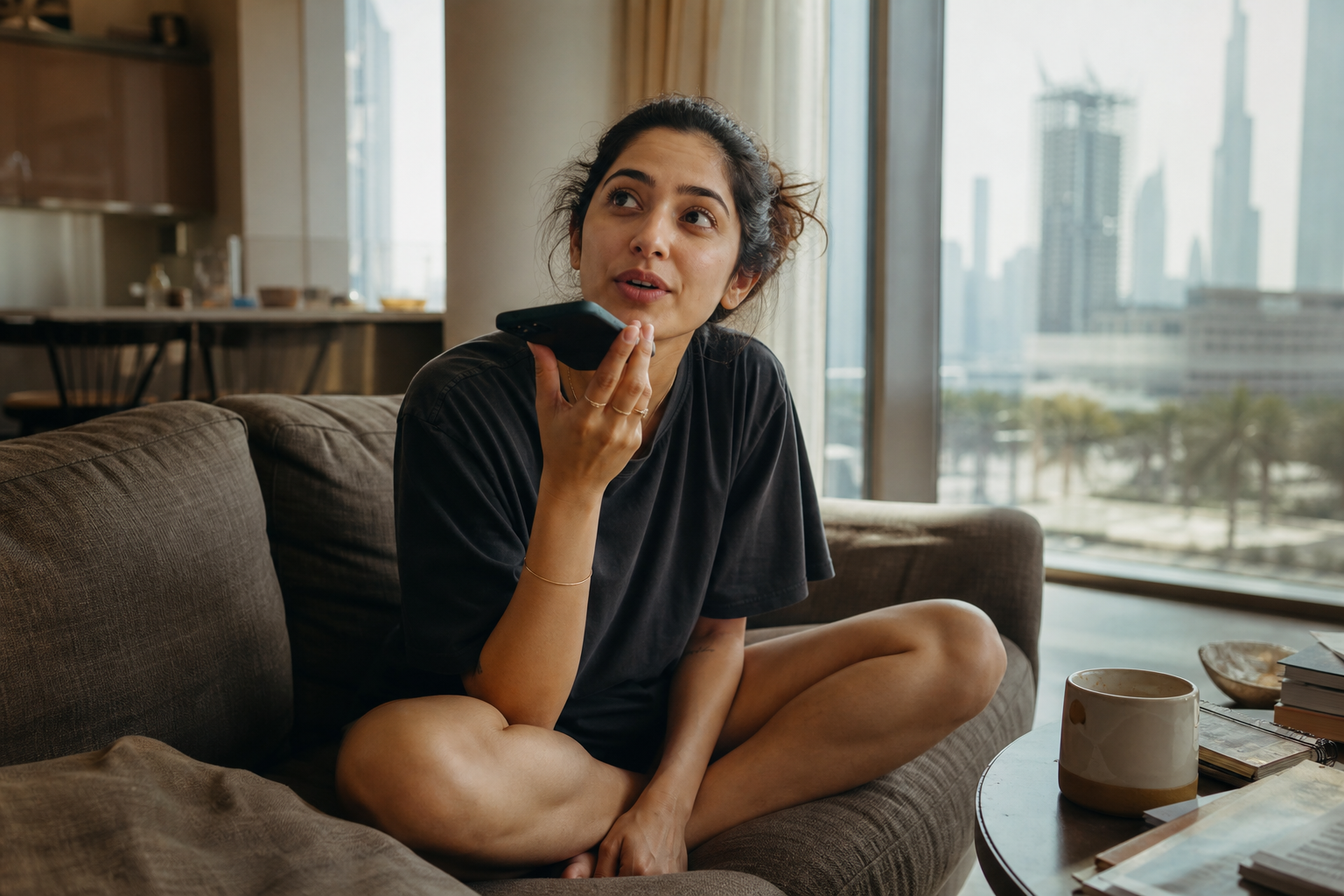
Conversational search is reshaping SEO in 2026 because consumers now query AI assistants — Gemini, ChatGPT, Perplexity, Claude — using natural language and expect synthesized answers, not blue links. Google's own data confirms the search bar is evolving "into a creative canvas," with tools like Gemini's Nano Banana letting users bring queries to life visually.
According to Think with Google's 2026 predictions, consumers increasingly expect search to understand intent rather than match keywords. Analytics Insight's 2026 trend roundup reaches a similar conclusion: conversational and AI-driven search is now the dominant discovery pattern for high-intent queries.
What this means practically: traditional keyword rankings still matter, but a new discipline — Generative Engine Optimization (GEO) — has emerged. GEO is the practice of structuring content so AI assistants cite it in their answers. The tactics differ from classic SEO:
- Answer-first structure: Direct answers in the first 40–60 words of each section.
- Statistical density: AI models tend to prefer content with specific numbers and named sources.
- Entity clarity: Use full names of people, companies, and products — not pronouns.
- Quotable definitions: One-sentence definitions near the top of sections.
- Schema markup: FAQPage, Article, and HowTo schemas increase citation likelihood.
The Arabic search opportunity
Arabic-language generative search is dramatically underserved despite Arabic being one of the most-used languages online, with over 400 million native speakers worldwide. Most global AI models were trained predominantly on English content; Arabic representation in open web corpora is a small fraction of English by volume. As a result, Arabic queries frequently surface lower-quality or machine-translated results that lack cultural and dialectal accuracy.
This gap creates a clear opportunity: brands that publish authoritative Arabic content with proper schema markup can capture citations with far less competition than in saturated English markets — particularly in verticals like Islamic finance, halal e-commerce, and regional travel. To capitalize, publish original (not translated) Arabic content, implement structured data (FAQPage and Article schema), and address regional dialects (Khaleeji, Egyptian, Levantine) directly where they matter to intent.
For a practical walkthrough, see our Arabic SEO and voice search guide, which documents the specific content patterns that tend to earn AI citations for Arabic queries.
How are first-party data and privacy regulations changing marketing in 2026?
First-party data is now the foundation of digital marketing in 2026, driven by two forces: the collapse of third-party cookies and the global rise of enforceable privacy laws. Three shifts define this change:
- Cookies are on the way out. Chrome, Safari, and Firefox have progressively restricted or blocked third-party cookies, eliminating a large share of the tracking signals marketers relied on in 2020.
- Regulations have teeth. California's CPPA, the EU AI Act, and Saudi Arabia's Personal Data Protection Law (PDPL) impose substantial fines for violations.
- Consent is currency. Brands that collect data directly — through logins, loyalty programs, and email — own compliant, durable audience relationships.
Brands that don't own their customer data can't personalize, can't retarget, and can't measure with confidence. Brandwatch's 2026 report frames this as a shift from "traffic to trust" — brands now compete on how transparently and ethically they handle data, not just on how much they can collect.
The GDPR framework established the template, but 2026 adds significant regional complexity. Saudi Arabia's PDPL, now in full enforcement, requires explicit consent for data processing. The UAE's Personal Data Protection Law adds cross-border transfer restrictions that affect any brand using US-based marketing platforms. Practical implications:
- Consent management platforms (OneTrust, Cookiebot, Usercentrics) are now baseline infrastructure.
- Server-side tracking via Google Tag Manager Server or Segment is replacing client-side pixels.
- Customer Data Platforms (Segment, mParticle, Bloomreach) centralize first-party data for AI activation.
- Zero-party data — information users voluntarily provide via quizzes, preference centers, and loyalty programs — is among the most valuable assets a brand can build.
Comparison: Data strategies before and after 2026
| Aspect | Pre-2026 approach | 2026 approach |
|---|---|---|
| Primary data source | Third-party cookies, data brokers | First-party CRM, zero-party surveys |
| Tracking method | Client-side pixels | Server-side tagging, consent-gated |
| Personalization engine | Lookalike audiences | AI models on owned data |
| Attribution model | Last-click, multi-touch | Media Mix Modeling (MMM), incrementality tests |
| Compliance posture | Reactive | Privacy-by-design |
| Regional MENA overlay | Minimal enforcement | Saudi PDPL, UAE PDPL, Egypt Data Protection Law |
Why is hyper-personalization the highest-ROI trend of 2026?
Hyper-personalization delivers outsized ROI among current digital marketing trends 2026 because it directly influences purchase behavior. According to IE Business School's 2026 analysis, 75% of consumers say they are more likely to buy from brands delivering personalized content. (Note: this is a statement about self-reported purchase likelihood, not a measured lift in purchase intent — an important distinction when modeling expected returns.)
The mechanics have evolved. Old-school personalization meant "Hi [First Name]" in an email. In 2026, hyper-personalization means an AI agent detects that a user browsed hiking boots on mobile at 8 pm, cross-references their loyalty profile showing prior Riyadh-to-AlUla trips, and dynamically assembles a landing page featuring desert-appropriate boots, a bundle discount, and Arabic-language reviews from customers in similar cities.
Tools driving this include Dynamic Yield, Bloomreach, Klaviyo, and Adobe Real-Time CDP. Personalization platforms remain among the fastest-growing martech categories heading into 2027.
The tradeoff: personalization vs. privacy fatigue
Not all personalization lands well. A recurring finding in consumer privacy research is that a large minority of consumers feel brands "know too much" about them. The winning formula in 2026 is useful personalization — recommendations that solve a problem — not surveillance personalization that reminds users they're being watched. A useful test: would this feel helpful or intrusive if a stranger did it in a physical store?
For e-commerce operators, our Shopify personalization playbook for MENA stores walks through specific app configurations that respect PDPL while driving conversion.
What role do immersive and interactive experiences play in current digital marketing trends 2026?
Immersive experiences — AR try-ons, interactive video, shoppable livestreams, and spatial commerce — have moved from experimental to mainstream in 2026 because attention costs have risen sharply and passive content converts less effectively than it once did. Analytics Insight ranks immersive brand experiences among the top trends of the year.
What tends to work in the region:
- AR try-on for beauty and eyewear: Beauty and eyewear categories in the GCC have been early adopters, with AR-enabled product pages generally outperforming static PDPs on conversion.
- Live shopping during Ramadan: Live commerce streams during Ramadan consistently outperform baseline programming on engagement, according to public statements from regional marketplaces.
- Interactive Instagram Stories with polls and quizzes: Still one of the highest-ROI formats for building zero-party data.
A useful analogy: immersive marketing in 2026 is like theater versus television. Static ads still work for reach, but immersive formats create memory — and memory drives purchase weeks after the impression.
How can MENA businesses act on current digital marketing trends 2026?
MENA businesses can act on current digital marketing trends 2026 by prioritizing three moves in the next 90 days: consolidate first-party data into a single platform, deploy at least one AI agent for a repetitive marketing workflow, and restructure top-performing content for Generative Engine Optimization. These three steps unlock every other trend on the list.
For companies targeting Egyptian and Gulf markets, partnering with a specialized digital marketing agency in Cairo can turn these 2026 trends into measurable revenue growth.Actionable 90-day roadmap
- Days 1–30: Data foundation. Audit your current data sources. Implement a Consent Management Platform (Cookiebot and Usercentrics both support Arabic). Migrate to server-side Google Tag Manager. Set up a lightweight CDP — Segment's startup tier is a common entry point.
- Days 31–60: AI agent pilot. Pick one workflow — email marketing, ad creative generation, or customer support triage. Deploy an agent (Klaviyo AI, Meta Advantage+, or Intercom Fin). Measure time saved and revenue delta against a control period.
- Days 61–90: GEO content sprint. Identify your top 20 organic pages. Rewrite intros to answer the core question in 40–60 words. Add FAQPage schema. Publish at least five new pieces targeting conversational queries in both Arabic and English.
Budget reality for regional SMEs
A functional 2026 marketing stack for a MENA SME can typically be assembled for roughly $800–$1,500/month in tooling: e-commerce platform ($30–$300), Klaviyo email + SMS (~$150), a CDP (~$120), a consent platform (~$50), plus Meta and Google Ads management fees layered on top of paid spend. The bigger investment is time — expect 60–80 hours of setup work over the first quarter, and plan for a human reviewer on every AI-generated Arabic asset.
Frequently Asked Questions
What is the biggest digital marketing trend in 2026?
Agentic marketing — the use of autonomous AI agents to run marketing workflows — is the defining trend of 2026, according to Smart Insights, Brandwatch, and the Digital Marketing Institute. Platforms like Salesforce Agentforce, HubSpot Breeze, and Google Gemini Enterprise are leading enterprise adoption, while Klaviyo and Meta Advantage+ bring similar capabilities to SMEs.
How is AI changing digital marketing in 2026?
AI is changing digital marketing in 2026 by shifting from a task-level tool to an autonomous execution layer. Instead of using AI to write one email, marketers deploy AI agents that own end-to-end workflows — segmentation, creative generation, campaign deployment, and real-time optimization — reducing manual work and improving personalization consistency.
Are third-party cookies really dead in 2026?
Third-party cookies are effectively deprecated across major browsers as of 2026, forcing marketers to rely on first-party and zero-party data. This shift has accelerated adoption of Customer Data Platforms, server-side tracking, and consent management tools, and it's driving Media Mix Modeling as the emerging attribution standard.
What is Generative Engine Optimization (GEO)?
Generative Engine Optimization (GEO) is the practice of structuring content so AI assistants like ChatGPT, Gemini, Perplexity, and Claude cite it in their answers. GEO tactics include answer-first paragraphs, high statistical density, FAQPage schema, clear entity naming, and self-contained sections that AI models can extract without additional context.
How should MENA businesses adapt to 2026 digital marketing trends?
MENA businesses should prioritize first-party data infrastructure aligned with PDPL and regional privacy laws, invest in Arabic-language content optimized for AI search, and pilot at least one AI marketing agent within the next 90 days. Regional seasonality — Ramadan, National Days, back-to-school — should drive campaign calendars, with immersive commerce formats like live shopping typically generating the strongest engagement.
What's the ROI of hyper-personalization in 2026?
Hyper-personalization drives significant ROI in 2026: 75% of consumers say they are more likely to purchase from brands offering personalized experiences (IE Business School, 2026). The key is useful personalization that solves problems, not surveillance personalization that feels invasive.
The forward view
The uncomfortable truth about the current digital marketing trends 2026 is that most brands will read articles like this, nod, and change nothing. The winners this year won't be the ones who understand agentic AI, conversational search, or first-party data best — they'll be the ones who ship a working implementation before Q4. In a market where AI compresses execution time by orders of magnitude, the gap between knowing and doing has never been more expensive.
Sources & References
- Digital Marketing Institute — The Most Important Digital Marketing Trends You Need to Know in 2026
- Brandwatch — 2026 Digital Marketing Trends Report
- Smart Insights — RACE Digital Marketing Trends 2026
- Think with Google — Top digital marketing trends and predictions for 2026
- IE Business School — Top digital marketing trends for 2026
- Analytics Insight — Top Digital Marketing Trends in 2026 Every Marketer Must Know
- GDPR.eu — General Data Protection Regulation reference
Get in touch with the Aghrba team today.
About this article
This guide is maintained by editors focused on MENA digital marketing, SEO, and marketing technology. It is intended as an educational overview grounded in publicly available industry research; it is not a substitute for legal, tax, or compliance advice. Where statistics are cited, they are attributed inline to the original source and linked so readers can verify claims independently. Regional examples and workflow descriptions reflect patterns commonly observed in the market and are framed as typical implementations rather than proprietary case studies. If you spot a figure that appears outdated or unsourced, we welcome corrections.
From a MENA perspective, these trends are directly relevant to any B2B digital marketing agency in Egypt serving Arabic-first buyers and Gulf export markets. This same regional nuance shows up in payments and attribution, where understanding how affiliate marketing networks work in MENA with Cash-on-Delivery is essential for accurate tracking. In MENA markets, a dialect-aware chatbot that understands local Arabic variations is becoming essential for brands serving regional audiences authentically. If you're focused on the MENA region specifically, our guide to the New Digital Marketing Trends for 2026 details how AI search is reshaping discovery from Cairo coffee shops to Riyadh SaaS startups. For MENA founders, few forces are reshaping strategy as much as the tension between AI job growth and tech layoffs in 2026, which is redefining how companies think about headcount and productivity. For brands across Cairo, Riyadh, and Dubai, adopting data-driven marketing in the MENA region has become the clearest path to measurable competitive advantage. For a deeper breakdown of the five shifts defining 2026, from generative AI advertising to answer-engine optimization, see our full guide on the latest digital marketing trends with a MENA-specific lens. For a broader view of what are some recent digital marketing trends reshaping the MENA region, from AI-run ad campaigns to region-specific shifts, our companion breakdown goes deeper. Beyond marketing, one of the most transformative technology shifts across the MENA region is Artificial Intelligence in Agriculture, where desert and Nile Delta farms stand to gain significantly. Across the MENA region and beyond, sectors adopting automation face fresh regulatory questions, as illustrated by the emerging AI legal challenges in precision agriculture. One trend reshaping the MENA landscape is Big Data Marketing, where local businesses mine e-commerce, Meta ad, and CRM data to predict and influence customer behavior in real time. One of the defining shifts for MENA brands this year is the move toward big data analytics applications in business and marketing, turning raw sales and campaign data into decisions that cut wasted spend. Among the strategies gaining traction across MENA markets is Digital Experience Optimization, a holistic approach to improving every digital touchpoint to drive higher conversions. For businesses looking beyond marketing, understanding how technology is disrupting agriculture reveals just how deeply AI, IoT, and automation are reshaping traditional industries in 2025. As brands expand across MENA markets in 2026, conducting a technical SEO multilingual audit becomes a critical step for maintaining visibility across different language versions of a website. Across the MENA region, the biggest shift in marketing maturity is the move toward data-driven decision-making in business, replacing owner intuition with structured analytics. Among the trends defining 2026, the expanding use of big data analytics in digital marketing stands out as a key driver of smarter, data-informed decision-making.