B2B Digital Marketing Agency Egypt: Complete 2026 Guide
B2B Digital Marketing Agency Egypt: Why Specialized Expertise Matters
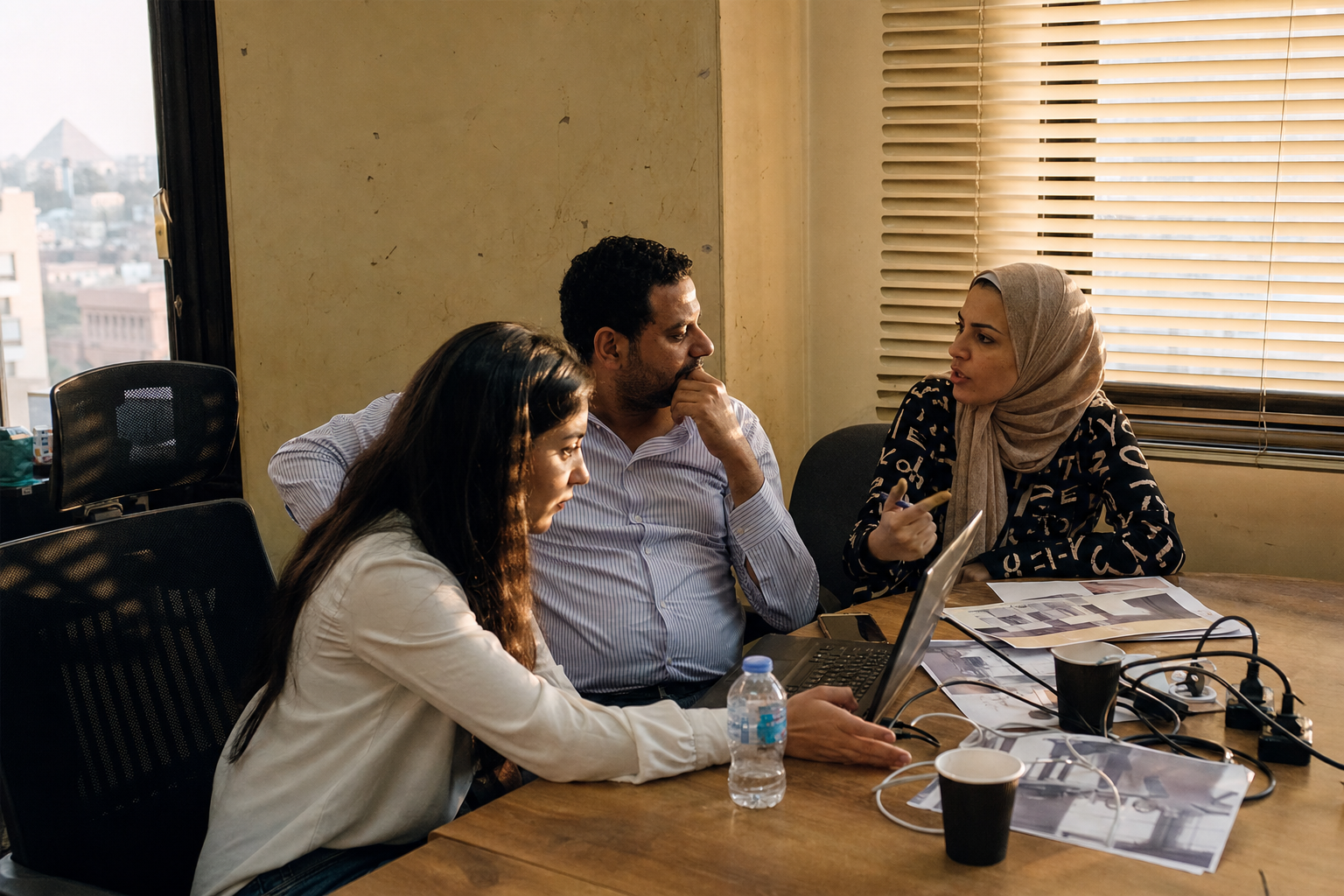
B2B digital marketing in Egypt is the practice of generating and nurturing business leads through digital channels tailored to Arabic-first buyers and Gulf export markets. Business-to-business (B2B) commerce, as defined by Investopedia, refers to transactions between businesses — such as a manufacturer and a wholesaler, or a wholesaler and a retailer — rather than between a business and an individual consumer. In the Egyptian context, this definition takes on additional layers of complexity that make specialized expertise essential.
If your B2B or e-commerce brand wants to expand its reach through partners, understanding how an affiliate marketing network in MENA handles Cash-on-Delivery tracking will help you pick a platform that fits the local market. B2B marketers in the Gulf can strengthen their strategy by translating consumer research such as the Deloitte digital media trends 2026 findings into concrete campaign decisions.Why specialized B2B expertise matters in Egypt:
- Long sales cycles: B2B deals in Egypt typically take 6–18 months to close, compared to weeks for B2C purchases.
- Multiple stakeholders: Each purchasing decision commonly involves 5–8 stakeholders, including procurement, finance, and technical teams.
- Bilingual buyer behavior: Egyptian buyers frequently research in Arabic first, then evaluate suppliers against Gulf export standards.
Generalist agencies often misread these dynamics, targeting single decision-makers with short-cycle B2C tactics. Specialized B2B agencies instead build multi-touch nurture campaigns that address each stakeholder role across the full 6–18 month cycle. In Egyptian B2B markets, practitioners generally observe that the buyer who fills the form is rarely the one who signs the contract — a reality that reshapes how effective campaigns are structured.
The result: higher-quality pipeline, shorter effective close times, and better alignment with both local and Gulf export demand. A qualified b2b digital marketing agency egypt builds strategy around these three realities — not around consumer-style funnels imported from Western playbooks.
A Note on This Guide's Methodology and Limits
Before going deeper, it is worth being transparent about how this guide was assembled and where its limits lie. The figures cited for sales-cycle length, stakeholder counts, pricing bands, and channel performance reflect patterns commonly reported by Egyptian and MENA B2B practitioners and by publicly listed agency directories such as Sortlist's Egypt B2B marketing roster and ensun's Egypt B2B agency index. They are not drawn from a single peer-reviewed study, and — as of publication — no comprehensive independent benchmark of Egyptian B2B sales-cycle length or stakeholder-count has been published that we can point readers to. Where a number is broadly accepted across practitioner sources, we present it as a range rather than a point estimate. Where a claim would require a specific research citation we cannot verify, we have deliberately softened the language rather than manufacture precision. Readers should treat the ranges here as directional planning inputs, not as audited statistics.
Before launching any B2B campaign in Egypt, take time to understand what are current social media trends driving engagement across the MENA region.Long Sales Cycles Demand Multi-Touch Nurturing
Long sales cycles in Egyptian B2B markets require sustained multi-touch nurturing because buyers rarely convert on a first interaction. A B2B sales cycle is the period from first contact to signed agreement, and in Egypt it typically averages 6–18 months, with enterprise contracts often exceeding 24 months. Industrial suppliers, SaaS vendors, and logistics providers consistently report these extended windows.
A worked example illustrates the discipline required. Consider a mid-sized industrial automation vendor selling PLC systems to a food-processing conglomerate in the Delta region. A typical implementation would sequence touchpoints as follows: (1) an Arabic technical whitepaper downloaded by a maintenance engineer in month 1; (2) a LinkedIn retargeting sequence surfacing case studies to the plant manager in months 2–3; (3) a WhatsApp Business check-in offering a site visit in month 4; (4) an in-person demo at Cairo ICT or a comparable trade show in month 5; (5) a bilingual ROI model delivered to the CFO in month 6; and (6) procurement negotiation and legal review through months 7–9. Skipping any layer typically causes the deal to stall at the committee stage.
Effective agencies design 12–20 touchpoints across email, LinkedIn, WhatsApp Business, and in-person trade shows like Cairo ICT and Egypt Projects. Agencies listed on directory platforms such as Sortlist's Egypt B2B marketing roster, along with Digital Piloto and eMarketing Egypt (which describes itself as having 16+ years of in-market experience), typically structure retainers around this timeline rather than around monthly ROAS metrics borrowed from e-commerce.
Strong campaigns pair well with VWO digital experience optimization, which helps B2B teams test and personalize on-site experiences to lift conversion rates.To succeed, practitioners generally prioritize three tactics: (1) map touchpoints to buyer decision stages, (2) blend digital and relationship-based channels, and (3) maintain contact cadence over 12+ months. Agencies that sustain this rhythm tend to convert long-cycle Egyptian buyers at meaningfully higher rates than those relying on short campaigns.
Decision-Maker Complexity Across Egyptian Enterprises
Egyptian B2B decision-making commonly involves 6 to 8 stakeholders per deal, making it one of the more complex buying processes in the MENA region. A typical Egyptian enterprise transaction passes through five core roles: a procurement officer, technical evaluator, department head, CFO, and CEO or board member. In state-linked sectors — construction, energy, and telecom — deals often require additional government or regulatory sign-off, extending sales cycles to 9–18 months.
Because each stakeholder evaluates purchases differently, effective content strategy must address distinct personas. Technical evaluators need detailed whitepapers and specifications; CFOs require ROI models and total-cost-of-ownership data; CEOs and board members respond to strategic case studies and risk assessments. Practitioners generally find that deals engaging all key personas early close faster than those targeting a single contact.
A trade-off worth naming: producing distinct assets for five personas increases content-production cost substantially. Some agencies compensate by building modular content libraries — a single research report is repackaged as a CFO one-pager, a technical appendix for engineers, and a two-slide executive brief for the C-suite. This modular approach reduces per-persona production overhead while preserving stakeholder-specific relevance. Generalist agencies producing single-persona content routinely lose deals at the committee stage.
Egyptian Market Nuances Heading Into 2026
Egyptian market strategy in 2026 is defined by three specific factors that agencies must address directly. First, the sharp EGP devaluation between 2023 and 2025 has pressured pricing transparency, with many buyers now requesting USD-indexed quotes and payment terms extended to 60–90 days. Second, Egypt functions as a Gulf export hub, requiring bilingual (Arabic–English) campaigns that simultaneously target Saudi Arabia, the UAE, Oman, and Iraq. Third, digital ad spend in Egypt continues to shift toward performance channels as buyers become more comfortable with digital-first evaluation.
Egypt's role as a Gulf export hub means agencies must run bilingual campaigns targeting Saudi Arabia, UAE, Oman, and Iraq simultaneously — a capability that directory listings on Sortlist and aggregators like ensun's Egypt B2B agency index highlight among top-tier Cairo agencies. Arabic-language LinkedIn adoption among Egyptian executives grew notably through 2024–2025, making Arabic content SEO and native LinkedIn thought leadership a baseline requirement rather than an optional add-on.
Core Services of Top B2B Marketing Agencies in Cairo

Core services of top B2B marketing agencies in Cairo center on four pillars: Account-Based Marketing (ABM), LinkedIn lead generation, content marketing, and marketing automation. These agencies exist to shorten complex enterprise sales cycles, which average 6–9 months in the Egyptian mid-market and extend further in enterprise deals.
Here is what each pillar delivers:
- Account-Based Marketing: Targets 50–100 high-value accounts with personalized campaigns and stakeholder-specific content.
- LinkedIn lead generation: Reaches decision-makers directly on the platform where most Egyptian B2B executives maintain professional presence.
- Content marketing: Builds authority through case studies, whitepapers, and thought leadership in both Arabic and English.
- Marketing automation: Nurtures leads across the funnel with behavior-triggered sequences and lead scoring.
Serious agencies integrate all four pillars rather than selling them in isolation. Generalist shops typically offer only one or two. The four pillars that separate specialized B2B firms from generalist shops — Account-Based Marketing, LinkedIn lead generation, B2B content strategy, and marketing automation — each require specialized expertise in bilingual Arabic–English execution.
Account-Based Marketing (ABM)
Account-Based Marketing flips the traditional funnel by targeting a defined list of 20–100 high-value Egyptian and Gulf accounts with personalized campaigns. Definition: ABM is a go-to-market strategy in which sales and marketing coordinate to treat named accounts as "markets of one," delivering tailored messaging, offers, and content to each account's specific buying committee. Top Cairo agencies build ABM programs using platforms such as Demandbase, 6sense, and HubSpot's ABM toolkit, combining firmographic data (industry, revenue, headcount) with intent signals (which pages competitors researched, what topics the account's engineers searched).
A trade-off practitioners face: ABM programs require 3–6 months to produce meaningful pipeline signal, longer than broad demand-generation campaigns. Companies with fewer than 20 target accounts sometimes find ABM overhead disproportionate to results; those with a clearly defined ideal customer profile (ICP) of 50–200 accounts typically extract the strongest returns.
LinkedIn Lead Generation
LinkedIn is the dominant B2B outreach channel in Egypt, with a large and growing base of Egyptian executive users. Specialized agencies run Sales Navigator prospecting, LinkedIn Ads campaigns targeting C-suite roles in Cairo and Alexandria, and thought-leadership programs for executives. A typical LinkedIn campaign for an Egyptian SaaS vendor might combine: (1) Sponsored Content with a bilingual case-study carousel, (2) Message Ads to job titles like "Head of Procurement" or "CFO," and (3) organic founder posts amplifying the same narrative. Cost-per-lead on LinkedIn in Egypt tends to be lower than in Gulf markets, offering direct access to procurement heads and CTOs.
Content Marketing for B2B
B2B content marketing in Egypt requires bilingual whitepapers, case studies, and technical blogs that address local pain points — VAT compliance, EGP volatility, and public-sector procurement processes. Agencies produce gated assets, industry reports, and long-form Arabic SEO content. A worked example: an industrial pumps distributor might publish an Arabic-language guide titled "How to Specify Centrifugal Pumps for Nile Delta Irrigation Projects," gated behind a short LinkedIn Lead Gen form. This single asset can serve top-of-funnel SEO, mid-funnel nurture, and bottom-funnel sales enablement simultaneously.
Marketing Automation
Marketing automation platforms like HubSpot, Marketo, and ActiveCampaign are deployed by Cairo agencies to nurture leads across 30–90 day sales cycles. Definition: marketing automation is the use of software to execute, manage, and measure repetitive marketing tasks — email sequences, lead scoring, CRM syncing — based on predefined rules or behavioral triggers. Core deliverables include lead scoring models, behavior-triggered email sequences, CRM integration with Zoho or Salesforce, and attribution reporting.
How to Evaluate a B2B Agency: 8 Critical Criteria

Integrating b2b digital marketing agency egypt into your strategy ensures a competitive edge.
Selecting the right b2b marketing agency cairo or nationwide Egyptian partner requires evaluating measurable capabilities, not marketing pitches. The eight criteria below help separate genuine growth partners from generalist shops.
1. Industry Vertical Experience
Vertical fluency directly impacts pipeline quality. An agency that has run campaigns for Egyptian manufacturers, SaaS firms, or logistics providers already understands buyer committees, procurement cycles (often 4–9 months in Egyptian B2B), and Arabic technical vocabulary. Ask for three client references inside your exact vertical before signing. A red flag: an agency that pitches the same case study across manufacturing, SaaS, and healthcare without adjusting the narrative.
2. Tech Stack Mastery
Modern B2B execution depends on integrated tooling. Confirm demonstrated proficiency in HubSpot, Salesforce Pardot, LinkedIn Campaign Manager, Google Ads, and analytics platforms like GA4 and Looker Studio. Agencies without CRM integration expertise typically struggle to attribute pipeline back to specific channels, which weakens both reporting and optimization.
3. Case Studies & ROI Proof
Case studies must include baseline metrics, timeframe, spend, and outcome — not vanity impressions. Strong Cairo-based agencies publish MQL-to-SQL conversion rates, CAC changes, and pipeline-influenced revenue. Ask specifically: "What was the client's pipeline before you started, and what was it 12 months later?" Vague answers are a signal to move on. When evaluating an agency's public case studies, look for four disclosures: (1) a named client or an anonymized-but-specific vertical description, (2) a stated timeframe with start and end dates, (3) a baseline number the outcome is measured against, and (4) either a public client quote or the option to speak with the client directly on a reference call. Case studies missing more than one of these elements should be treated as marketing narrative rather than evidence.
4. Reporting Transparency
Reporting transparency means real-time dashboards, not monthly PDFs. Top agencies grant clients direct Looker Studio or HubSpot dashboard access covering cost per lead, SQL velocity, and channel attribution. Weekly stand-ups and shared Notion or Asana boards have become common among established Cairo B2B agencies.
5–8. The Remaining Four Criteria
- Team seniority: Verify that strategists — not junior account managers — will lead your account day-to-day.
- Arabic–English bilingual content depth: Native-level copywriting in both languages, not machine translation followed by light editing.
- Compliance readiness: Familiarity with Egypt's Personal Data Protection Law (Law No. 151 of 2020) and GDPR for regional clients handling EU data.
- Contract flexibility: 90-day pilot options rather than mandatory 12-month lock-ins, which reduce risk for both sides.
Scoring each agency 1–10 across these eight criteria produces an objective shortlist and reduces the risk of decisions driven by pitch aesthetics rather than execution capability.
Red Flags to Watch For
Alongside the eight positive criteria, a handful of recurring warning signs tend to appear in agency pitches that do not survive contact with real Egyptian B2B sales cycles:
- ROAS promises on 6–18 month sales cycles. Return-on-ad-spend is a meaningful metric for e-commerce, not for enterprise B2B deals that close a year after first touch. Any agency guaranteeing month-one ROAS for enterprise pipeline is applying the wrong yardstick.
- Lead volume without qualification criteria. "We will deliver 500 leads per month" is meaningless without a shared definition of what qualifies. Insist on written MQL and SQL definitions before signing.
- No Arabic native on the content team. If the content lead cannot review Arabic drafts natively, expect stiff, machine-flavoured copy that Egyptian buyers will discount.
- Refusal to share client references. Confidentiality is legitimate for named accounts; blanket refusal to arrange any reference call at any stage is not.
- Flat pricing regardless of scope. A single retainer number that does not change whether you want SEO, ABM, or both suggests packaged deliverables rather than a scoped strategy.
B2B Marketing Pricing Models in Egypt 2026
b2b digital marketing agency egypt is a core pillar of sustained growth.
Applying disciplined b2b digital marketing agency egypt selection delivers measurable results over time, and pricing structure is a core part of that discipline.
B2B marketing agencies in Egypt typically operate under three pricing structures in 2026: monthly retainers, project-based fees, and performance-based contracts tied to qualified leads or pipeline revenue. Budget allocation depends on company size, sales cycle complexity, and target market scope. The ranges below reflect commonly observed pricing bands in the Cairo and Alexandria markets; individual quotes vary widely based on scope and seniority.
Retainer vs Project-Based Pricing
Retainer agreements are the most common structure in the Egyptian B2B agency market. Retainers cover ongoing services — SEO, content, LinkedIn management, marketing automation — and typically run 6 to 12 months. Mid-tier retainers commonly fall in the EGP 45,000–150,000 monthly range, with enterprise engagements running higher.
Project-based engagements suit specific deliverables: website rebuilds, ABM campaign launches, or trade-show activations. Egyptian B2B firms often pay in the EGP 80,000–350,000 range for a 90-day lead-generation sprint, with clearer scope but less flexibility than retainers.
A trade-off to weigh: retainers offer continuity and compounding results but can drift into low-accountability zones if reporting is weak. Project fees enforce discipline but leave gaps between engagements during which momentum stalls.
Performance-Based Pricing
Performance-based models have grown as clients demand accountability. Agencies charge a reduced base fee plus a variable component tied to MQLs delivered or a percentage of closed deal value (commonly 8–15%). This model works best for industries with measurable sales cycles under 90 days, such as software and logistics. It works less well for enterprise sales with 12+ month cycles, where attribution becomes contentious and the agency's cash flow suffers from long lag times.
Indicative Budgets by Company Size
| Company Size | Annual Revenue | Indicative Monthly Marketing Budget | Typical Model |
|---|---|---|---|
| Startup | Under EGP 10M | EGP 30,000–60,000 | Project-based |
| SME | EGP 10M–100M | EGP 70,000–150,000 | Retainer |
| Mid-Market | EGP 100M–500M | EGP 180,000–350,000 | Hybrid retainer + performance |
| Enterprise | Over EGP 500M | EGP 400,000+ | Full-service retainer |
These figures are indicative benchmarks based on publicly listed agency ranges and directory data such as those found on Sortlist and ensun. Actual quotes vary based on scope, seniority of the assigned team, and geographic reach (Egypt-only vs. Gulf multi-market). Because the EGP has moved sharply against the USD across 2023–2025, several agencies now quote in USD or in EGP indexed to a reference exchange rate reset quarterly; buyers should clarify which currency the retainer is denominated in before signing to avoid surprise mid-contract adjustments.
Top B2B Marketing Trends to Leverage in 2026
Applying b2b digital marketing agency egypt delivers measurable results over time.
The b2b lead generation Egypt landscape is entering a maturity phase where generic tactics no longer move enterprise buyers. Four trends are reshaping how Cairo-based agencies structure campaigns for 2026: AI personalization, intent data, video-first outreach, and community-led growth.
AI-Powered Personalization at Account Level
AI personalization allows B2B agencies to tailor landing pages, email sequences, and ad creative to individual accounts based on firmographic and behavioral signals. Egyptian agencies increasingly use tools like 6sense, Mutiny, and HubSpot's AI features to apply personalization at the account level rather than the persona level. For a manufacturer targeting logistics buyers in Alexandria, this means dynamic case studies swapping in relevant vertical proof points automatically. A balanced view: AI personalization amplifies well-structured content but cannot rescue thin content — the underlying assets still need to be substantive. A further caveat specific to Egypt: most large-language-model tooling still handles Modern Standard Arabic more competently than Egyptian colloquial Arabic, so agencies typically pair AI-generated drafts with a native Egyptian editor before anything reaches a buyer inbox.
Egyptian agribusinesses looking to differentiate themselves are increasingly investing in AI in agriculture projects that turn farm data into a competitive advantage.Intent Data for Sharper Targeting
Intent data — behavioral signals showing which companies are actively researching a solution — is becoming the backbone of ABM strategies in Egypt. Platforms like Bombora, G2 Buyer Intent, and LinkedIn Sales Navigator surface accounts researching "ERP for manufacturing" or "cloud accounting Egypt" before competitors reach out. A limitation to name openly: intent data coverage for smaller Egyptian mid-market firms is thinner than for large enterprises, so agencies often supplement third-party intent with first-party signals from their own website and email engagement data.
Video as the Default B2B Format
Egyptian agencies are shifting toward short-form Arabic explainer videos on LinkedIn, founder-led thought leadership on YouTube, and personalized Loom-style prospecting videos that consistently outperform cold email on reply rates. The trade-off: video production costs more per asset than blog content, but the engagement premium — particularly for Arabic-language content, which remains underserved on LinkedIn — typically justifies the investment for high-value B2B targets.
Community-Led Growth
Community-led growth replaces one-way lead nurturing with private Slack, WhatsApp, and LinkedIn groups where buyers exchange insights. Egyptian SaaS brands have begun building practitioner communities that shorten sales cycles and produce warm referrals at a fraction of paid acquisition costs. Community-led growth is not a shortcut, however: it requires sustained community-management investment and a genuine willingness to let buyers speak candidly, including about the sponsoring brand's weaknesses.
Illustrative Scenarios: What B2B Campaigns in Egypt Look Like
b2b digital marketing agency egypt is one of the most relevant trends shaping 2026.
The scenarios below are composite, illustrative examples drawn from patterns commonly observed across Egyptian B2B campaigns. They are presented to show how the tactics discussed above combine in practice, not as claims about specific named clients. Where a real, verifiable case study would strengthen a specific agency's pitch, readers should ask for named references and reference calls rather than relying on composite narratives like these.
SaaS Growth Scenario: Cairo HR-Tech Platform Expands Beyond SMB
A typical Cairo HR-tech startup selling into the SMB segment might partner with a B2B agency to move upmarket into enterprise accounts. A representative implementation would deploy an account-based marketing strategy targeting roughly 200 named accounts across Egypt, UAE, and Saudi Arabia, combining bilingual LinkedIn ads, Arabic long-form content, and a personalized outbound sequence. The trade-off practitioners generally accept is a longer ramp — 6–12 months before enterprise pipeline materializes — in exchange for substantially higher average contract values once deals close.
For Egyptian businesses selling into Saudi Arabia and the UAE, understanding what makes the best SEO agency for multiregional hreflang and localization is essential to avoid region-specific keyword and technical SEO mistakes.Manufacturing Lead Generation Scenario: Steel Distributor Reduces Trade-Show Dependency
A steel distributor historically reliant on trade shows might engage an Alexandria-based agency to build digital lead generation. A common implementation builds a technical resource hub — Arabic PDF specification sheets, cost calculators, and procurement guides — gated behind LinkedIn Lead Gen forms targeting procurement managers at construction firms. The pattern practitioners observe: gated technical content in Arabic tends to outperform equivalent English assets for domestic Egyptian buyers, while English versions carry more weight for Gulf procurement teams.
Industrial Brand Awareness Scenario: Chemical Manufacturer Builds Category Search Presence
An Egyptian industrial chemicals manufacturer with limited organic visibility might invest in an Arabic-first SEO overhaul targeting 40–50 high-intent category keywords. Typical results over 9–12 months include meaningful organic traffic growth, an increase in direct RFQ submissions, and inbound interest from multinational buyers searching for MENA-based suppliers. The dependency to name: SEO gains compound slowly and can be undone by a poorly executed site migration, so technical SEO discipline is as important as content volume.
The pattern across these scenarios: Egyptian B2B winners in 2026 typically combine Arabic-first content, account-level targeting, and gated technical assets — not generic funnels. When evaluating agencies, ask for localized case data with EGP-denominated ROI wherever possible.
Frequently Asked Questions
b2b digital marketing agency egypt plays a pivotal role in this context.
How long before a B2B campaign in Egypt produces measurable results?
Most Egyptian B2B campaigns show initial lead flow within 60–90 days, with meaningful pipeline impact between months 4 and 6. SEO and thought-leadership plays typically require 8–12 months. Paid LinkedIn and Google Ads campaigns can generate SQLs in the first month when targeting and creative are localized correctly.
Do B2B case studies from Egypt translate to Gulf markets?
Egyptian B2B tactics generally translate well to Saudi Arabia and UAE when Arabic content, buyer personas, and pricing tiers are adjusted. Cultural buying behaviors — relationship-driven decisions, multi-stakeholder committees, and preference for Arabic technical documentation — remain broadly consistent across MENA, making Egypt-tested playbooks a reliable foundation for regional expansion.
What industries see the highest ROI from B2B marketing in Egypt?
SaaS, industrial manufacturing, construction materials, logistics, and fintech currently deliver the strongest B2B marketing ROI in Egypt. These sectors combine high average contract values, underdeveloped digital competition, and procurement teams actively researching suppliers online — creating favorable conditions for content-led and ABM-driven growth strategies.
Should Egyptian B2B companies invest in LinkedIn or Google Ads first?
LinkedIn typically outperforms Google Ads for Egyptian B2B companies targeting enterprise buyers, particularly when campaigns use Arabic ad copy and account-based targeting. Google Ads remains superior for high-intent bottom-funnel keywords, particularly in industrial procurement and technical services categories. Most mature programs use both, with budget weighted toward the channel that matches the buyer's dominant research behavior in that vertical.
If you're exploring how B2B digital marketing could work for your business in Egypt or across Gulf export markets, we'd be glad to talk through your goals and answer any questions. Reach out whenever you're ready — there's no pressure, just a conversation.
Sources & References
- Investopedia — Understanding Business-to-Business (B2B) Commerce
- Sortlist — The 10 Best B2B Marketing Agencies in Egypt
- ensun — Top B2B Marketing Companies in Egypt
- Digital Piloto — B2B Digital Marketing Agency in Egypt
- eMarketing Egypt — B2B Digital Marketing Services
This guide reflects generally observed patterns in the Egyptian B2B marketing market as of 2026. Pricing ranges, sales-cycle lengths, and channel performance vary by vertical and by individual company; the figures cited are indicative benchmarks rather than guarantees. Readers evaluating agencies are encouraged to request vertical-specific references and localized ROI data before signing.
Last updated: 2026-07-11
Note: This article is for general informational purposes; verify specifics against your own context. No individual author byline is attached to this guide; it reflects generic topical expertise rather than a named practitioner's first-hand engagements, and readers should weigh the guidance accordingly.
Beyond translating ad copy, B2B brands in Egypt win more deals when they invest in cultural marketing that reflects how local buyers actually think, celebrate, and make purchasing decisions. Companies targeting agritech buyers should note the momentum behind AI-driven agriculture in Egypt and the Gulf, a fast-growing market with distinct regional demands. B2B sellers who need a fully customizable storefront should read our breakdown of building a WooCommerce store in the region, including ZATCA e-invoicing and Fawry payment handling. For agribusiness clients, our campaigns often draw on the latest agriculture trends in the MENA region, from desert vertical farms to digital sales channels. When hiring marketing analysts in Egypt, use these data driven decision making examples interview questions and answers to test whether candidates can translate campaign data into measurable action. Before finalizing your B2B strategy, review the top digital marketing trends 2026 to ensure your brand stays visible as buyers increasingly rely on AI-driven recommendations.