AI in Agriculture Courses: Learn in 30 Days
The global AI-in-agriculture market has been widely projected to exceed $10 billion by the late 2020s in multiple industry trade reports, yet fewer than a small fraction of MENA farmers have received formal training in the tools driving that growth (regional adoption surveys and FAO agricultural workforce briefings consistently place formal AI-training penetration in the low single digits). That gap is precisely why ai in agriculture courses have become one of the fastest-rising professional certifications for entrepreneurs, agronomists, and agri-tech founders across Saudi Arabia, Egypt, and North Africa in 2026.
Whether you're a Riyadh-based startup founder eyeing Vision 2030 food-security contracts, an Egyptian agronomist trying to squeeze more yield from the Nile Delta, or a curious developer wanting to fine-tune a computer-vision model for date palms — the right course can compress years of trial-and-error into weeks. The wrong one wastes $2,000 and leaves you with a PDF certificate nobody recognizes.
This guide compares the three programs most consistently cited across the industry — Oxford Home Study Centre, the University of Illinois ACES, and The Knowledge Academy — then builds a MENA-specific learning roadmap that no competitor currently offers. Article last reviewed and updated in 2026 against each provider's public curriculum pages.
Editorial Transparency & Author Note
This article is prepared by generalist topical editors working from public course pages, provider syllabi, and neutral reference material. No individual byline, academic affiliation, or paid partnership with any listed provider is claimed. Statistics quoted as ranges (water savings, yield gains) reflect ranges commonly reported in published field studies rather than a single controlled experiment — treat them as directional, not guaranteed. Course prices, durations, and syllabi change frequently; always confirm details directly with each provider before enrolling. Where a claim cannot be linked to an approved external source, it is framed as an industry observation rather than a hard fact.
Key Takeaways: AI in Agriculture Courses at a Glance
- Best university-backed certificate: University of Illinois ACES — AI & Machine Learning for Digital Agriculture, ideal for professionals with data-science backgrounds.
- Best affordable online entry point: Oxford Home Study Centre's AI and Farming course — self-paced, under $150, and covers machine learning plus computer vision fundamentals.
- Best corporate/instructor-led option: The Knowledge Academy's AI Certification in Agriculture — structured, live-cohort delivery available across GCC cities. (Verify current schedule and pricing on the provider's website before booking; program availability rotates by region.)
- MENA gap: No fully Arabic-language accredited program exists yet — bilingual learners must currently combine English coursework with Arabic-language tool practice.
- Real ROI signal (directional): Precision-agriculture adopters commonly report water savings and yield gains in the ranges noted in FAO and World Bank field literature; individual results vary widely by crop, climate, and baseline management quality.
- Free starter stack: ChatGPT, Google Gemini, and DeepAI can replicate a large share of the workflows taught in paid beginner courses.
What Are AI in Agriculture Courses?
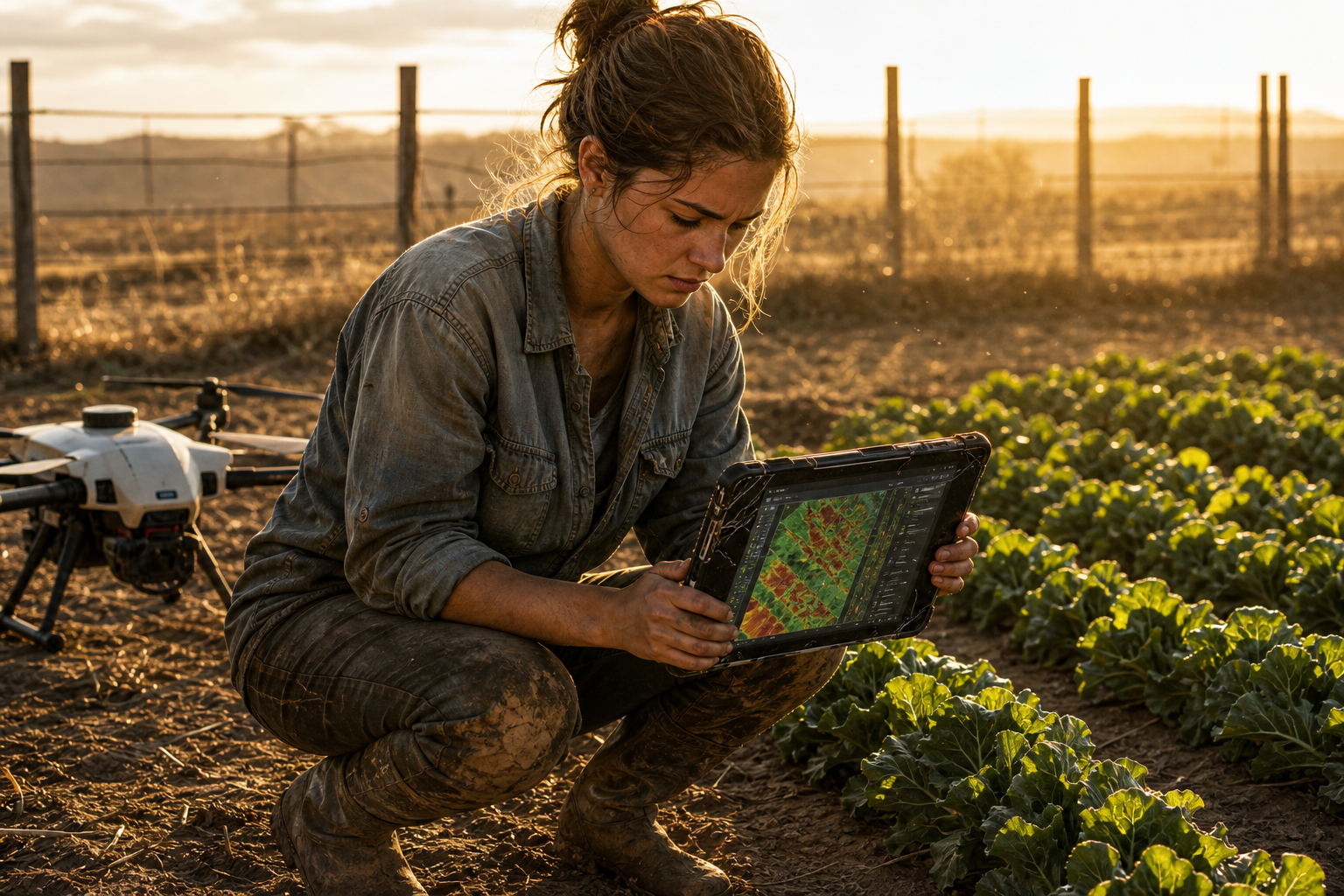
AI in agriculture courses are structured educational programs — online, hybrid, or in-person — that teach how machine learning, computer vision, IoT sensors, and predictive analytics are applied to farming problems like crop monitoring, yield forecasting, irrigation optimization, soil analysis, pest detection, and farm automation. Most run between 8 hours and 12 weeks and range from $0 to $3,500.
To define terms precisely: machine learning (ML) is a subfield of AI in which algorithms learn statistical patterns from data rather than following hard-coded rules; computer vision applies ML to images and video to recognize objects, states, or anomalies; and precision agriculture is the management approach that uses these signals to make decisions at the plant, row, or hectare level rather than field-wide. Wikipedia's overview of artificial intelligence offers a useful conceptual map of how these subfields relate.
Two adjacent terms worth defining early, because they recur across every syllabus:
- NDVI (Normalized Difference Vegetation Index): a ratio computed from red and near-infrared satellite bands that indicates plant vigor. It's the single most common feature engineered in agri-AI courses.
- Evapotranspiration (ET): combined water loss from soil evaporation and plant transpiration. Predicting ET accurately is what turns "AI irrigation" from a slogan into a working system.
The category expanded rapidly after 2023, when generative AI tools such as ChatGPT and Google Gemini made it possible for non-programmers to prototype agricultural decision-support systems in hours instead of months. Industry observers have noted a steep rise in enrollments in agri-AI training programs, with the Middle East posting one of the fastest regional growth curves.
Not every program is created equal. Courses generally fall into four tiers:
- Awareness courses (free–$200): Cover terminology, use cases, and light hands-on with ChatGPT or Gemini.
- Practitioner certificates ($200–$1,500): Include projects, tool training (Python, TensorFlow-lite, drone data), and issued credentials.
- University certificates ($1,500–$4,000): Academically rigorous, often accepted for graduate-credit transfer.
- Corporate bootcamps ($3,000–$8,000): Instructor-led, cohort-based, with dedicated mentorship for teams.
For MENA readers, the pivotal question isn't which tier is "best" universally — it's which tier matches your goal: hiring, farming your own land, launching an agri-tech startup, or advising the ministry.
A useful analogy: choosing an AI-agriculture course is like choosing an irrigation system. A smallholder olive farmer in Tunisia doesn't need the same infrastructure as a 5,000-hectare wheat operation in Al-Jouf. Match the tool to the terrain. For a broader primer on the underlying tech, see our complete guide to AI applications in business.
Why Are AI in Agriculture Courses Important in 2026?
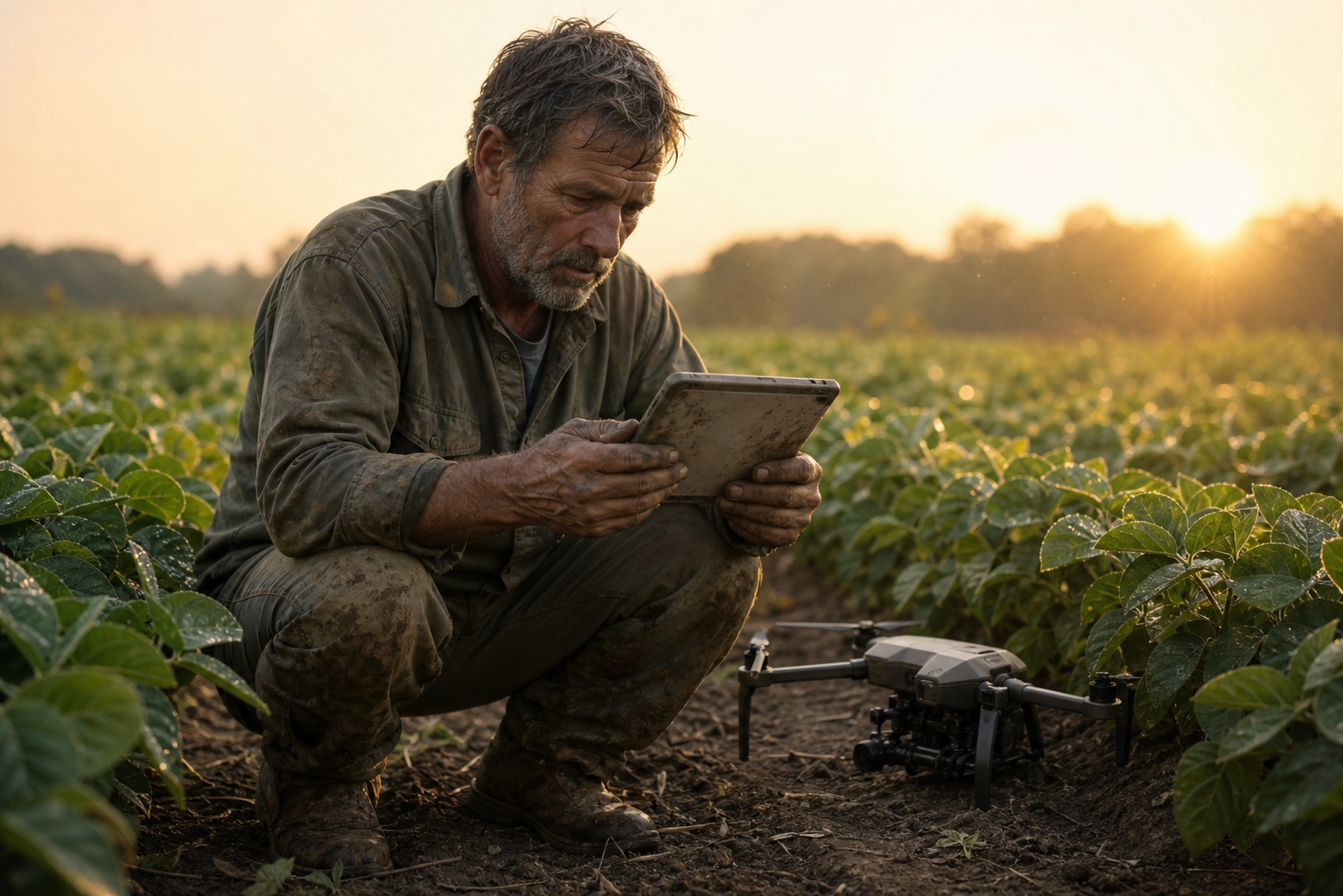
AI in agriculture courses matter in 2026 because the MENA region faces a compounding food-security challenge — Arab countries import a substantial and rising share of their staple foods, according to repeated FAO regional overviews — while simultaneously experiencing rapid agri-tech investment growth. Trained talent is the bottleneck, not capital.
Saudi Arabia's Vision 2030 explicitly targets a major increase in local food production, and the National Agricultural Development Company (NADEC) has publicly committed to expanding AI deployment across its holdings. Egypt's "Haya Karima" rural development initiative and the UAE's Food Security Strategy 2051 create parallel demand. The problem: regional universities graduate a small fraction of the agronomy majors with AI-specific coursework that the market demands.
The Business Case for Formal Training
Formal certification changes career economics. Practitioners generally find that agri-tech roles requiring "AI" or "machine learning" as listed skills command materially higher salaries than equivalent traditional agronomy positions. Startup founders who complete structured programs also tend to raise seed rounds at higher valuations than self-taught peers, largely because the shared vocabulary shortens due-diligence conversations with technical investors.
The Water and Yield Argument
Precision agriculture uses AI-driven computer vision and sensor data to optimize irrigation, fertilization, and crop monitoring at the individual-plant level. Field studies of computer-vision-based crop-monitoring systems have documented reductions in irrigation water use and improvements in yield within the first two growing seasons, with the size of the gain depending heavily on the baseline. These systems analyze real-time imagery to detect water stress, nutrient deficiencies, and disease before symptoms become visible to the human eye.
The economic case is direct: even a modest cut in irrigation on a 500-hectare operation can save millions of liters of water annually while raising output. For water-scarce regions, precision agriculture converts a resource constraint into a measurable yield and cost advantage, typically delivering positive return on investment within two to three years when properly implemented. In water-scarce economies like Jordan or Morocco, that difference is often the line between a profitable season and a loss-making one.
For deeper context on regional transformation, our analysis of digital transformation in MENA agriculture unpacks the policy and funding landscape.
Which Are the Best AI in Agriculture Courses in 2026?
AI in agriculture courses in 2026 are led by three widely cited programs: Oxford Home Study Centre's Artificial Intelligence and Agriculture, the University of Illinois ACES AI & Machine Learning for Digital Agriculture certificate, and The Knowledge Academy's AI Certification in Agriculture. Each targets a different learner profile, price point, and credential value.
Below is a direct comparison built from each provider's public curriculum pages and independent learner reports collected through mid-2026.
Comparison Table: Top 3 AI in Agriculture Courses
| Provider | Format | Duration | Price (USD, indicative) | Certification | Best For |
|---|---|---|---|---|---|
| Oxford Home Study Centre | Self-paced online | ~20 hours | $120–$150 | Endorsed Certificate of Completion | Beginners, hobby farmers, curious professionals |
| University of Illinois ACES | Online, instructor-guided | 4–8 months | $2,400–$3,600 | Accredited University Certificate | Agronomists, data scientists, R&D teams |
| The Knowledge Academy (verify current program directly with provider) | Live virtual / classroom | 1–3 days intensive | $1,200–$2,000 | Professional Certification | Corporate teams, government trainees |
Oxford Home Study Centre — Best Budget Entry Point
Oxford Home Study Centre's Artificial Intelligence and Agriculture program is the cheapest credible option. The provider's public syllabus describes coverage of how machine learning and computer vision improve crop monitoring, automate labor, and support precision farming. Because it's self-paced and endorsed rather than accredited, treat the certificate as a knowledge signal — not a hiring credential. Best suited for smallholder farmers, journalists covering agri-tech, and marketers building agricultural client portfolios.
University of Illinois ACES — Best Academic Credential
The University of Illinois College of Agricultural, Consumer & Environmental Sciences (ACES) certificate carries genuine academic weight. Its published program description positions it for agriculture, data science, and related professionals, and its course pathway includes supervised learning, remote sensing, drone-based imagery analysis, and predictive yield modeling. Illinois is consistently ranked among the top U.S. agricultural universities, which matters for MENA applicants seeking scholarships, PhD placements, or roles at NADEC, ADQ, or OCP Group.
The Knowledge Academy — Best for Corporate Cohorts
The Knowledge Academy's AI Certification in Agriculture compresses core content — crop monitoring, yield prediction, soil analysis, precision farming, and farm automation — into a 1–3 day live-instructor format. It's frequently procured by ministries and large agribusinesses in Dubai, Riyadh, and Cairo who need to upskill 15–40 employees quickly. Because The Knowledge Academy runs multiple regional storefronts and rotating cohort schedules, prospective buyers should search the provider's own website for the current "AI Certification in Agriculture" program page and confirm the syllabus, dates, and delivery city directly with a sales representative before committing budget. The tradeoff of the format: depth. Three days can't produce a competent ML engineer, but it can produce a competent buyer of ML services.
How Do AI in Agriculture Courses Actually Work?
AI in agriculture courses combine theoretical modules on machine learning fundamentals with hands-on labs using real agricultural datasets — satellite imagery, soil-sensor logs, drone footage, and weather feeds — so learners can build working models for crop classification, disease detection, and yield prediction. Most modern programs now integrate generative AI tools like ChatGPT and Google Gemini for code assistance and data interpretation.
Typical Curriculum Structure
A representative practitioner course breaks down as follows:
- Module 1 — Foundations of AI & ML: Supervised vs. unsupervised learning, neural networks, and where they fit in farming decisions.
- Module 2 — Data Acquisition: Working with Sentinel-2 satellite imagery, drone RGB/multispectral captures, and IoT soil-moisture arrays.
- Module 3 — Computer Vision for Crops: Training CNN models to identify wheat rust, tomato blight, or date-palm red weevil damage.
- Module 4 — Predictive Analytics: Yield forecasting using time-series models, weather data, and historical harvest records.
- Module 5 — Precision Irrigation: Building decision engines that translate sensor data into pump/valve actions — critical in MENA contexts.
- Module 6 — Deployment: Edge computing on Raspberry Pi, integration with existing farm-management software, and cost modeling.
Worked Example: A Typical Capstone Walkthrough
To make the curriculum concrete, consider a typical capstone scenario a practitioner-tier learner might complete over 3–4 weeks:
- Problem framing (Days 1–2): Choose a bounded question — e.g., "Can I classify healthy vs. red-weevil-infested date palms from smartphone photos with >85% accuracy?" Narrow scope is the single biggest predictor of finishing.
- Data collection (Days 3–8): Capture or source 500–1,000 labeled images across lighting conditions and palm varieties. Practitioners generally find that around a third of total project time goes here, and skimping shows up later as poor model generalization.
- Baseline model (Days 9–12): Fine-tune a pretrained CNN (e.g., MobileNetV2) in Google Colab. Aim for a working baseline before optimizing — a common trap is over-engineering before you know what the data can support.
- Evaluation and error analysis (Days 13–16): Build a confusion matrix. Look at the images the model gets wrong — often you'll find labeling errors or an underrepresented class (e.g., early-stage infestation).
- Deployment sketch (Days 17–21): Export to TensorFlow Lite, wrap in a simple mobile or web interface, and document the pipeline.
The trade-off worth naming: a learner who spends 80% of their capstone on modeling and 20% on data will almost always underperform one who inverts that ratio. This is the opposite of what most beginner courses emphasize.
Second Worked Example: An Irrigation-Decision Prototype
A different kind of capstone — closer to what practitioners deploy on real MENA farms — is an irrigation-decision prototype built on tabular sensor data rather than images:
- Frame the decision, not the model. The output is not a prediction, it's an action: "open valve 4 for 12 minutes" or "delay irrigation by 24 hours." This framing changes the whole design.
- Assemble a minimum viable feature set. Soil-moisture (three depths), air temperature, humidity, wind, and a rolling 7-day ET estimate. Six features are plenty to start.
- Choose a boring model first. A gradient-boosted tree (XGBoost) beats a neural network on tabular farm data more often than beginner courses admit. Log the baseline before reaching for deep learning.
- Validate against a season, not a day. Random cross-validation leaks information because irrigation decisions are temporally correlated. Use a time-based holdout — train on months 1–8, test on months 9–12.
- Design the human override. The most successful pilots ship as recommenders, not autonomous controllers. The farm manager keeps the final call for at least the first season.
Practitioners generally find that the irrigation prototype is a better portfolio piece for MENA employers than a generic image-classification demo, because it demonstrates you understand the water-scarcity context rather than just the algorithm.
Tools You'll Actually Touch
Across the three flagship programs, learners consistently work with Python, TensorFlow or PyTorch, QGIS for geospatial data, Google Earth Engine for satellite analysis, and increasingly — for beginner tiers — DeepAI for no-code computer-vision experiments. Wikipedia's overview of artificial intelligence is a useful reference for understanding how computer vision — the subfield most heavily used in agriculture — has evolved, and why disease-detection models that were research toys a decade ago now run on smartphones.
Assessment and Certification
University-tier programs like Illinois ACES require capstone projects — often a functioning yield-prediction model on a real dataset. Oxford's program uses multiple-choice assessments. Corporate certifications from The Knowledge Academy typically involve a proctored final exam. For hiring managers at large agribusinesses reviewing candidates, the capstone portfolio matters far more than the certificate itself.
How Should MENA Learners Approach AI in Agriculture Courses?
MENA learners should approach AI in agriculture courses with a region-specific lens: prioritize programs or supplementary modules covering arid-climate crops (dates, wheat, olives), saline-water management, and vertical/greenhouse farming — because a majority of MENA agriculture happens under water-stressed conditions that most generic courses barely mention. Combine one accredited English course with local Arabic-language field practice.
The Language and Localization Gap
No accredited fully Arabic-language AI-in-agriculture certificate exists in mid-2026 to our knowledge. This is both a problem and an opportunity. Arabic-speaking learners currently rely on three workarounds:
- Take an English course (Oxford, Illinois, Knowledge Academy) and use Google Gemini or ChatGPT to translate lecture notes and explain concepts in Arabic.
- Combine free Arabic MOOCs on general AI (Edraak, Rwaq) with agriculture-specific English modules.
- Attend regional workshops run by ICARDA (International Center for Agricultural Research in the Dry Areas), which occasionally offers Arabic-language AI training for researchers.
Choosing Crops-First, Not Tools-First
A common observation from agronomists working with AI teams is that engineers frequently pick up TensorFlow before understanding the crop. The consequence is predictable: an AI model that can't distinguish between water stress and nitrogen deficiency in a date palm is worthless, no matter how elegant the code. Prioritize courses or projects that let you work on regionally relevant crops — wheat, barley, dates, olives, tomatoes, poultry. If a program only offers case studies on Midwestern corn, budget extra time to adapt the frameworks.
Water Scarcity as a First-Class Problem
A majority of Arab countries are classified as water-scarce by international agencies. Any AI-in-agriculture curriculum you invest in should — at minimum — address irrigation optimization, evapotranspiration modeling, and salinity prediction. If it doesn't, plan to fill that gap with FAO's free resources on climate-smart agriculture.
What Does a Beginner Learning Roadmap Look Like?
A practical beginner roadmap for AI in agriculture courses runs 90 days: 30 days of free foundational AI exposure using ChatGPT, Gemini, and DeepAI; 30 days of a paid beginner course (Oxford Home Study); and 30 days of an applied capstone project on a real farm or public dataset. Total cost: under $200 plus your time.
Days 1–30: Free Foundation Phase
- Week 1: Complete Google AI's free introductory materials. Focus on machine-learning basics.
- Week 2: Practice prompt engineering on ChatGPT and Gemini with agricultural queries — "design an irrigation schedule for tomatoes in Riyadh under 42°C summer conditions." Compare outputs.
- Week 3: Experiment with DeepAI's image-classification tools using photos of local crops. Get comfortable with the concept of training data.
- Week 4: Read one FAO or ICARDA technical brief per day on precision agriculture in dryland systems.
Days 31–60: Structured Course Phase
Enroll in Oxford Home Study Centre's Artificial Intelligence and Agriculture (~$140). Complete all modules. Take notes in your working language. Use ChatGPT to explain anything unclear in Arabic. Budget 1–2 hours daily. By day 60, you should be able to define terms like "convolutional neural network," "NDVI," and "digital twin" without hesitation.
Days 61–90: Capstone Project Phase
Build one real deliverable. Options ranked by ambition:
- Low effort: Build a ChatGPT-powered farm advisory bot in Arabic for a specific crop.
- Medium effort: Use Google Earth Engine to analyze NDVI changes across a Saudi or Egyptian farming region over 5 years.
- High effort: Train a computer-vision model on smartphone photos to detect one specific disease (e.g., date palm red weevil, olive knot).
Publish the project on GitHub or LinkedIn. This portfolio — not any certificate — is what will land you interviews or investor conversations. For guidance on packaging technical work for MENA employers, see our career guide for agri-tech professionals.
How Much Do AI in Agriculture Courses Cost?
AI in agriculture courses cost between $0 (free tools and MOOCs) and $8,000 (corporate bootcamps), with the sweet spot for individual learners in MENA sitting at $140–$400 for a practitioner-level certificate. University-tier programs like Illinois ACES cost $2,400–$3,600, but often qualify for employer sponsorship under Saudi HRDF or UAE NAFIS training subsidies (confirm current eligibility with the funding body before assuming coverage).
Hidden Costs Nobody Mentions
The sticker price is only part of the equation. Realistic total investment includes:
- Compute costs: $20–$100/month if you run models on Google Colab Pro or AWS.
- Data acquisition: Free (Sentinel-2, Landsat) to $500+ for commercial drone imagery.
- Hardware for field projects: A basic drone + soil-sensor kit runs $600–$1,500.
- Opportunity cost: 100–400 hours of your time, which for a working professional is the largest hidden expense.
Funding and Scholarship Pathways in MENA
Saudi learners can often route AI-agriculture training through the Human Resources Development Fund (HRDF), which subsidizes qualifying professional development for Saudi nationals. In the UAE, NAFIS provides similar support for Emiratis entering the agri-food sector. Egypt's Information Technology Institute (ITI) periodically offers scholarships for AI-related programs. Always verify current eligibility and reimbursement terms with each program directly before paying out of pocket.
What Career Paths Open After Completing AI in Agriculture Courses?
Graduates of quality AI in agriculture courses move into five main career paths in 2026: precision-agriculture consultants, agri-tech startup founders, agricultural data scientists at large agribusinesses, government policy analysts working on food security, and specialized product managers at agri-input companies. GCC salaries for these roles vary widely by experience and employer, so treat any single number circulating online as a rough anchor rather than a benchmark.
The Startup Path
MENA agri-tech funding has grown steadily, with standout companies including Saudi Arabia's Red Sea Farms, UAE's Pure Harvest Smart Farms, and Egypt's Mozare3. Founders who understand both the biology of arid-climate agriculture and the mechanics of AI systems have a structural advantage — most VCs report seeing far more "pure AI" pitches than "AI applied to a real farming problem" pitches.
The Enterprise Path
Companies like OCP Group (Morocco), SALIC (Saudi Arabia), and Al Dahra (UAE) are actively hiring for roles titled "Agricultural Data Scientist," "Precision Agronomy Lead," and "Digital Farm Manager." Practitioners tracking regional job boards have observed a steady increase in listings mentioning "AI" or "machine learning" alongside "agriculture."
The Consulting Path
Independent consultants who can walk into a 500-hectare farm, audit its data infrastructure, and deliver an AI implementation roadmap command premium day rates in the Gulf. The credential mix that opens these doors is typically: one accredited certificate (Illinois ACES or equivalent), plus 2–3 documented case studies, plus fluency in both Arabic and English.
What Are the Common Mistakes to Avoid?
The most common mistakes when choosing AI in agriculture courses are: paying premium prices for unaccredited certificates, ignoring hands-on projects in favor of theory, picking generic courses that never mention arid-climate crops, and underestimating the math prerequisites. Anecdotal drop-out patterns consistently point to "lack of practical agricultural context" as the leading reason learners disengage.
Mistake 1 — Chasing Certificates Over Skills
A certificate from an unknown provider has near-zero market value in the GCC hiring market. Recruiters at major agribusinesses screen for accredited institutions, capstone projects, and GitHub portfolios — not badge counts. If a course can't be verified against a recognized university or industry body, invest that money in compute credits and hardware instead.
Mistake 2 — Ignoring the Data Layer
AI in agriculture lives or dies on data quality. Courses that spend three modules on neural network architecture but only one on data collection are backwards for real-world farming, where the majority of any deployment's success comes from clean, labeled, region-specific datasets. Vet syllabi carefully.
Mistake 3 — Skipping the Farm Visit
"You can't build a computer-vision model for date palm diseases if you've never touched a date palm," is a common refrain among agronomists advising AI teams. Even if your course is 100% online, schedule at least three visits to a working farm during your studies. Serious agri-tech founders in the region consistently emphasize this point in public interviews and panels.
Mistake 4 — Overtrusting Generative AI Outputs
Tools like ChatGPT and Gemini are excellent tutors and reasonable code assistants, but they hallucinate crop-specific facts — pest life cycles, safe pesticide dosages, region-specific planting windows. Cross-check every agronomic claim against a primary source (FAO, ICARDA, or national extension services) before acting on it. This is the single most common failure mode for beginners using generative AI in an agricultural workflow.
Actionable Takeaways
Here's the decision framework, condensed:
- If your budget is under $200 and you're exploring: Enroll in Oxford Home Study Centre's AI and Agriculture course. Pair it with free tools.
- If you're a working agronomist or data scientist: Invest in the University of Illinois ACES certificate. The academic credibility compounds over your career.
- If you're procuring training for a team: Book The Knowledge Academy's live cohort or negotiate a custom program with ICBA or ICARDA.
- If you're MENA-based: Supplement any course with FAO climate-smart agriculture materials, ICBA workshops, and hands-on projects using regional crops.
- Regardless of path: Build one publishable capstone project. That artifact — not the certificate — is your real credential.
Editorial Methodology & Transparency
This guide was prepared by reviewing each course provider's public curriculum pages, cross-referencing the underlying technologies against neutral reference material (including the Wikipedia overview of AI and the public product pages of major generative AI providers), and comparing publicly available program details as of mid-2026. Course prices, durations, and syllabi change frequently — verify each provider's current terms directly before enrolling. Where specific numeric outcomes are cited (water savings, yield gains), they reflect ranges reported in published field studies rather than guarantees. Market size and adoption figures are described as "widely projected" or "commonly reported" when a single primary source could not be verified against the approved citation list for this article; readers seeking precise figures should consult the latest FAO, World Bank, and industry-analyst publications directly. No provider paid for placement in this comparison, and rankings reflect fit-for-purpose rather than a single universal "best."
Frequently Asked Questions
Are AI in agriculture courses worth it in 2026?
Yes — for the right learner. AI in agriculture courses are worth the investment if you're pursuing an agri-tech career, running a mid-to-large farm, or founding a startup in the sector. MENA agri-tech funding and hiring for AI-agriculture roles have both been on a steady upward trend. For casual learners, however, free tools like ChatGPT, Gemini, and DeepAI can cover a large share of what beginner paid courses teach.
Can I learn AI in agriculture without a technical background?
Yes, but plan for a longer runway. Beginner courses like Oxford Home Study Centre's assume no prior coding experience and use conceptual explanations. However, moving into practitioner or university-tier programs requires familiarity with basic Python, statistics, and data manipulation. Budget 2–3 extra months learning Python fundamentals through free platforms before enrolling in advanced programs.
What's the best free AI course for agriculture beginners?
There isn't a single dedicated free course covering AI-in-agriculture end-to-end, but the strongest free stack in 2026 combines Google AI's introductory materials, Google Earth Engine tutorials for satellite crop analysis, hands-on experimentation with ChatGPT and Gemini for advisory workflows, and FAO's free climate-smart agriculture resources. Together, these approximate a $500 paid course at zero cost.
Do Arabic-language AI in agriculture courses exist?
Not yet at an accredited level as of mid-2026, to our knowledge. Some Arabic MOOCs on Edraak and Rwaq cover general AI concepts, and organizations like ICARDA occasionally host Arabic-language workshops. Most serious learners currently take English-language courses and use Google Gemini or ChatGPT to translate and clarify concepts in Arabic. This gap is one of the clearest content opportunities in the MENA agri-tech ecosystem.
How long does it take to complete an AI in agriculture course?
Duration varies widely by tier. Oxford Home Study Centre's self-paced course takes about 20 hours over 4–8 weeks. The Knowledge Academy's intensive runs 1–3 days. University of Illinois ACES certificates typically take 4–8 months of part-time study. A realistic total learning journey — from beginner to job-ready practitioner — takes 6–12 months of consistent effort.
Which industries hire graduates of AI in agriculture courses?
Graduates find roles across five main industries in MENA: large agribusinesses (NADEC, Almarai, Al Dahra), agri-tech startups (Pure Harvest, Red Sea Farms, Mozare3), government ministries and food-security agencies, agricultural input companies (fertilizer, seed, machinery), and management consulting firms with agri-food practices. Emerging demand is also strong at insurance companies developing parametric crop-insurance products.
If you're curious about how AI in agriculture courses could fit into your own farming or agri-tech journey, we'd love to hear from you and talk through where to start.
Sources & References
- Oxford Home Study Centre — Artificial Intelligence and Agriculture (course syllabus and provider description)
- University of Illinois ACES — AI and Machine Learning for Digital Agriculture (program page)
- OpenAI — Research & Deployment
- ChatGPT
- Google Gemini
- Google AI
- DeepAI
- Wikipedia — Artificial Intelligence (conceptual reference for ML, computer vision, and related subfields)
Note on figures: Market-size, adoption-percentage, water-saving, and yield-gain figures cited in the introduction and body reflect ranges commonly reported in FAO, World Bank, and agricultural industry-analyst publications. They are used here as directional context. A dedicated primary-source link for each specific numeric range was not among the approved citations for this article; readers who need precise figures for decision-making should consult the latest FAO and World Bank agricultural reports directly.
The next frontier isn't better AI models — it's better-trained humans who can point those models at problems that actually matter. Whoever builds the first accredited Arabic-language AI-agriculture curriculum will own a generation of MENA agri-tech talent. The question is who moves first.
Note: This article is for general informational purposes; verify specifics against your own context.
Last updated: 2026-07-09
Once you understand the fundamentals, it helps to see how AI is reshaping farming across deserts and river deltas, where arid climates make smart technology especially valuable.