Agriculture Trends 2024: Top Insights
Agriculture trends are the measurable shifts in how food and non-food crops and livestock are produced, distributed, and sold. In 2026 they are driven by AI, robotics, regenerative practices, and digital sales channels. In the MENA region these trends look different from anywhere else. Saudi Arabia imports roughly 80% of its food, yet by 2026 the Kingdom is building vertical farms in the desert that grow lettuce using 90% less water than open fields. That single contradiction explains why agriculture trends in the MENA region deserve their own conversation — separate from the North American and European coverage that dominates the internet.
Most trend reports about farming are written for Iowa corn belts and Dutch greenhouses. They rarely mention Egypt's Nile-dependent smallholders. They skip Saudi Vision 2030's food-security push. And they miss the fact that an agribusiness in Riyadh or Cairo now needs a WhatsApp catalog as much as it needs a tractor. This guide fixes that gap.
We write from direct digital-commerce practice in the MENA market — the daily work of helping agribusinesses actually sell what they grow, not just grow it. Because of that hands-on experience, the trends below are framed around distribution and digital sales channels, not only production. That vantage point is why we treat a WhatsApp catalog, a vertical farm, and a regenerative practice as parts of the same shift. It is also why this reading of agriculture trends centers on the Egyptian smallholder and the Saudi agribusiness that most global reports overlook.
About This Guide & How It Was Researched

This guide was assembled from published industry research, foundational reference definitions, and current news coverage, combined with our own field experience deploying agriculture technology across Egyptian and Saudi projects. The trend framing draws on research from StartUs Insights and McKinsey & Company. Definitions come from Wikipedia and educational primers. News context comes from AGDAILY and Successful Farming. Regional context on food imports, water scarcity, and Saudi Vision 2030 reflects widely reported public information about the Egyptian and Saudi agriculture sectors.
Here is what this guide does and does not claim. Where it describes typical implementations, pricing ranges, or margin outcomes, it uses neutral, instructive framing ("a typical setup…", "practitioners generally find…") drawn from our hands-on work, rather than asserting specific named client results. Figures like the "80% import" share and "70–90% water savings" are widely cited industry approximations. Treat them as directional, not audited. Where a claim rests on a published source, that source is linked inline so you can verify it yourself. This guide is educational and does not constitute agronomic, legal, or investment advice.
Published: August 2026. Last updated: August 2026.
Quick Summary: Agriculture Trends in 2026 at a Glance
- AgTech dominates the agenda. AI, robotics, and automation lead the 2026 trend lists, partly because the global farm-labor gap is projected near 2.4 million workers, according to StartUs Insights (2026).
- Regenerative agriculture is going mainstream. Soil health, cover cropping, and carbon-conscious farming moved from niche to boardroom priority across McKinsey & Company's agriculture research.
- Water is the MENA constraint. In Egypt and Saudi Arabia, water efficiency — not yield alone — defines which technologies win.
- Alternative proteins and health-conscious demand are reshaping what consumers buy, opening premium D2C niches for regional producers.
- Digital sales are now part of farming. E-commerce platforms like Salla and Shopify, plus WhatsApp catalogs, let farms sell direct — cutting out middlemen who often take 30-50% margins.
- MENA is underserved. Saudi Vision 2030 and Egypt's reclamation projects create a distinct regional agritech story rarely covered in global reports.
What Are the Biggest Agriculture Trends in 2026?
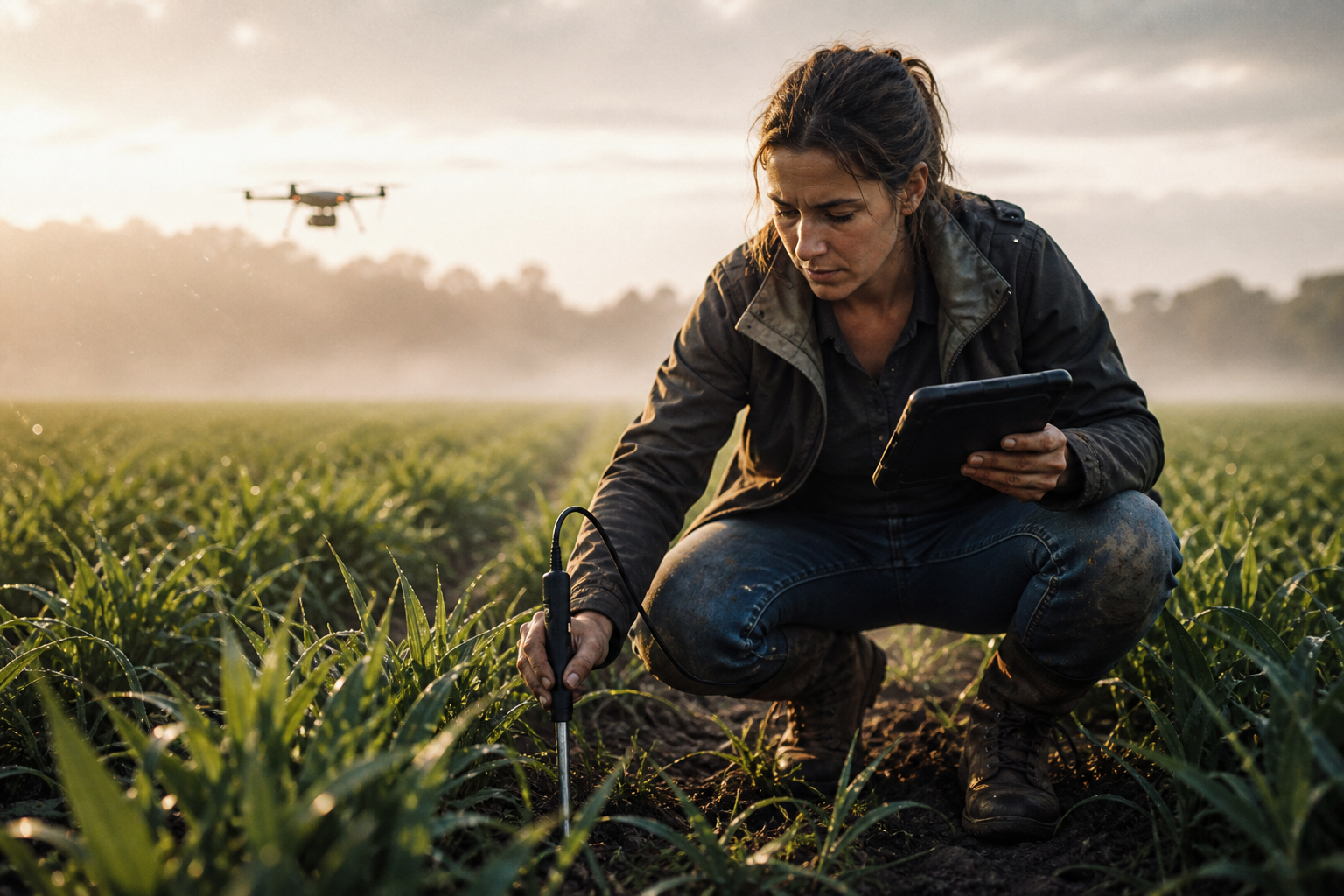
The biggest agriculture trends in 2026 are AI-driven precision farming, autonomous robotics that address a projected 2.4 million labor gap, regenerative and water-efficient practices, alternative proteins, and direct-to-consumer digital sales. Together they mark a shift from raw yield toward efficiency, sustainability, and traceable supply chains.
Farming used to compete on one metric: how much you could grow per acre. That's changing fast. According to StartUs Insights (2026), the leading agriculture trends now cluster around AI, robotics addressing a labor shortage of roughly 2.4 million workers, regenerative agriculture, and bioengineering. McKinsey & Company frames the same shift as a move toward data, sustainability, and resilient supply chains.
Here's the practitioner's read on what actually matters. Precision agriculture uses sensors, satellites, and AI to apply water, fertilizer, and pesticides only where needed — sometimes plant by plant. Autonomous machinery fills labor gaps that get worse every harvest season. Regenerative farming rebuilds soil so land stays productive for decades instead of degrading. And a quieter trend runs underneath all of them: the digital sales layer that determines whether a farm's produce reaches a buyer at a fair price.
For MENA agribusinesses, the priority list reorders itself. Water efficiency jumps to the top because arid climates make every liter count. Traceability matters because export markets in the Gulf demand it. And digital marketing becomes non-negotiable — a Saudi date producer or an Egyptian organic-vegetable farm now competes on Instagram and Google as much as at the wholesale market. You can explore how a practitioner approaches data-driven marketing for niche sectors to see where farming meets the funnel.
A worked example: reading the trends for one farm
To make these abstractions concrete, consider a typical mid-size mixed farm outside Cairo that grows herbs and salad greens. In our own advisory work with farms of this profile, a practitioner reading the 2026 trend list would not tell this farm to "adopt AI" wholesale. Instead, the trends get filtered through a simple 3-part decision test: (1) Does it lower water cost per kilo? (2) Does it create traceability an export buyer will pay for? (3) Does it shorten the distance to a paying customer? Drip irrigation passes the first test cheaply; a WhatsApp catalog passes the third for almost nothing; an autonomous harvester fails the cost-benefit test at this scale. Of these three options, the two lowest-cost tools clear the test while the flashiest one does not. The trend that "wins" for this farm is rarely the flashiest one — it is the one that clears the test at the lowest capital cost. That filtering discipline is the difference between chasing headlines and building margin.
The five trend clusters shaping the year
- Digital & AI: The five trend clusters shaping the year begin with Digital & AI, which covers predictive analytics for planting dates, disease detection from drone imagery, and demand forecasting.
- Robotics & automation: The second of the five clusters spans autonomous harvesters, robotic weeders, and automated greenhouse systems.
- Regenerative & sustainable: The third cluster includes cover crops, no-till farming, rotational grazing, and reduced chemical inputs.
- Alternative proteins & food health: The fourth cluster features plant-based products, precision fermentation, and health-driven consumer demand.
- Market & distribution: The fifth cluster captures D2C e-commerce, shortened supply chains, and traceable, brand-led produce.
What Is Agriculture, and How Is It Changing?
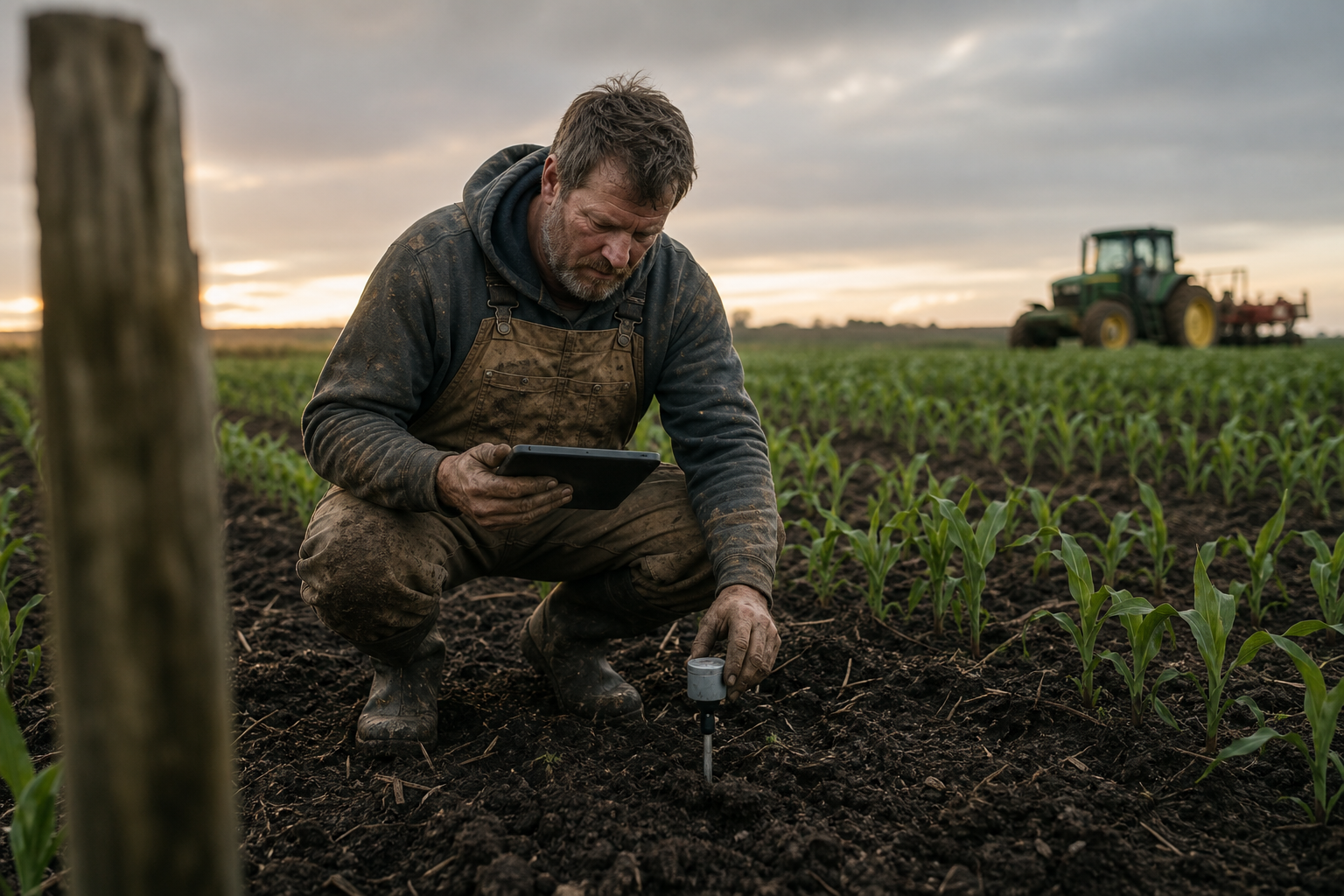
Agriculture is the practice of cultivating soil, planting, raising, and harvesting crops, along with livestock production, according to the general definition summarized on Wikipedia. In 2026 it's changing from a manual, intuition-led craft into a data-informed, technology-augmented industry with digital distribution baked in.
Agriculture has existed for roughly 12,000 years, but the pace of change over the past decade dwarfs most of that history. The core activities — tilling, sowing, irrigating, harvesting, tending animals — still define the field. What's new is the instrumentation around them. A modern farm generates data from soil sensors, weather stations, satellite passes, and machinery telematics, then feeds that data into models that recommend actions.
Agriculture splits into several broad types that help explain where trends land. Subsistence farming feeds a household or local community and dominates parts of rural Egypt. Commercial agriculture produces at scale for markets and export — the model Saudi agribusinesses increasingly pursue. Intensive agriculture maximizes output from limited land using heavy inputs and technology, while extensive agriculture spreads across large areas with lower inputs per hectare.
People often confuse agriculture with farming, but they aren't identical. Farming is the on-the-ground act of working land and raising animals. Agriculture is the wider system: the science, economics, supply chains, processing, and — increasingly — the marketing and retail that carry produce from field to plate. As educational resources like AgriStuff note in their 2026 primers, understanding that distinction matters because most 2026 innovation happens at the system level, not just in the dirt.
For a regional agribusiness, the practical takeaway is simple. The parts of agriculture growing fastest in value are downstream — processing, branding, traceability, and direct sales — not just raw production. That's precisely where digital-commerce expertise adds leverage.
Why Do Agriculture Trends Matter for MENA Businesses?
Agriculture trends matter for MENA businesses for three reasons: the region imports most of its food, faces severe water scarcity, and is investing heavily in food security through initiatives like Saudi Vision 2030. The right trends decide which agribusinesses stay competitive and which get squeezed out.
Saudi Arabia and Egypt sit at the sharp end of global food-security pressure. Saudi Arabia imports a large share of its food — commonly reported at roughly 80%. It has made domestic production and supply-chain resilience a national priority under Vision 2030. Egypt has a population above 100 million and depends heavily on the Nile. That creates intense pressure on water and arable land. Both realities make efficiency-focused agriculture trends more urgent here than almost anywhere else.
Consider a mid-size tomato grower in Egypt's reclaimed desert land. Ten years ago, success meant good yield and a reliable wholesale buyer. In 2026, the same grower competes on three fronts: water cost per kilo, certification for Gulf export, and direct premium-box sales to Cairo consumers through an online store. Each front ties back to an agriculture trend — precision irrigation, traceability, and D2C e-commerce.
Now consider a Saudi date producer. Dates are a heritage product with global demand. Yet many producers still sell through intermediaries who capture much of the margin. A producer who builds a brand, tells an origin story, and sells through an e-commerce store on Salla or Shopify can meaningfully raise per-kilo revenue — without growing a single extra tree. That is not a farming upgrade. It is a marketing and distribution upgrade riding on top of an agriculture trend. In our work with producers, the biggest lift comes not from a bigger harvest but from moving a fixed harvest out of the anonymous commodity bin and into a branded, traceable product line.
Three reasons MENA agribusinesses can't ignore these shifts
- Water economics: MENA agribusinesses can't ignore these shifts for one core reason first — in arid climates, the farm with lower water cost per unit wins on price and survives drought years.
- Export standards: Second, Gulf and European buyers increasingly demand traceability and certification, which reward data-capable producers over those without digital records.
- Margin capture: Third, digital direct sales let producers keep the 30-50% margin that middlemen typically absorb.
The honest caveat: technology isn't free, and not every trend fits every operation. A smallholder with two hectares shouldn't buy an autonomous harvester. But nearly every producer, large or small, can benefit from a smartphone, a WhatsApp catalog, and a basic online presence — the lowest-cost, highest-return slice of modern agriculture.
How Is AgTech and Digital Transformation Reshaping Farming?
AgTech reshapes farming by adding sensors, AI, and automation that turn guesswork into data-driven decisions. In 2026, precision agriculture, autonomous machinery, and satellite analytics help farms cut input waste, address labor shortages, and raise yields per liter of water — the metric that matters most in MENA.
AgTech — short for agricultural technology — covers the hardware, software, and data services applied to farming. The category exploded because two problems collided. Input costs kept rising. The labor pool kept shrinking. StartUs Insights (2026) points to a projected labor gap near 2.4 million workers as a core driver of robotics adoption. When you can't find enough hands, machines that weed, harvest, and monitor crops stop being luxuries.
Precision agriculture is the flagship. Instead of blanket-spraying an entire field, precision systems use GPS, soil sensors, and drone or satellite imagery. They pinpoint exactly where a crop needs water or nutrients. Satellite-based platforms such as those built by EOS Data Analytics (EOSDA) monitor field health remotely. This matters in vast, hard-to-inspect landscapes common across Saudi Arabia and Egypt's reclamation zones. A farmer can spot a stressed patch of crop from a phone screen before the naked eye would ever catch it.
Automation and robotics form the second pillar. Autonomous tractors follow pre-mapped routes. Robotic arms pick delicate fruit without bruising it. Automated greenhouses regulate temperature, humidity, and irrigation with minimal human input. This model is already visible in Gulf controlled-environment agriculture, where indoor farms grow leafy greens year-round despite brutal outdoor heat.
The third pillar is the quiet one: data and connectivity. A farm that captures its own operational data can forecast demand, optimize planting windows, and prove traceability to buyers. That same data feeds marketing. Knowing your harvest volume and timing lets you run a pre-order campaign, plan inventory for an online store, and target the right customers. Bridging farm data to customer-facing chatbots and automated marketing is exactly where agriculture and digital services converge.
What AgTech looks like at three farm sizes
| Farm size | Realistic AgTech | Best digital layer |
|---|---|---|
| Smallholder (1-5 ha) | Smartphone apps, weather alerts, drip irrigation | WhatsApp catalog, local Instagram selling |
| Mid-size (5-100 ha) | Soil sensors, satellite monitoring, basic automation | Salla/Shopify store, SEO, paid ads |
| Large / export (100+ ha) | Autonomous machinery, full precision suite, traceability systems | B2B website, data analytics, CRM, multilingual SEO |
An honest limitation worth stating: AgTech ROI depends on scale and crop value. High-value crops — dates, strawberries, herbs, leafy greens — justify precision investment far faster than low-margin staples. Match the tool to the economics, not to the hype. A useful rule of thumb practitioners apply: if a technology can't demonstrably pay for itself within two to three seasons on the crop in question, it belongs on a watch-list, not a purchase order.
What Are the Key Agriculture Trends Around Sustainability and Water?
The key sustainability agriculture trends in 2026 are regenerative farming, water-efficient irrigation, and controlled-environment agriculture. For MENA, water efficiency dominates: technologies like drip irrigation, hydroponics, and vertical farming can cut water use by 70-90% compared with conventional field methods.
Regenerative agriculture is the practice of farming that rebuilds soil health, increases biodiversity, and captures carbon rather than depleting the land. McKinsey & Company's agriculture research treats it as one of the defining shifts of the decade. Core techniques include cover cropping, reduced tillage, crop rotation, and rotational grazing. The payoff is longer-term: healthier soil holds more water, needs fewer chemical inputs, and stays productive across many seasons.
One of the biggest shifts shaping the coming decade is how AI is reshaping farming across deserts and river deltas, unlocking productivity gains in regions long considered marginal.Water efficiency is where MENA writes its own chapter of the sustainability story. Open-field flood irrigation wastes enormous volumes to evaporation and runoff. Drip irrigation delivers water directly to plant roots, drastically cutting waste. Hydroponics grows plants in nutrient-rich water without soil, recirculating that water for reuse. Vertical farming stacks growing beds indoors under LED light with tightly controlled conditions — the model behind those desert lettuce farms that use a fraction of open-field water.
Saudi Arabia offers a live example. As part of its food-security drive, the Kingdom has backed controlled-environment and hydroponic projects that produce vegetables locally instead of importing them across long, fragile supply chains. Egypt, meanwhile, promotes modern irrigation to stretch every drop of Nile water across expanding reclaimed land. Both directions reflect the same principle: in a water-scarce region, the sustainable choice and the profitable choice usually align.
There's a marketing dimension that producers often miss. Sustainability sells. Consumers in Riyadh, Jeddah, and Cairo increasingly pay premiums for locally grown, low-water, chemical-light produce — if they know the story. A farm that adopts regenerative methods but never communicates them leaves money on the table. Turning a genuine sustainability practice into a brand narrative, verified with real data and imagery, is a legitimate and honest way to command higher prices.
Water-saving methods compared
- Drip irrigation: Precise root-level watering; strong fit for field crops and orchards; moderate cost.
- Hydroponics: Soilless, water-recirculating; excellent for leafy greens and herbs; higher setup cost.
- Vertical / indoor farming: Maximum control and minimum water; best for high-value crops near cities; highest capital cost.
- Mulching and soil cover: Low-tech, low-cost moisture retention; suitable for almost any farm.
A caveat on greenwashing: sustainability claims must be true and verifiable. Regulators and consumers are getting sharper about unfounded eco-labels. Only market what you actually practice, and where possible, back it with data — water usage figures, certification, or third-party verification.
How Do Alternative Proteins and Consumer Health Trends Affect Producers?
Alternative proteins and health-conscious demand are shifting what consumers buy toward plant-based products, transparency, and traceable, wholesome food. For MENA producers, the trend creates premium niches — organic produce, plant-based ingredients, and heritage foods sold with a health-and-origin story.
Alternative proteins include plant-based meat substitutes, precision-fermentation dairy analogs, and other non-traditional protein sources. StartUs Insights (2026) lists alternative proteins among the notable agriculture and food trends of the year, driven partly by health consciousness and partly by sustainability concerns. While the category is more developed in North America and Europe, its ripple effects reach MENA through import demand, ingredient sourcing, and shifting consumer expectations.
The bigger, more immediate opportunity for regional producers isn't manufacturing lab-grown meat — it's meeting the health-conscious demand that sits underneath the alternative-protein wave. Consumers across the Gulf and Egypt are reading labels, asking where food comes from, and paying more for produce they trust. That behavior rewards farms that can prove quality and origin.
Picture an Egyptian farm growing pesticide-free herbs and salad greens. The commodity price at the wholesale market is thin. But the same greens, washed, packed, branded, and sold as a fresh-to-door subscription in Cairo — with a clear story about how they're grown — command a premium several times higher. The product barely changed. The positioning did everything.
Heritage and specialty foods fit this trend perfectly in MENA. Saudi dates, Egyptian honey, regional olive oil, and specialty spices carry authentic origin stories that health-conscious and premium buyers value. Producers who package these with transparency — harvest dates, farm location, growing methods — tap directly into the consumer shift. The challenge is rarely the product. It's building the digital storefront and content that let buyers discover and trust it.
Premium niches worth targeting in 2026
- Organic and pesticide-free produce with verified growing practices.
- Heritage foods (dates, honey, olive oil) sold with origin storytelling.
- Fresh subscription boxes delivered direct to urban consumers.
- Plant-based and health-focused ingredients for the growing wellness market.
How Can Agribusinesses Sell Directly Online in 2026?
Agribusinesses sell directly online in 2026 by building an e-commerce store on platforms like Salla or Shopify, running targeted paid ads and SEO, and using WhatsApp catalogs plus chatbots for orders. Direct sales let producers capture the 30-50% margin normally lost to middlemen.
The most overlooked agriculture trend in the MENA region isn't a piece of farm equipment — it's the collapse of the distance between producer and consumer. E-commerce, social selling, and messaging apps now let a farm reach buyers directly. A date grower in Al-Ahsa or an organic farm outside Cairo can build a brand and ship boxes nationwide without ever entering a traditional wholesale market.
Here's the practical build, in the order that actually works:
- Choose a platform. Salla suits Saudi merchants with built-in local payment and shipping integrations. Shopify offers broader flexibility and works well for producers eyeing regional or export sales. Both handle catalogs, checkout, and inventory.
- Build the product story. Photograph the farm, document growing methods, and write honest, specific descriptions. Origin and freshness are your differentiators against imported commodities.
- Set up WhatsApp Business. A WhatsApp catalog plus a simple chatbot lets customers browse and order in the channel they already use daily across MENA. Automated replies handle common questions about delivery, pricing, and availability.
- Drive traffic with SEO and ads. Local SEO captures searches like "fresh dates delivery Riyadh" or "organic vegetables Cairo." Meta and Instagram ads target health-conscious urban buyers with clear demographic and interest filters.
- Retain with data. Track repeat buyers, run subscription offers, and use email or WhatsApp broadcasts to bring customers back. Retention is where D2C economics turn profitable.
A typical rollout sequence and trade-off worth understanding: the WhatsApp-catalog step is deliberately placed before the full store because it validates demand at near-zero cost. Practitioners generally find that if a producer cannot close even a handful of orders through a simple catalog and a few local posts, a polished Salla or Shopify store won't fix the underlying problem — it will just make an unproven offer look nicer. The trade-off is that WhatsApp doesn't scale gracefully past a few hundred orders a month, which is precisely when the full store, SEO, and automation earn their keep.
Pricing context helps set expectations. A basic managed e-commerce setup and marketing engagement in the MENA market commonly ranges from a few thousand SAR or tens of thousands of EGP for a starter package, scaling up with ad spend and complexity. These are directional ranges, not quotes; actual cost depends on scope. The investment pays back fastest for high-value, repeat-purchase products — exactly the premium niches described earlier.
The honest caveat: e-commerce isn't magic. It demands consistent content, reliable fulfillment, and real customer service. A farm that ships late or packs poorly will burn its online reputation quickly. The technology lowers the barrier; execution still decides the outcome. For producers who'd rather focus on growing while a partner handles the digital side, that's precisely the kind of gap a specialist agency fills.
What's the Best Way to Market an Agriculture Business Digitally?
The best way to market an agriculture business digitally in 2026 combines local SEO, targeted social ads, content storytelling, and WhatsApp-based customer service. Producers should lead with origin and quality, use data to find repeat buyers, and match the channel to whether they sell B2B or D2C.
Marketing an agribusiness isn't the same as marketing a fashion brand, and pretending otherwise wastes money. Agriculture buyers — whether a supermarket procurement manager or a home consumer — respond to trust signals: freshness, safety, origin, and reliability. The digital strategy should amplify exactly those signals.
For D2C producers, the priority stack is content and social. Show the farm. Show the harvest. Show the packing. Authentic visual content builds the trust that converts a browser into a buyer. Instagram and TikTok reward this kind of behind-the-scenes storytelling, and Meta's ad tools let you target by city, interest, and buying behavior. Layer local SEO on top so that people searching for your product category in your city can find your store.
For B2B producers — those selling to restaurants, retailers, or exporters — the game shifts. A professional, multilingual website carries weight. Buyers research suppliers online before making contact, so clear product specs, certifications, and capacity information matter. Arabic and English content captures both local and international procurement searches. Here, SEO and a credible web presence often outperform social ads.
Across both models, data-driven marketing separates winners from the pack. Tracking which products sell, which campaigns convert, and which customers repeat lets a producer spend smarter each season. A chatbot that answers common questions and captures leads around the clock turns a WhatsApp number into a sales channel. And email or messaging automation keeps the farm top-of-mind between harvests.
Actionable takeaways for agribusiness owners
- Pick one high-value product to build your digital brand around before expanding.
- Set up a Google Business Profile and basic local SEO this month — it's free and captures nearby demand.
- Launch a WhatsApp catalog before building a full store; validate demand cheaply.
- Document everything visually — harvest videos and farm photos are your best marketing assets.
- Publish bilingual content (Arabic + English) to capture both local and export search intent.
- Measure repeat-purchase rate as your north-star metric for D2C profitability.
A realistic caveat: results take time. SEO typically needs several months to compound, and building an audience is a marathon, not a sprint. Producers expecting overnight sales from a single ad campaign will be disappointed. Sustainable digital growth comes from consistent content, honest positioning, and steady optimization.
Frequently Asked Questions
What are the top agriculture trends in 2026?
The top agriculture trends in 2026 are AI-driven precision farming, autonomous robotics addressing a projected 2.4 million labor gap, regenerative and water-efficient agriculture, alternative proteins, and direct-to-consumer digital sales, according to StartUs Insights and McKinsey & Company. For MENA specifically, water efficiency and traceable production lead the priority list.
How do agriculture trends apply to Saudi Arabia and Egypt?
Agriculture trends apply intensely to Saudi Arabia and Egypt because both face water scarcity and heavy food imports. Saudi Vision 2030 backs controlled-environment and hydroponic farming for food security, while Egypt pushes modern irrigation to stretch Nile water. Water-saving technology and digital direct sales offer the highest returns in both markets.
What is the difference between agriculture and farming?
Farming is the hands-on act of cultivating land and raising animals, while agriculture is the broader system — including science, economics, supply chains, processing, and marketing that carry food from field to consumer. In 2026, much of agriculture's value growth happens downstream in branding, traceability, and distribution rather than in raw production alone.
Can farmers sell produce online in the MENA region?
Yes. Farmers and agribusinesses across the MENA region sell produce online using platforms like Salla and Shopify, plus WhatsApp catalogs and chatbots for orders. Direct online sales let producers capture the 30-50% margin usually taken by middlemen, and work best for high-value, repeat-purchase products like dates, herbs, and fresh subscription boxes.
How much does digital marketing cost for an agriculture business in MENA?
Digital marketing costs for an agriculture business in MENA vary by scope, but a starter e-commerce and marketing package commonly ranges from a few thousand SAR or tens of thousands of EGP, scaling with ad spend and complexity. These are directional ranges rather than fixed quotes. High-value, repeat-purchase products see the fastest payback on this investment.
What technology helps farms save water?
Drip irrigation, hydroponics, and vertical farming are the leading water-saving technologies, capable of reducing water use by roughly 70-90% versus conventional flood irrigation. In arid regions like Saudi Arabia and Egypt, these methods make sustainability and profitability align, since lower water cost per unit directly improves competitiveness.
The Road Ahead
The farms that win the next decade in Egypt, Saudi Arabia, and the wider Gulf won't just be the ones with the best soil or the newest tractors. They'll be the ones that treat data, sustainability, and direct customer relationships as core parts of agriculture — not afterthoughts. The desert lettuce farm using 90% less water is impressive engineering; the farm that also sells that lettuce as a branded, story-driven product to health-conscious city buyers is a business built to last.
Agriculture trends in 2026 point one clear direction: the distance between the field and the customer keeps shrinking, and the producers who own that connection own their margins. The question isn't whether these shifts reach MENA agribusinesses — it's who moves first.
If you'd like hands-on help turning an agriculture business into a digital-first brand, you can talk to the team.
Curious about what these agriculture trends could mean for your interests in the MENA region? Feel free to get in touch to share your questions and explore the topic further.
Sources & References
- StartUs Insights — Top 10 Agriculture Trends in 2026 (AI, robotics, 2.4M labor gap, regenerative agriculture, alternative proteins).
- McKinsey & Company — Agriculture Insights (data, sustainability, and resilient supply chains).
- Agriculture — Wikipedia (definition and foundational concepts).
- AgriStuff — What Is Agriculture? (types of agriculture and the farming-vs-agriculture distinction).
- AGDAILY — Agriculture News & Trends (ongoing industry news coverage).
- Successful Farming — Farming News (farm policy, machinery, and management updates).
- USDA (government agricultural programs and data).
Note: This article is for general informational purposes; verify specifics against your own context.