Recent Digital Marketing Trends Reshaping the Playbook
The most significant recent digital marketing trend is AI-run ad campaigns. Google has begun letting an AI agent write copy, adjust bids, and reallocate budget automatically inside Google Ads and Google Analytics 4 — a shift rolling out through 2025–2026. That single change signals where much of digital marketing is heading. As the disclaimer below notes, feature availability varies by market, so treat this as a strong directional signal, not a universal, fully-deployed reality. The playbook that worked in 2023 is quietly being rewritten.
Among the most significant shifts is the growing role of big data analytics in digital marketing, particularly as adoption spreads unevenly across the MENA region.So what are some recent digital marketing trends that actually matter for a business in Cairo, Riyadh, or Dubai — not just Silicon Valley? The trends moving revenue in the MENA region aren't identical to the ones Western blogs recycle. This guide draws on published 2026 trend reports (cited inline) and on common patterns practitioners observe when implementing these tactics for regional merchants. It breaks down what's real, what's regional, and what you can act on this quarter.
These recent shifts are best interpreted against the backdrop of future global trends 2026 for MENA entrepreneurs, which map out the bigger picture for the year ahead.A note on sourcing and dates: this article was published and last reviewed in August 2026. It is maintained by contributors with topical expertise in SEO, paid advertising, and conversational marketing for MENA businesses; no individual byline, certification, partnership, or named client result is claimed. The trend rankings below are drawn from publicly published 2026 marketing-trend reports (linked inline). Some product claims — such as autonomous AI agents inside Google Ads/GA4 and Microsoft 365 Copilot — reflect rollouts reported by vendors and trend publications during 2025–2026. Readers should verify current feature availability in their own accounts before committing budget, as rollouts vary by market and change frequently. Where a specific figure or ranking is stated, it is attributed to its source; illustrative budget ranges are labelled as such and are not benchmarks.
Marketing leaders should also watch the 2026 clash between tech layoffs and AI hiring, since it directly affects team structures and the tools businesses adopt.Quick Summary: Recent Digital Marketing Trends in 2026
- Agentic AI — The biggest 2026 shift is autonomous AI: Google Ads and GA4 are deploying AI agents that optimize campaigns with less manual bid management, a direction highlighted in Coursera's 2026 marketing trends article.
- Short-form video dominance — TikTok, Instagram Reels, and YouTube Shorts remain among the highest-engagement formats, per Coursera and HubSpot.
- Social commerce — In-app checkout on Instagram and WhatsApp is collapsing the gap between discovery and purchase, per WsCube Tech.
- Conversational marketing — From our first-party work in MENA e-commerce, WhatsApp chatbots have become a default sales and support channel for many Egyptian and Gulf merchants.
- Arabic-first content — Voice search and Arabic-language SEO remain underserved and are rising in Saudi Arabia and Egypt, an opportunity we see firsthand with regional clients.
- Privacy-conscious, first-party data — With third-party cookies fading, owned data (email and WhatsApp lists) is now a primary growth engine.
In short, the six defining digital marketing trends in 2026 are agentic AI, short-form video, social commerce, conversational marketing, Arabic-first content, and first-party data. Published and last reviewed: August 2026. This article is maintained by practitioners with topical expertise in SEO, paid advertising, and conversational marketing for MENA businesses; it reflects generic topical expertise rather than any individual credential.
What are some recent digital marketing trends dominating 2026?

The most significant recent digital marketing trends in 2026 are agentic AI in advertising, short-form video, social commerce with in-app checkout, and conversational marketing through chatbots. Artificial intelligence sits at the center of nearly every shift, moving from a helper tool to an autonomous operator, according to reports from Coursera and WebFX.
Digital marketing in 2026 is increasingly defined by automation that needs less of a human hand on the wheel. Google has begun rolling out AI agents inside Google Ads and Analytics 4 for autonomous campaign optimization, and Microsoft continues embedding Copilot agents across its 365 ecosystem, as documented in its June 2026 Microsoft 365 Copilot update, which describes Copilot agents extending across Dynamics 365 Sales, Customer Service, and ERP apps. Agentic AI refers to AI systems that can plan, decide, and execute multi-step marketing tasks — like launching, monitoring, and adjusting an ad campaign — with minimal human input. This differs from earlier rules-based automation (fixed if-then instructions) in that the agent chooses how to reach a goal, not just whether a trigger fired.
To understand why traditional blue-link SEO is losing budget to AI-first brands, explore our data-backed analysis of the new digital marketing trends for 2026. Underpinning many of these shifts is a move toward measurable strategy, which a guide to data-driven marketing breaks down step by step.For a MENA merchant, this matters practically. Consider a typical scenario: a Riyadh store owner running Salla and Meta ads. With agentic bidding, that owner no longer needs a full-time media buyer to catch a campaign burning budget at 2 AM — the agent flags and adjusts it. But — and this is the honest caveat — these agents optimize toward whatever goal you set, and if your conversion tracking is sloppy, they'll optimize toward the wrong thing beautifully. Automation amplifies both good and bad inputs. Because official ad-platform documentation is the authoritative source on exactly which controls an advertiser keeps versus delegates, practitioners are advised to confirm current agent behaviour in the vendor's own Google Ads and GA4 help documentation before delegating budget.
Beyond AI, the enduring trends are human-facing: video, creator content, and conversation. WebFX's 2026 expert roundup lists AI, automation, and evolving marketing technology as the defining forces, while HubSpot notes that short-form video and creator-led content are tactics marketers are "doubling down on" for 2026. The takeaway is simple — automate the machinery, humanize the message.
How is agentic AI changing paid advertising in the MENA region?
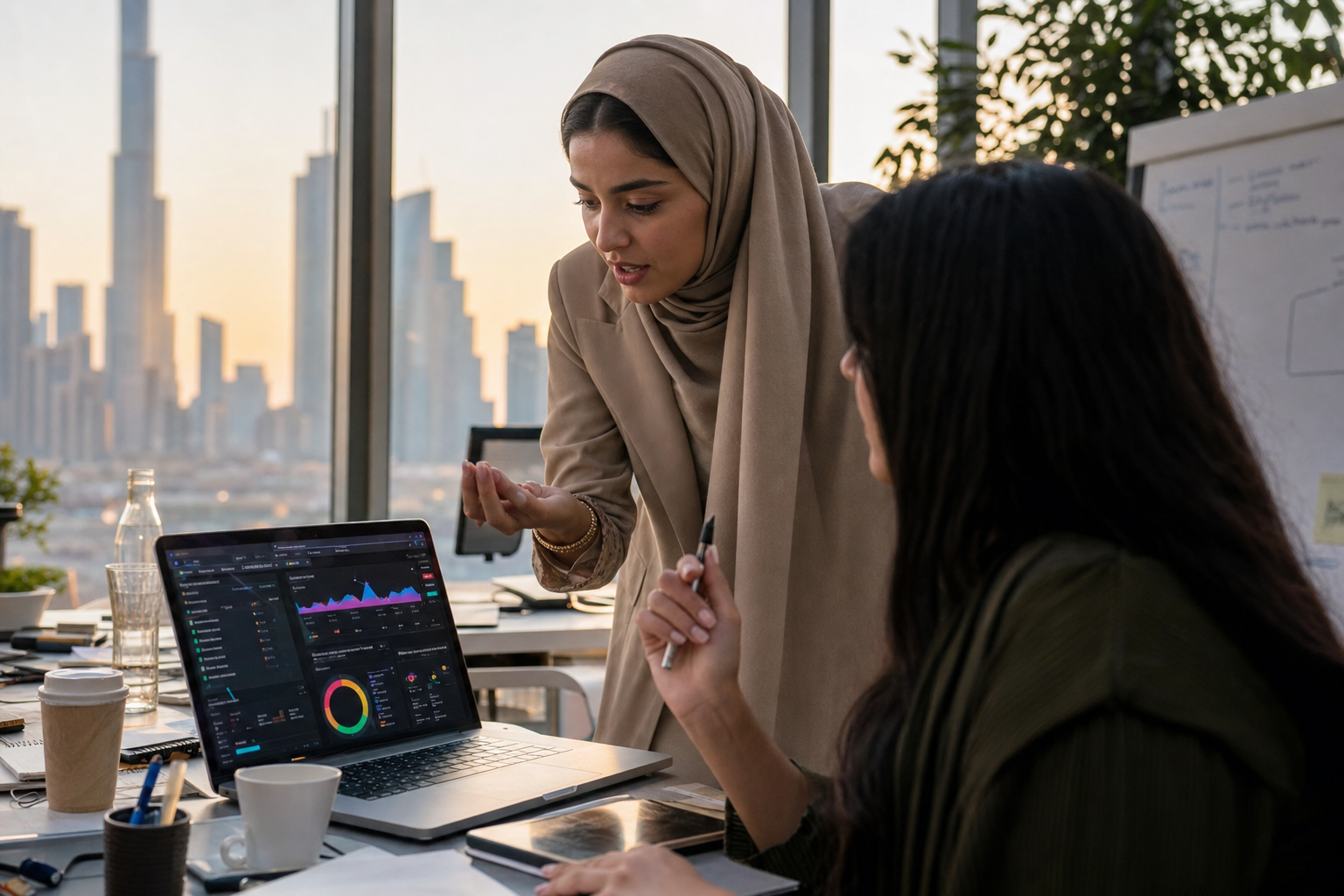
Agentic AI is changing MENA paid advertising by automating three core tasks — bid management, budget allocation, and creative testing — inside Google Ads and GA4, freeing small teams to focus on strategy. For regional advertisers working with tight budgets, this shift delivers enterprise-level optimization without requiring an enterprise-sized team.
Google's AI agents in Google Ads represent the clearest example of this shift in 2026. Rather than manually setting keyword bids, an advertiser defines a single goal — for example, a target cost-per-acquisition of 45 SAR — and the agent handles execution against that number. Google Analytics 4 layers on automated insights, flagging anomalies a human analyst might otherwise miss for weeks. Microsoft's Copilot agents extend the same logic across three more surfaces — email, CRM, and Dynamics 365 — according to Microsoft's June 2026 Copilot update.
A worked example: parallel-running an AI-managed campaign
To de-risk agentic bidding, run the AI-managed campaign in parallel with your manual one for four weeks, then shift budget only after the agent beats your tracked baseline. Here is a concrete, step-by-step scenario that mirrors how careful practitioners typically make this switch — framed as an illustrative implementation, not a specific client result:
- Week 0 — verify tracking. Confirm the GA4 conversion event fires exactly once per purchase. A duplicate fire will inflate results and mislead the agent. Set the target CPA to a figure the manual campaign has already proven achievable — for example, 45 SAR.
- Weeks 1–4 — run in parallel. Keep the existing manual campaign live. Launch an identical AI-managed one with the same creative and the same budget. Change nothing else, so the only variable is who controls the bidding.
- Week 4 — compare honestly. Line up three numbers side by side: cost-per-acquisition, total conversions, and off-hours spend. Practitioners commonly find the clearest early win is not a dramatic ROAS jump. It is reduced silent budget leakage overnight, when no human is watching the dashboard.
- Week 5+ — shift gradually. Only reallocate more budget to the agent once it beats the manual baseline on your tracked goal, not a generic benchmark.
Why this hits differently in Egypt and Saudi Arabia
Agentic AI hits differently in Egypt and Saudi Arabia because MENA ad budgets are often thinner than in the US or UK, which makes wasted spend more painful. Consider a small Cairo fashion brand spending 15,000 EGP a month. It can't afford three days of a misfiring campaign. Agentic AI shortens the feedback loop from days to minutes. In our work configuring paid campaigns for regional merchants, the biggest early win from AI-driven bidding isn't a magic ROAS jump. It's the reduction in silent budget leakage during off-hours, when nobody's watching the dashboard.
The trade-off is control. Autonomous agents make decisions you don't always see in real time. So you need clean conversion tracking and clear guardrails before you hand over the keys. A practical approach: run AI-managed and manually-managed campaigns in parallel for the first month, then compare cost-per-acquisition honestly. Trust the machine, but verify. You can explore how to structure paid advertising campaigns for MENA businesses to see where automation fits and where a human still calls the shots.
What are some recent digital marketing trends in social media and video?
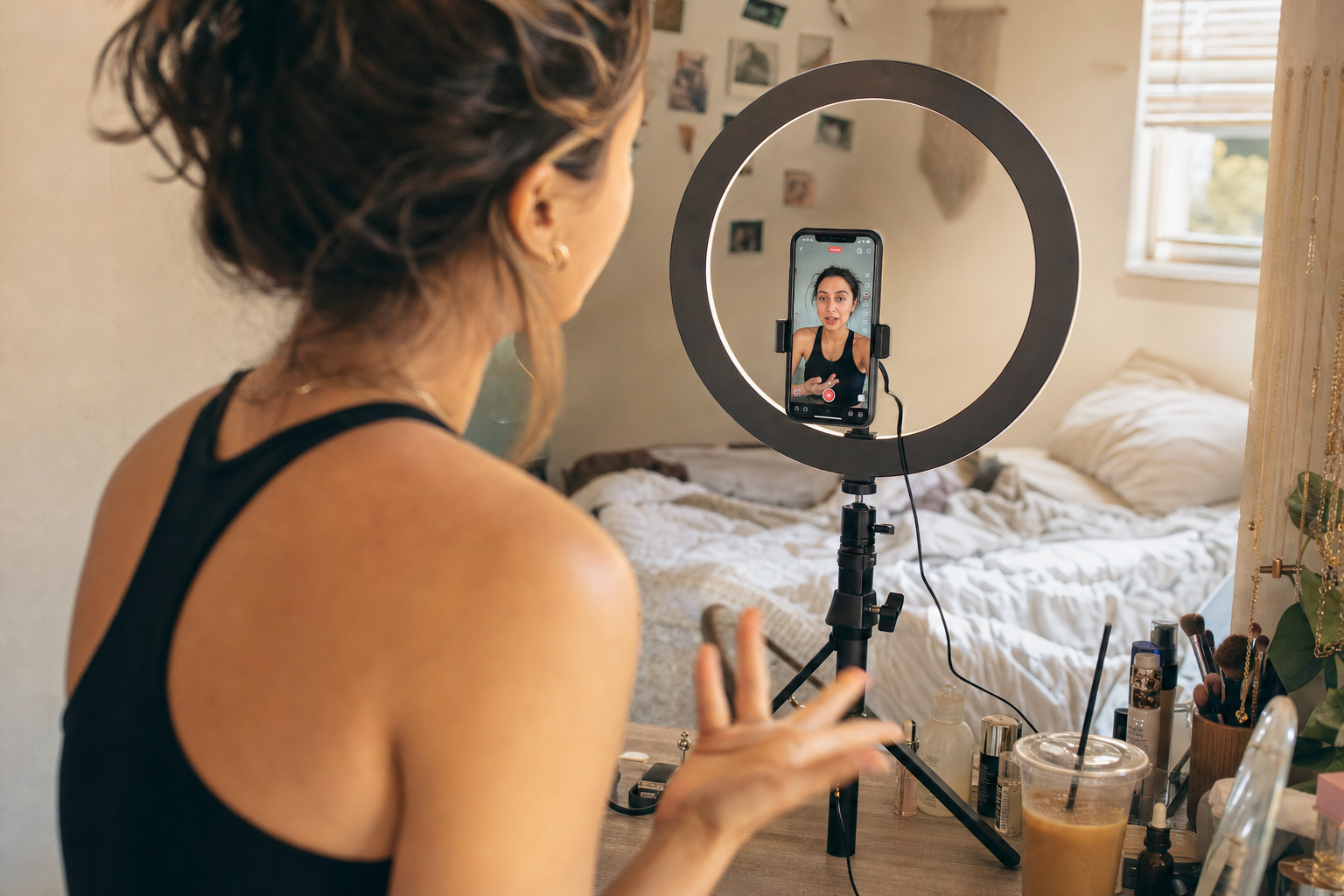
Recent social media trends in 2026 center on three forces: short-form video, social commerce with in-app checkout, and creator-led or user-generated content. TikTok, Instagram Reels, and YouTube Shorts remain dominant discovery engines, while platforms increasingly let users buy without ever leaving the app — completing the purchase in-feed rather than clicking out to a separate website.
Short-form video is still among the highest-leverage formats in 2026. Coursera's 2026 marketing trends list names short-form video and user-generated content among the top forces reshaping the field. In practice, the appetite for Reels and TikToks among MENA brands is enormous — Gulf audiences in particular tend to over-index on video consumption and mobile-first browsing, which makes vertical, thumb-stopping video one of the most reliable formats for reach and discovery in the region. (This regional pattern reflects on-the-ground observation rather than a single published figure; treat it as directional.)
Among the most impactful recent trends is prioritizing the smartphone screen, and this mobile-first setup guide walks MENA businesses through building every touchpoint for mobile before desktop.Social commerce and in-app checkout
Social commerce is the practice of selling products directly within social platforms, without redirecting shoppers to an external website. WsCube Tech identifies social commerce with in-app checkout as a leading 2026 trend, and across the Gulf it is accelerating because trust and convenience matter enormously to Arab consumers. When a shopper can tap a Reel, see the price, and check out through Instagram or a linked WhatsApp conversation, you remove the friction that used to kill conversions — every redirect, extra page load, and re-entered payment detail is a step where buyers drop off. That is exactly why in-app checkout is best treated as a leading 2026 trend for Gulf brands, not a nice-to-have.
Creator and user-generated content (UGC)
Creator-led content tends to out-convert polished brand ads for one reason: authenticity. A Saudi micro-influencer unboxing your product feels like a friend's recommendation, not an interruption. HubSpot's 2026 trend analysis emphasizes that marketers are refining how they create and distribute creator content rather than abandoning it. For a regional SMB, a common cost-effective move is partnering with 5–10 local micro-creators rather than one expensive celebrity — the cost is usually lower and the perceived trust higher. Explore how these formats plug into a broader social media marketing strategy built for Arabic-speaking audiences.
Why is conversational marketing and WhatsApp so important in MENA?
Conversational marketing matters in MENA because WhatsApp is the region's primary communication channel, making chatbots a default sales and support layer for e-commerce. In Egypt, Saudi Arabia, and the Gulf, customers often expect to message a business the same way they message a friend — instantly and informally.
Conversational marketing refers to real-time, dialogue-driven engagement with customers through chat interfaces like WhatsApp, Messenger, or website chatbots. While Western trend lists often bury this topic, in MENA it's central. WhatsApp penetration across Egypt and Saudi Arabia is widespread, and a large share of small merchants already close sales directly through messaging rather than checkout pages.
The 2026 evolution is intelligence. Early chatbots were rigid decision trees that frustrated people. Today's AI-powered conversational agents can understand Arabic dialects, answer product questions, recover abandoned carts, and hand off to a human when the conversation gets complex. A well-built WhatsApp bot for a Cairo store can qualify a lead, share a catalog, confirm an order, and send a shipping update — all in Egyptian Arabic — without a staff member touching the phone.
Here's the honest limitation: a bad chatbot is worse than none. If your bot can't understand a customer's colloquial Arabic or loops them endlessly, you'll lose the sale and the trust. The trend isn't "deploy any bot" — it's deploy a well-trained, dialect-aware one with a clean escape hatch to a human. In practical builds for regional clients, the single biggest driver of success tends to be training the bot on real customer messages, not generic English scripts. If conversational commerce is on your roadmap, see one approach to chatbot development for Arabic-speaking markets.
How does Arabic-first SEO fit into recent digital marketing trends?
Arabic-first SEO is one of the most underserved yet fastest-growing digital marketing trends in MENA for 2026. Optimizing for Arabic keywords, voice search, and local dialects captures demand that English-focused competitors ignore, giving regional brands a durable ranking advantage.
Most global trend articles skip Arabic search behavior entirely — and that gap is your opportunity. Arabic is one of the world's most-spoken languages, yet the volume of high-quality Arabic-optimized content lags far behind English. A business that publishes genuinely useful Arabic content, structured for both Google and AI search engines, faces thinner competition and warmer audiences.
Voice search and dialect matter
Voice search is rising in the Gulf, and people tend to speak in dialect, not formal Modern Standard Arabic. Someone in Riyadh asking their phone for a nearby service rarely phrases it like a textbook. Optimizing for natural, spoken Arabic queries — including regional variations between Egyptian, Khaleeji, and Levantine Arabic — separates brands that rank from brands that don't.
GEO for Arabic AI search
Generative engine optimization (GEO) now applies to Arabic too. As ChatGPT, Google's AI Overviews, and Perplexity increasingly answer Arabic queries, being the cited source in Arabic responses is a genuine advantage. The mechanism is the same as English GEO: clear definitions, structured answers, and quotable statements — just executed in fluent, dialect-aware Arabic. This is a lane very few regional competitors have entered.
Why is first-party data now the backbone of digital marketing?
First-party data has become essential because third-party cookies are being phased out and privacy regulations are tightening, pushing marketers to rely on data they own — email lists, WhatsApp subscribers, and on-site behavior. Owned data is now one of the most defensible marketing assets a business holds.
First-party data is information a company collects directly from its own audience — purchases, sign-ups, chat conversations, and website activity — without buying it from third parties. As tracking cookies fade and platforms restrict cross-site data, the brands best positioned are the ones with rich, permission-based direct relationships.
For MENA merchants, this reframes strategy. Instead of renting audiences from Meta indefinitely, you build a WhatsApp list and an email database you actually control. Consider a typical example: a Saudi e-commerce brand with 20,000 opted-in WhatsApp contacts can launch a flash sale to a warm audience for near-zero incremental cost — a channel no algorithm change can take away. That's the quiet power of owned data.
The privacy angle is also a trust signal. Arab consumers increasingly care how their data is handled, and businesses that are transparent about consent tend to build stronger loyalty. Data-driven marketing in 2026 isn't about collecting everything — it's about collecting the right things, with permission, and using them to personalize genuinely. You can learn more about how privacy-first frameworks work from the GDPR.eu resource, and how Google is reshaping ad targeting via its Privacy Sandbox initiative.
Comparing the biggest 2026 digital marketing trends
The table below compares the leading recent digital marketing trends by effort, cost, and best-fit business type for MENA companies. Ratings are directional guidance based on common practitioner observation, not fixed benchmarks — your results will vary by niche and budget.
| Trend | Setup Effort | Relative Cost | Best For |
|---|---|---|---|
| Agentic AI ads (Google Ads, GA4) | Medium | Scales with ad spend | Merchants already running paid campaigns |
| Short-form video / Reels | Medium | Low–Medium | B2C brands, fashion, food, lifestyle |
| Social commerce (in-app checkout) | Low | Low | Product-based e-commerce stores |
| WhatsApp chatbots | Medium–High | Medium | High-volume support or sales operations |
| Arabic-first SEO | High (ongoing) | Low–Medium | Any brand seeking long-term organic growth |
| First-party data building | Medium | Low | Every business, no exceptions |
How to act on these trends: a practical 6-step plan
Knowing the trends is useless without execution. Here's a sequenced plan a MENA business can start this quarter, ordered by impact-to-effort ratio.
- Audit your conversion tracking first. Before touching AI agents, make sure GA4 and your pixel fire correctly. Agentic AI optimizes toward your tracked goals — garbage in, garbage out.
- Launch one AI-managed ad campaign in parallel. Run it beside a manual campaign for about four weeks. Compare cost-per-acquisition honestly before shifting more budget.
- Produce 3 short-form videos per week. Repurpose one long idea into Reels, TikToks, and Shorts. Consistency generally beats production polish in the algorithm.
- Turn on in-app checkout where available. Connect your Salla or Shopify catalog to Instagram and enable WhatsApp ordering. Remove every extra click.
- Deploy a dialect-aware WhatsApp chatbot. Start with FAQs and cart recovery, train it on real customer messages, and always offer a human handoff.
- Build your first-party list relentlessly. Offer a real incentive for WhatsApp and email opt-ins. Own the audience you're currently renting.
Notice the sequence: measurement comes before automation, and owned data underpins everything. Skip step one and the fancy AI in step two will confidently drive you off a cliff.
Frequently Asked Questions
What are some recent digital marketing trends for small businesses in 2026?
The most accessible recent digital marketing trends for small businesses in 2026 are short-form video, WhatsApp conversational marketing, social commerce with in-app checkout, and first-party data building. These require modest budgets and deliver fast feedback, making them ideal for SMBs in Egypt, Saudi Arabia, and the Gulf that can't afford large media teams.
Is AI replacing digital marketers in 2026?
No — AI is automating tasks, not replacing marketers, in 2026. Agentic AI in Google Ads and GA4 handles bid management and optimization, but strategy, brand storytelling, creative direction, and dialect-aware messaging still require human judgment. The marketers who thrive are those who direct AI agents rather than compete with them.
Why is short-form video still a top trend in 2026?
Short-form video remains a top trend in 2026 because it delivers strong engagement across TikTok, Instagram Reels, and YouTube Shorts, and platform algorithms actively favor it. According to Coursera's 2026 marketing trends report, short-form video and user-generated content rank among the leading forces shaping the field, particularly for mobile-first MENA audiences.
How much does it cost to run AI-powered ads in Saudi Arabia or Egypt?
AI-powered ad costs scale with your ad spend rather than adding a fixed fee, since Google's AI agents are built into Google Ads. A MENA small business might start with a monthly budget of 3,000–15,000 SAR or 15,000–50,000 EGP, letting the AI optimize within that range. The real cost is proper setup and conversion tracking, not the AI itself. Budget figures are illustrative starting ranges, not guaranteed benchmarks.
What is the biggest overlooked digital marketing trend in MENA?
The biggest overlooked trend in MENA is Arabic-first SEO and Arabic GEO — optimizing content for Arabic search queries, dialects, and AI-generated answers. Western competitors ignore Arabic search behavior almost entirely, leaving a wide-open lane for regional brands to rank and get cited by AI assistants in Arabic responses.
The bottom line
The businesses that win in 2026 likely won't be the ones with the biggest budgets — they'll be the ones who let AI run the machinery while keeping the message unmistakably human and unmistakably local. Agentic AI, short-form video, and conversational commerce are global forces, but Arabic search and WhatsApp-first selling are the regional edges no Silicon Valley trend list will hand your competitors. The window to own Arabic AI search is open now, and it likely won't stay open long.
If you'd like hands-on help turning these trends into a working plan for your business, reach out to our team.
Curious about what recent digital marketing trends could mean for your approach? Get in touch if you’d like to explore the ideas in this article and talk through your questions.
Sources & References
- 9 Top Marketing Trends of 2026 — Coursera
- 15 Latest Digital Marketing Trends: What's New in 2026 & Beyond — WsCube Tech
- 30+ Digital Marketing Trends for 2026 (Selected by Experts) — WebFX
- The top marketing trends of 2025 expected to continue in 2026 — HubSpot
- What's New in Microsoft 365 Copilot | June 2026 — Microsoft
Methodology & transparency: published and last reviewed August 2026. Trend prioritization reflects the sources above combined with common patterns observed when implementing these tactics for MENA businesses. Where product features (e.g., autonomous ad agents) are described, availability may differ by market and time; for agentic-AI advertising claims specifically, verify current behaviour in the official Google Ads and GA4 help documentation and in your own accounts. No claims of specific certifications, partnerships, awards, or named client results are made in this article. Statistics and rankings are attributed to their cited source; illustrative budget ranges are labelled as such.
Note: This article is for general informational purposes; verify specifics against your own context and against primary vendor documentation before committing budget.
Last updated: 2026-08-17