How AI in Precision Agriculture Raises New Legal Questions
When the Kilpatrick Legal Committee examined precision agriculture, the scenario they wrestled with was concrete: a self-steering machine adjusts fertilizer doses across a field based on satellite imagery and soil sensors, the harvest underperforms, and the question of who pays — the farmer, the software vendor, or the party that trained the algorithm — has no clean answer in law. That legal vacuum, documented in Kilpatrick's analysis on JDSupra, is exactly why AI in precision agriculture makes legal issues sprout faster than the crops themselves.
Precision agriculture is the use of technologies like robotics, cloud computing, smart sensors, actuators, and artificial intelligence to optimize farming decisions field by field, even meter by meter. According to Kilpatrick's analysis published on JDSupra, these tools promise to "disrupt farming as we know it" — but they also open a thicket of largely untested legal questions around liability, data ownership, and regulatory compliance. The same firm's detailed publication (Kilpatrick Townsend, July 2024) expands on these risks for suppliers and growers alike. Independent commentary in the Washington Journal of Law, Technology & Arts (February 2025) and from Buckley Law reaches broadly similar conclusions from different vantage points, which is why this article deliberately triangulates across several sources rather than relying on a single firm's view.
Scholars publishing legal analyses in this domain can consult our breakdown of the APC for the Artificial Intelligence in Agriculture journal to prepare for Open Access fees. The legal questions raised by precision farming are best understood in the broader context of Artificial Intelligence in Agriculture, where automated decision-making is reshaping how crops are grown and managed. The legal questions raised by AI-driven farming become clearer once you understand the broader agriculture trends reshaping how crops are grown and sold in 2026.For agribusinesses across Egypt, Saudi Arabia, and the Gulf, the stakes are higher because regional data-protection frameworks are new, enforcement is tightening, and almost no local guidance exists. That's the gap this article fills — translating documented legal analysis into practical, region-specific steps.
Disclaimer: This article is an educational explainer written from general topical and data-strategy expertise. It is not legal advice and does not create any lawyer–client relationship. Laws such as the Saudi PDPL and Egypt's Law No. 151 of 2020 are subject to interpretation and change; consult a qualified attorney licensed in the relevant jurisdiction before making compliance decisions.
Key Takeaways
- Liability is unsettled: When AI-driven advice causes crop failure, responsibility is often buried in software terms of service — not law.
- Farm data is valuable and contested: Ownership of soil, yield, and machinery data is rarely spelled out clearly in vendor contracts.
- MENA rules now apply: Saudi Arabia's PDPL and Egypt's Data Protection Law (Law No. 151 of 2020) govern how agtech data is collected and processed.
- Training data is the hidden risk: Biased or unrepresentative datasets can produce unfair insurance pricing and faulty predictions.
- Compliance is a marketing asset: Transparent consent and data practices build farmer trust and speed adoption.
- Contracts, not code, decide disputes: Read warranties and disclaimers before deploying any AI agtech tool.
Published: 2025. Last reviewed and updated: 2025. Source materials cited in this article were published between 2024 and 2025.
What Does It Mean That AI in Precision Agriculture Makes Legal Issues Sprout?
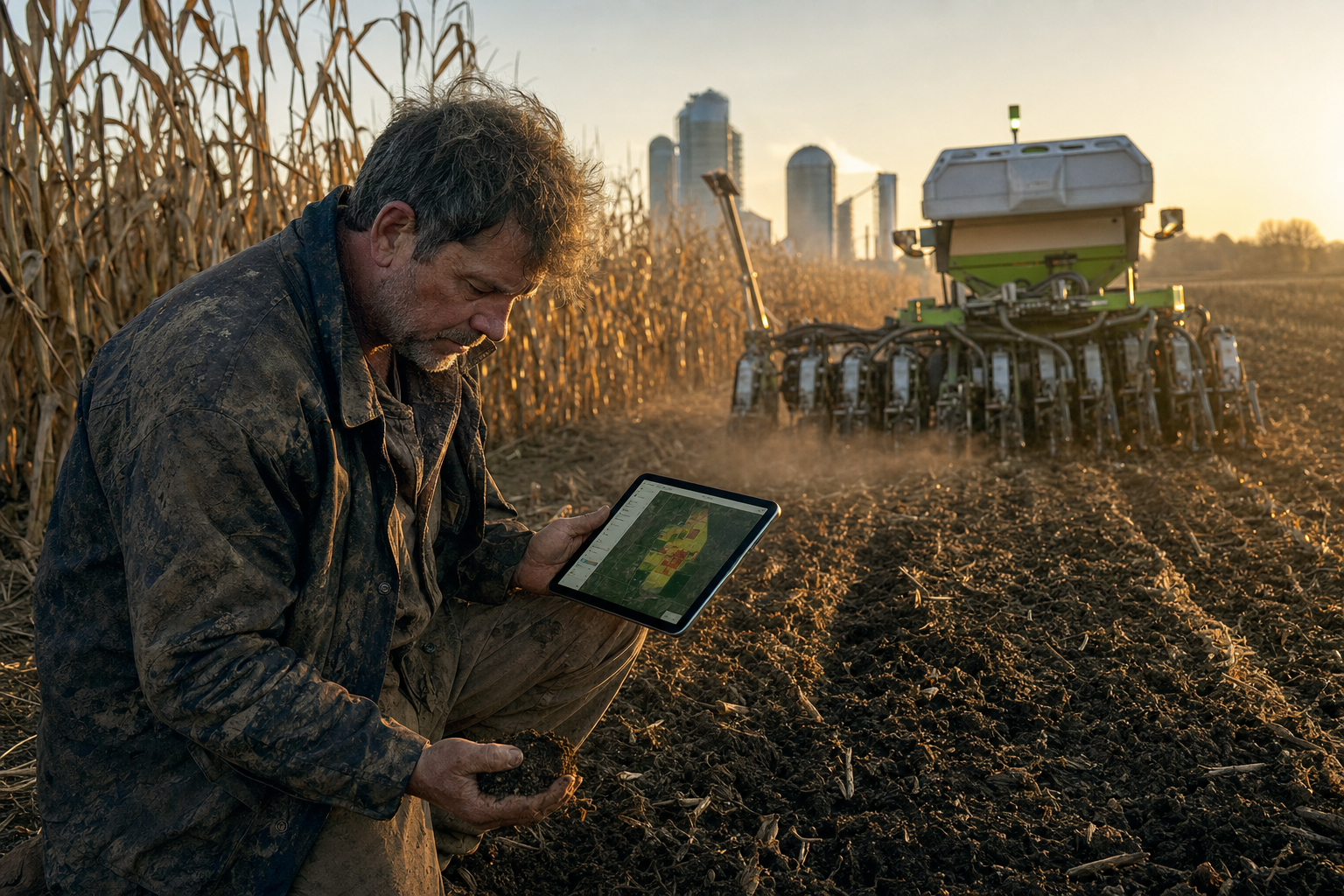
AI in precision agriculture makes legal issues sprout because autonomous systems now make farming decisions — irrigation, fertilization, pest control — that were once made by humans. The problem: the law hasn't decided who is accountable when those decisions go wrong. Three disputes dominate: liability, data ownership, and regulatory compliance.
Precision agriculture pairs machine learning models with real-time field data to recommend or automatically execute actions. A model might cut nitrogen on one corner of a field and double it on another. No human reviews each choice. When the model is right, yields climb. When it's wrong, the financial damage can be severe. The trail of responsibility then runs through four parties: software vendors, data brokers, sensor manufacturers, and the farmer who trusted the output.
Defining the terms: "Machine learning" (ML) is a subset of AI in which a model infers patterns from historical data rather than following explicit rules. A "training dataset" is the collection of past observations — soil readings, yield maps, weather logs — the model learns from. "Telemetry" refers to the machine-generated data (GPS position, engine load, application rates) that a connected tractor or sensor transmits automatically. These distinctions matter legally, because each data type can carry a different consent status and ownership claim.
According to the Washington Journal of Law, Technology & Arts (February 2025), the legal landscape around data privacy in AI-driven agriculture remains fragmented. The stated risks range from biased datasets to discriminatory insurance pricing. Buckley Law describes the clash bluntly: AI integration is "leading to complex issues surrounding liability, data privacy, and regulatory compliance."
Think of it like a self-driving car that plows a field instead of a highway. The engineering is impressive. But the question of who's at fault after a crash is still being argued in courtrooms and contracts — not settled in statute. A useful real-world reference point is the automotive sector, where the debate over whether liability sits with the driver, the manufacturer, or the software vendor has been litigated and legislated for more than a decade and still lacks a universally settled answer. Precision-ag law is roughly where autonomous-vehicle law was several years ago: the technology is deployed commercially, but the accountability framework trails behind.
The three legal seeds that keep sprouting
- Liability: The three recurring legal issues in agricultural AI are liability, data privacy and ownership, and regulatory compliance. Liability centers on determining fault when an algorithm's recommendation causes crop loss or equipment damage.
- Data privacy and ownership: This issue turns on deciding who owns and controls the farm-generated data feeding the AI.
- Regulatory compliance: This means meeting emerging AI and data-protection rules that vary sharply by country.
Who Is Liable When AI Farming Decisions Cause Crop Failure?
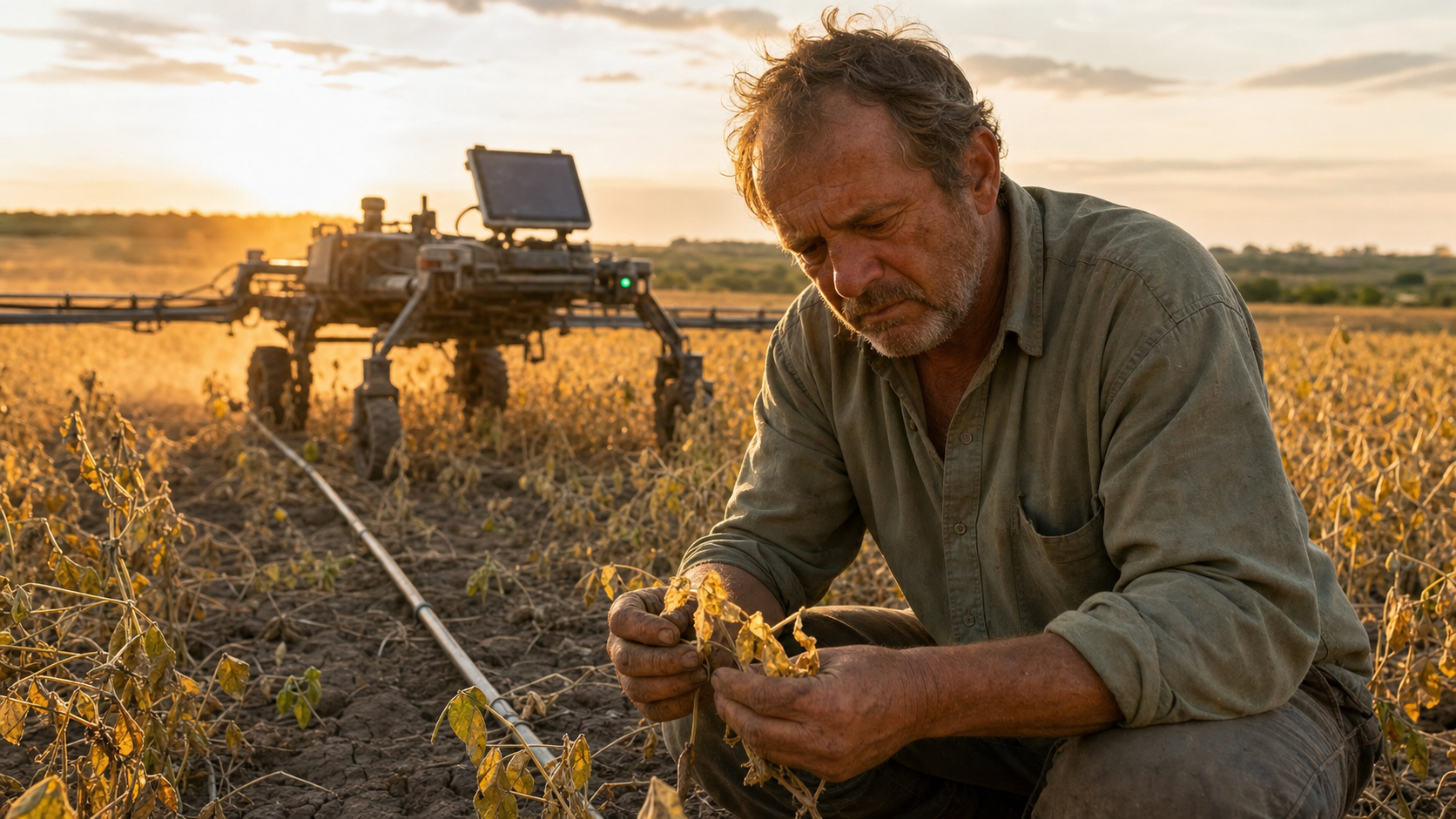
Liability for AI-driven crop failure is rarely settled by law. Instead, it is usually decided by the software's terms of service, warranties, and disclaimers. These documents typically shift risk onto the farmer. In most agtech contracts, developers limit their responsibility for outcomes.
Here is the operational reality. When a farmer buys a precision ag platform, they click through a licensing agreement that few read carefully. Buried inside are clauses that do three things. First, they classify the AI's output as "advisory." Second, they disclaim fitness for a particular purpose. Third, they cap damages at the subscription fee. AgFunderNews notes a genuine tension. Vendors who load their contracts with protections may actually slow adoption, because farmers grow wary of tools that offer zero accountability.
According to Lexology's coverage of the Kilpatrick analysis (2024), "only rarely will the developers" of these systems bear direct liability. One reason is that responsibility is diffused across the data supply chain. A sensor might report a flawed reading. A cloud outage might delay an irrigation command. A model might be trained on data from a different climate entirely. Untangling which link failed is expensive and slow.
The "advisory output" disclaimer that dominates agtech contracts mirrors a well-established pattern in other software categories. In the United States, the Uniform Commercial Code lets sellers disclaim the implied warranties of merchantability and fitness for a particular purpose using conspicuous language. That is why so many software licenses read the way they do. When reading a precision-ag agreement, ask one question: has the vendor disclaimed those implied warranties? That lens spots where risk has been shifted faster than reading the marketing copy.
A worked example: tracing fault after a failed nitrogen recommendation
When a failed nitrogen recommendation causes crop loss, fault-tracing typically follows a fixed four-question sequence — sensor calibration, data delivery, model fit, and contract terms — and each question can shift liability to a different party. Consider a typical implementation. A farmer licenses a variable-rate-application (VRA) platform that reads soil-nitrogen sensors and prescribes fertilizer maps. One season, a whole block is under-fertilized and yield drops. In our experience walking through these disputes, the investigation runs through this same sequence of questions:
- Was the sensor calibrated? If calibration lapsed, the manufacturer or the farmer — not the AI vendor — may be the exposed party.
- Did the data reach the model? A connectivity gap or cloud outage can point liability toward an infrastructure provider whose SLA the farmer never saw.
- Was the model appropriate for the region? If it was trained on foreign soils, the mismatch becomes a training-data question (discussed below).
- What did the contract say the output was? If the ToS labels the map "advisory," the vendor's exposure often collapses to the subscription fee.
The trade-off is stark: each of these four protective clauses the vendor adds shifts risk onto the grower, and — as AgFunderNews observes — that same protection can deter cautious buyers. Across all four questions, neither side gets a clean deal.
How liability gets distributed in practice
Liability for AI agronomy advice is distributed through four contract levers: the warranty scope, the damages cap, your own input documentation, and written risk allocation. Most disputes turn on the first two — whether the vendor guarantees performance and whether the damages cap limits recovery to fees paid rather than the value of a lost harvest. Work through all four in this order:
- Read the warranty first. Determine whether the vendor guarantees performance or merely provides "recommendations."
- Check the damages cap. Many contracts limit liability to fees paid, not the value of a lost harvest.
- Document your inputs. Keep records of sensor calibration and data quality to defend your own diligence.
- Insist on clarity. Ask vendors, in writing, who bears risk when a recommendation causes measurable loss.
For agribusinesses in Saudi Arabia and Egypt, local contract law adds a fifth layer — and in our experience the interaction between vendor disclaimers and consumer-protection rules is largely untested regionally. That uncertainty is precisely why AI in precision agriculture makes legal issues sprout in ways generic tech contracts never anticipated. A data-driven marketing and analytics approach often starts with the same principle: know what your contracts actually promise.
Who Owns Farm Data in AI-Driven Precision Agriculture?
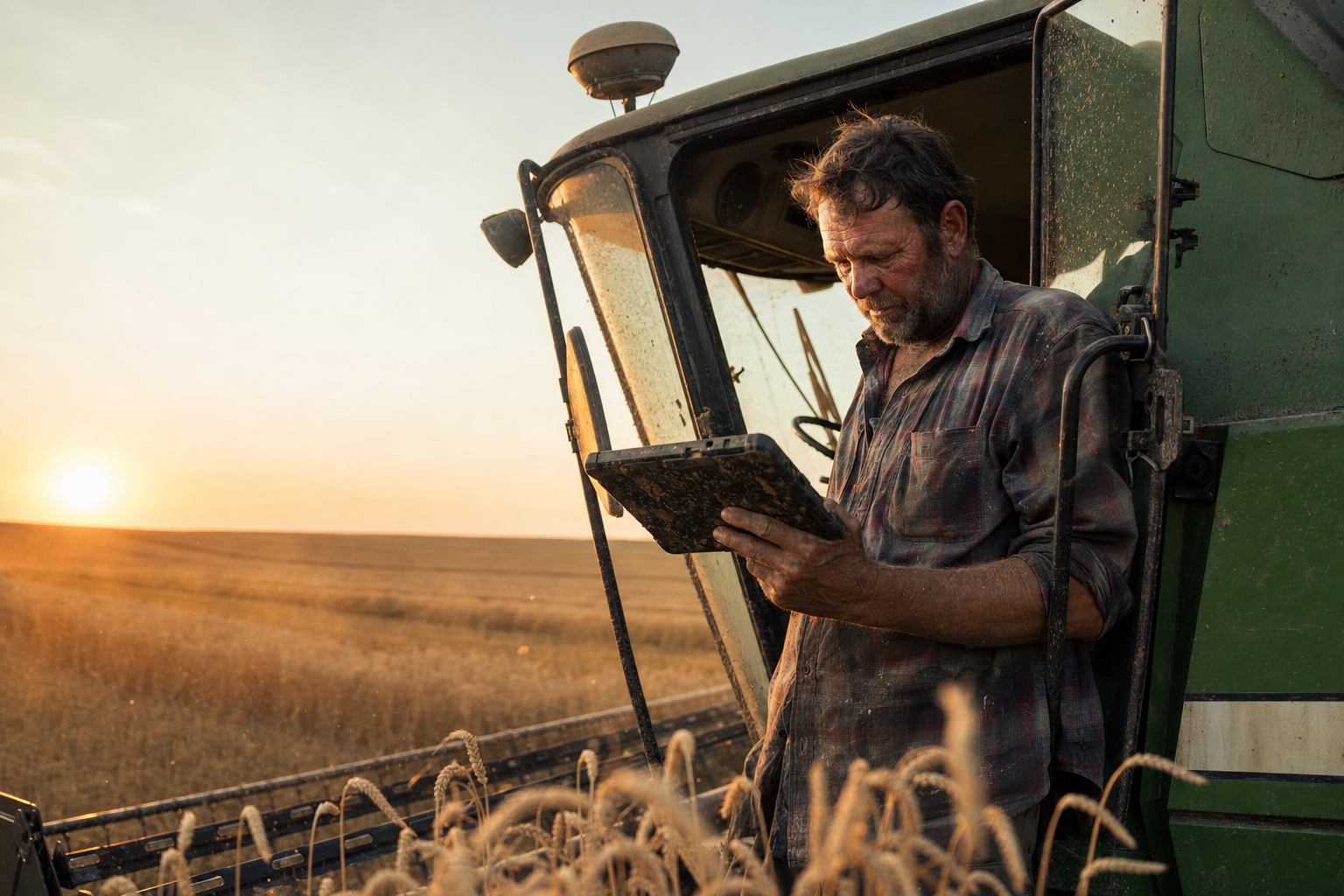
Ownership of farm data in precision agriculture is frequently ambiguous — soil readings, yield maps, and machinery telemetry are often controlled by the platform vendor rather than the farmer, unless the contract explicitly grants ownership back to the grower. Data is the fuel, and whoever holds it holds leverage.
Farm data has real commercial value. Aggregated yield and soil information can be sold to seed companies, insurers, and commodity traders. According to the Washington Journal of Law, Technology & Arts (2025), AI-driven risk assessments built on this data "could lead to higher insurance premiums for certain farmers" — a form of price discrimination baked into the analytics. A farmer's own numbers can be turned against them.
Lexology (2024) highlights that "a thicket of legal issues surround the obtaining and use of training data," which is exactly what agtech developers depend on to improve their models. Every field a platform monitors becomes a training sample. Without clear consent terms, that repurposing sits in a gray zone — legally and ethically.
This is not a purely theoretical worry. In North America the question of who owns and controls farm-generated data became contentious enough that industry groups and equipment makers developed the Ag Data Transparency Evaluator, a voluntary certification under which vendors answer a standardized set of questions about how they collect, use, share, and return farmer data. The existence of that industry initiative is a concrete signal of how seriously the ownership issue is taken where precision agriculture is most mature — and a useful checklist template for MENA buyers evaluating a vendor's data terms.
The MENA data-ownership dimension
MENA data-ownership rules determine who controls farm telemetry and where it can travel. Two laws matter most: Saudi Arabia's Personal Data Protection Law (PDPL) and Egypt's Data Protection Law No. 151 of 2020. Both regulate how personal and, in many interpretations, business-linked data is collected, stored, and transferred. When an individual owns a farm, telemetry tied to that person can fall under personal-data rules. Cross-border transfers — sending Egyptian farm data to a US or European cloud — trigger extra requirements.
Practitioners reading the statutes should focus on the specific provisions most likely to bite in an agtech deployment:
- Consent (Egypt Law No. 151/2020, Art. 2 and Art. 7): The law makes consent a core lawful basis. The data subject's consent must be explicit and informed. Farmers should actively agree to how their data is reused. A buried clause is generally not enough.
- Cross-border transfer (Egypt Law No. 151/2020, Art. 14–15): Transferring personal data outside Egypt requires meeting defined conditions. In cases the law contemplates, it also requires licensing or authorization from the Data Protection Centre.
- Lawful basis and consent under the Saudi PDPL: The PDPL requires a lawful basis for processing. As a general rule it also requires the data subject's consent, with specified exceptions. It adds obligations around breach notification and cross-border transfer conditions. Localization or transfer safeguards may apply where data crosses the Kingdom's borders.
- Portability: Growers should be able to extract their data if they switch vendors. This is a practical protection worth negotiating even where a statute does not mandate it explicitly.
Statutory numbering and implementing regulations are periodically amended, so verify the current article numbers against the official gazetted text or a licensed local advisor before relying on them. Saudi Arabia's PDPL, for example, was amended before it came into force, and its Implementing Regulations are published separately by the regulator — so the text a vendor cites may not be the current one.
Compliant collection and consent flows turn data into an asset instead of a liability. In our deployments, clean data practices also power better SEO and content strategy when these firms market to skeptical farmers.
How Do Saudi PDPL and Egypt's Data Law Affect AI Agtech Adoption?
Saudi Arabia's PDPL and Egypt's Data Protection Law directly shape AI agtech adoption by requiring lawful basis, consent, and secure processing for farm-linked data — meaning agtech vendors selling into these markets must localize their compliance, not copy US or EU templates. Regional rules are enforced by regional authorities.
Saudi Arabia's PDPL is overseen by the Saudi Data & Artificial Intelligence Authority (SDAIA), which signals how seriously the Kingdom links AI governance with data protection. The law sets expectations around consent, breach notification, and cross-border transfers. Egypt's Data Protection Law No. 151 of 2020 establishes a Data Protection Centre and similarly regulates processing and transfers, with penalties for non-compliance.
For an agtech firm deploying AI drones over farms in the Nile Delta or automated irrigation in Al-Qassim, these frameworks mean the collection of GPS-tagged, farmer-linked data isn't a free-for-all. A vendor operating a chatbot that gathers crop reports over WhatsApp, or a Salla or Shopify storefront selling precision-ag hardware, must handle customer and farm data lawfully. It is also worth noting that both regimes were drafted in the general spirit of the EU's General Data Protection Regulation (GDPR) — the concepts of lawful basis, data-subject consent, breach notification, and restricted cross-border transfer are recognizably GDPR-derived — but the specific thresholds, exceptions, and enforcement bodies differ, which is exactly why a copy-pasted EU privacy policy tends to be non-compliant in the details.
Comparison: liability, data, and compliance across the AI agtech stack
| Legal Issue | Who's Usually Exposed | MENA-Specific Angle | Practical Mitigation |
|---|---|---|---|
| Liability for bad AI advice | Farmer (via ToS disclaimers) | Untested against local consumer law | Negotiate warranties in writing |
| Data ownership | Vendor by default | PDPL / Egypt Law No. 151/2020 may apply | Demand explicit data-ownership clause |
| Training-data reuse | Farmer (data repurposed) | Consent standards still maturing | Require opt-in consent terms |
| Insurance pricing bias | Farmer (higher premiums) | Little regional regulatory scrutiny yet | Audit datasets for representativeness |
| Cross-border transfer | Vendor and farmer | Localization / transfer safeguards (PDPL; Egypt Art. 14–15) | Map where data physically lives |
The honest caveat: none of these frameworks were written with autonomous tractors in mind, and regulators are still interpreting how existing rules apply to AI. Expect guidance to continue evolving. Treat any compliance plan as a living document, not a one-time checkbox.
Why Does Training Data Create the Biggest Legal Risk in Precision Ag?
Training data creates the biggest legal risk in precision agriculture because AI models learn from datasets that are often obtained without clear rights, and biased or unrepresentative data can produce flawed recommendations and discriminatory outcomes. Bad data in means legal exposure out.
Lexology (2024) reports that training-data concerns were "foremost on the minds" of legal experts examining precision ag. The reason is structural. Developers rarely generate all their own data — they pull from farms, third-party sensors, public satellite feeds, and historical records. Each source carries its own consent status and quality problems.
Consider dataset bias. A model trained mostly on temperate North American farms may misjudge soil behavior in arid Gulf conditions or the humid Delta. When that model recommends irrigation schedules for a Saudi date-palm operation, the mismatch can waste water — a precious, regulated resource — or damage yield. According to the Washington Journal of Law, Technology & Arts (2025), the same bias can feed unfair insurance risk scores. Providers of the underlying models are themselves candid that AI systems reflect the data they are trained on; OpenAI, for instance, frames its work as ongoing research toward systems that solve human-level problems — a reminder that even frontier developers treat model behaviour as an evolving, imperfect artefact rather than a finished, infallible product.
Reducing training-data risk
- Verify provenance. Ask vendors where training data came from and whether it represents your climate and crops.
- Localize the model. Prefer tools tuned on regional data, or supplement with your own field records.
- Log consent. Maintain clear records of what data was collected and how consent was obtained.
- Test before trusting. Run AI recommendations on a small plot before scaling to the whole farm.
Because AI in precision agriculture makes legal issues sprout from the very data that powers it, disciplined data governance isn't optional — it's the root system that keeps everything else standing. That discipline is best built directly into chatbot and data collection systems so consent and analytics are captured cleanly from day one.
Practical Steps for MENA Agribusinesses Adopting AI Tools
MENA agribusinesses should treat AI adoption as a legal-and-data project, not just a technology purchase — reviewing contracts, mapping data flows, verifying model provenance, and confirming PDPL or Egyptian compliance before deployment. A structured approach prevents expensive surprises.
Here's a practical sequence for farmers, cooperatives, and agtech vendors working across Egypt, Saudi Arabia, and the Gulf.
- Audit the contract. Identify warranties, liability caps, and whether outputs are "advisory." If the vendor disclaims everything, treat recommendations as one input among many.
- Map your data. Document what's collected, where it's stored, and whether it crosses borders. Cross-border transfers likely trigger PDPL or Egyptian transfer rules (Egypt Law No. 151/2020, Art. 14–15).
- Secure ownership terms. Negotiate explicit language stating you own your farm data and can export it.
- Test on a pilot plot. Validate the AI on a limited area to catch bias before full rollout.
- Build consent flows. If you gather farmer or customer data via WhatsApp, Salla, or Shopify, capture consent lawfully and transparently.
- Document everything. Keep sensor logs, calibration records, and decision trails to defend your diligence if a dispute arises.
One caveat worth repeating: no framework guarantees you'll win a dispute. Regional AI law is young, and outcomes are unpredictable. What good process does is shift the odds — clean records, clear contracts, and lawful data practices make you the party who did things right.
For agtech companies specifically, compliant data isn't just risk management — it's a selling point. Farmers adopt tools they trust. A vendor that can honestly say "you own your data, and here's exactly how we protect it" wins on marketing as much as on engineering. That's where data-driven marketing and technical development overlap.
The Road Ahead: Regulation Will Catch Up to the Algorithms
The near future will likely bring more explicit AI and agricultural-data regulation across MENA, not less. As SDAIA sharpens Saudi Arabia's AI governance and Egypt's Data Protection Centre matures, the informal gray zones agtech vendors rely on today are likely to narrow. Farmers who prepared their contracts and data practices early tend to adapt smoothly; those who didn't often scramble. The trajectory elsewhere supports this: the EU's AI Act — the first comprehensive statutory AI framework — moved from proposal to law within a few years, and where the EU leads on data and AI regulation, several MENA regimes have historically followed the broad contours.
The provocative reality is that the algorithm steering a tractor near Riyadh will only get smarter — while the law defining who's responsible for it stays a step behind. The winners won't be whoever has the fanciest AI. The winners will be whoever paired that AI with sound data governance and contracts that name a responsible party before something breaks.
If you're an agtech founder or agribusiness owner trying to turn compliant data into a competitive advantage, you can reach out to Aghrba to discuss building it right from the start.
About This Article
This explainer was prepared from general expertise in data strategy, digital analytics, and regulatory-technology topics, synthesizing publicly available legal commentary from the sources listed below. To avoid over-reliance on any single perspective, it draws on law-firm analyses (Kilpatrick/Kilpatrick Townsend, Buckley Law), an academic law review (Washington Journal of Law, Technology & Arts), an industry outlet (AgFunderNews), and the primary regulatory frameworks themselves (the Saudi PDPL and Egypt's Law No. 151 of 2020). It is written for farmers, cooperatives, and agtech operators in the MENA region who need the legal risks translated into practical action. It reflects a topical, non-lawyer perspective and, as stated above, is not legal advice. For binding guidance on the Saudi PDPL, Egypt's Law No. 151 of 2020, or any contract, consult an attorney licensed in the relevant jurisdiction.
Frequently Asked Questions
Who is legally responsible when AI causes a crop failure?
Responsibility usually depends on the software's terms of service rather than clear law. Most agtech vendors classify their AI output as "advisory" and cap liability at the subscription fee, shifting risk onto the farmer. According to Lexology's coverage of the Kilpatrick analysis (2024), developers rarely bear direct liability, so reviewing warranties before deployment is essential.
Does Saudi Arabia's PDPL apply to farm data collected by AI tools?
Yes, when the data can be linked to an identifiable individual — such as a farm owner's GPS-tagged records — Saudi Arabia's Personal Data Protection Law generally applies. Vendors must ensure lawful basis, consent, secure processing, and compliant cross-border transfers, all overseen in connection with SDAIA. Copying US or EU compliance templates is not sufficient.
Who owns the data generated by precision agriculture platforms?
By default, platform vendors often control soil, yield, and machinery data unless the contract explicitly grants ownership back to the farmer. Farm data carries commercial value and can even influence insurance pricing. Growers should negotiate clear ownership and data-portability clauses before signing any agtech agreement.
Why is training data such a major legal risk in AI farming?
Training data is a major risk because models are often built on datasets obtained without clear rights, and biased or unrepresentative data can produce faulty recommendations. Lexology (2024) notes training-data issues were foremost among legal experts' concerns, since a model trained on foreign farms may misjudge Gulf or Delta conditions.
How can agtech companies in MENA build farmer trust through compliance?
Agtech companies build trust by making data practices transparent — clearly stating that farmers own their data, obtaining explicit consent, and protecting it under PDPL or Egyptian law. Transparent compliance doubles as a marketing advantage, since farmers adopt tools they trust. Compliant consent and analytics flows can be engineered into chatbots and e-commerce platforms from the start.
If you’d like to explore the legal questions surrounding AI in precision agriculture, feel free to get in touch to discuss your concerns and the issues you’d like to understand better.
Sources & References
- AI in Precision Agriculture Makes Legal Issues Sprout — Kilpatrick, JDSupra
- AI Can Transform Precision Agriculture, but What Are the Legal Risks? — Kilpatrick Townsend (July 2024)
- Artificial Intelligence is Clashing with Agriculture Law — Buckley Law
- AI Can Transform Precision Agriculture, but What Are the Legal Risks? — AgFunderNews
- The Legal Landscape of Data Privacy in AI-Driven Precision Agriculture — Washington Journal of Law, Technology & Arts (Feb 2025)
- AI in Precision Agriculture Makes Legal Issues Sprout — Lexology
- AI Can Transform Precision Ag, But What Are the Legal Risks? — Precision Farming Dealer
- OpenAI — Research & Deployment